
[Paper Review] Algorithmic Writing Assistance on Jobseekers' Resumes Increases Hires
This study conducts a field experiment in an online labor market, showing that algorithmic writing assistance increases jobseekers' hiring probability by 8% without reducing employer satisfaction. The improvement stems from clearer communication rather than signaling ability, as better writing helps employers assess candidate fit more accurately.
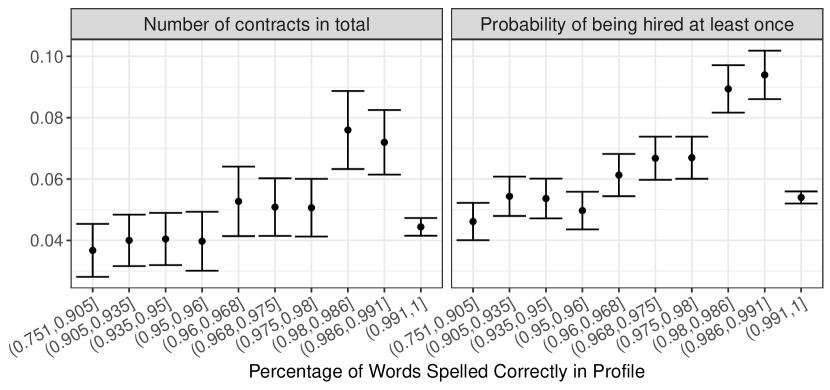
There is a strong association between the quality of the writing in a resume for new labor market entrants and whether those entrants are ultimately hired. We show that this relationship is, at least partially, causal: a field experiment in an online labor market was conducted with nearly half a million jobseekers in which a treated group received algorithmic writing assistance. Treated jobseekers experienced an 8% increase in the probability of getting hired. Contrary to concerns that the assistance is taking away a valuable signal, we find no evidence that employers were less satisfied. We present a model in which better writing is not a signal of ability but helps employers ascertain ability, which rationalizes our findings.
Motivation & Objective
- To determine whether better resume writing quality causally increases hiring outcomes for new labor market entrants.
- To distinguish between the 'clarity view'—where writing quality aids employer understanding—and the 'signaling view'—where it signals worker ability.
- To assess whether algorithmic writing assistance, by reducing writing effort, affects employer satisfaction and hiring outcomes.
- To evaluate whether the benefits of improved writing come at the expense of other jobseekers (crowd-out effects).
- To model how reduced costs of resume writing affect hiring efficiency and wage outcomes in a labor market with asymmetric information.
Proposed method
- Conducted a randomized field experiment with nearly 500,000 jobseekers on an online labor platform, assigning algorithmic writing assistance to a treatment group.
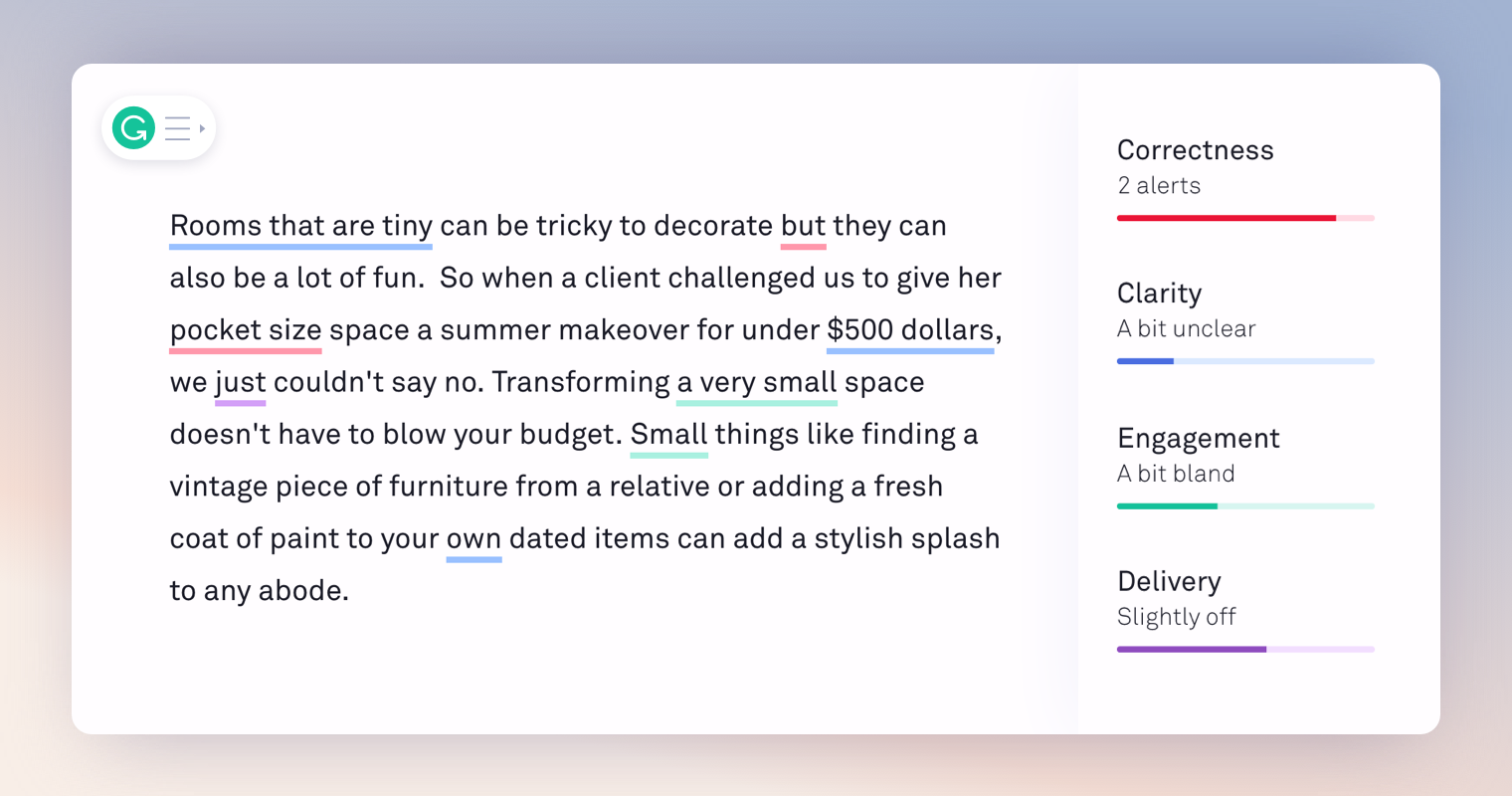
- Used an algorithmic writing service that identifies and corrects spelling, grammar, and structural errors in resumes, improving clarity without altering factual content.
- Compared hiring outcomes, job offer rates, wages, and employer satisfaction ratings between treated and control groups.
- Employed a structural model of the hiring process where resume quality affects employer inferences about worker type (high vs. low ability), with effort cost as a key parameter.
- Modeled the impact of reduced writing costs on equilibrium outcomes, including the share of workers choosing to invest in resume quality and wage differentials.
- Used employer ratings at contract completion as a proxy for worker performance and employer disappointment, testing whether improved writing undermines signal credibility.
Experimental results
Research questions
- RQ1Does algorithmic writing assistance causally increase the probability of being hired for new labor market entrants?
- RQ2Is the effect of better writing due to improved clarity in conveying information, or does it function as a signal of ability?
- RQ3Does improved resume quality through algorithmic assistance reduce employer satisfaction or performance ratings?
- RQ4What are the general equilibrium effects of reduced writing costs on hiring rates, wage formation, and worker sorting?
- RQ5To what extent does algorithmic writing assistance undermine the signaling role of writing quality in hiring decisions?
Key findings
- Treated jobseekers had an 8% higher probability of being hired compared to the control group, with a 95% confidence interval of (3%, 13%).
- The treatment group generated 7.8% more job offers over the experimental period, indicating a significant increase in hiring activity.
- Treated workers earned 8.4% higher hourly wages on average, suggesting improved match quality or stronger employer interest.
- Employer satisfaction ratings showed no decline—treated workers received an average rating of 8.84 (95% CI: 8.74–8.94), compared to 8.835 for controls, indicating no negative impact on perceived performance.
- The improvement in hiring outcomes was driven by enhanced resume clarity rather than signaling, as the treatment did not weaken the value of writing as a signal.
- The model predicts that reduced writing costs lead to higher hiring rates and increased effort in resume writing, especially among low-quality writers, without reducing total surplus or employer welfare.
Read this paper
Open the full text in the Nubint reader and ask about any passage as you read.
Read this paper on NubintThis review was generated by AI from the original paper. Please check the paper before citing it.