
[Paper Review] An Entry Point for Formal Methods: Specification and Analysis of Event Logs
This paper proposes using formal specification languages to analyze pre-existing event logs from the Mars Science Laboratory mission, enabling scalable runtime verification without real-time instrumentation. By treating logs as formal traces and specifying requirements as event sequences, the authors demonstrate a practical method for testing complex flight software using a domain-specific language that supports pattern-based rules, state machines, and automated specification learning from test runs.
Formal specification languages have long languished, due to the grave scalability problems faced by complete verification methods. Runtime verification promises to use formal specifications to automate part of the more scalable art of testing, but has not been widely applied to real systems, and often falters due to the cost and complexity of instrumentation for online monitoring. In this paper we discuss work in progress to apply an event-based specification system to the logging mechanism of the Mars Science Laboratory mission at JPL. By focusing on log analysis, we exploit the "instrumentation" already implemented and required for communicating with the spacecraft. We argue that this work both shows a practical method for using formal specifications in testing and opens interesting research avenues, including a challenging specification learning problem.
Motivation & Objective
- To address the scalability and practicality challenges of formal verification in real-world aerospace systems.
- To enable formal specification-based testing by leveraging existing event logs instead of requiring real-time instrumentation.
- To develop a domain-specific specification language that is both expressive and accessible to test engineers.
- To explore automated specification learning from successful test executions to reduce manual specification effort.
- To integrate formal verification into the flight software testing pipeline at JPL, improving test reliability and maintainability.
Proposed method
- The approach uses offline analysis of event logs generated during spacecraft testing, treating them as execution traces for formal verification.
- A domain-specific specification language is introduced, supporting pattern-based rules and state machines with parameterized events and data binding.
- The pattern language is compiled into a more expressive rule-based language derived from Ruler, enabling complex event sequence validation.
- User-defined predicates in Python extend specification expressiveness, allowing checks on field values and derived conditions.
- A learning facility extracts common execution patterns from 'good' test runs, automatically generating candidate specifications for reuse.
- Specifications are visualized using Graphviz and violations are reported with log file references for traceability.
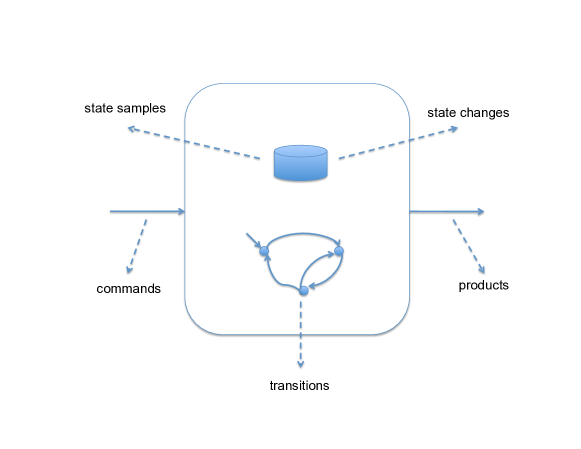
Experimental results
Research questions
- RQ1Can formal specification techniques be effectively applied to real-world aerospace systems using existing event logs rather than online instrumentation?
- RQ2To what extent can a domain-specific language improve the accessibility and maintainability of formal specifications for test engineers?
- RQ3How effective is automated specification learning from successful test executions in reducing manual specification effort?
- RQ4What are the practical benefits of using formal methods for log analysis in complex software testing workflows?
- RQ5Can the integration of formal methods into existing testing pipelines improve test reliability and reduce errors?
Key findings
- The proposed approach successfully enabled formal verification of flight software using pre-existing event logs, avoiding the need for complex runtime instrumentation.
- Test engineers found the specification language intuitive and usable, leading to rapid integration into the MSL testing pipeline.
- The specification learning facility reduced the burden of writing detailed patterns by automatically generating candidates from 'good' test runs.
- The system detected specification violations with precise error traces linked to log files, improving debuggability and traceability.
- The method demonstrated practical scalability by analyzing large volumes of event logs from complex spacecraft systems.
- The approach opened new research avenues in specification mining and learning from event sequences in safety-critical systems.
Read this paper
Open the full text in the Nubint reader and ask about any passage as you read.
Read this paper on NubintThis review was generated by AI from the original paper. Please check the paper before citing it.