
[Paper Review] Approaching an unknown communication system by latent space exploration and causal inference
This paper introduces Causal Disentanglement with Extreme Values (CDEV), a method combining latent space manipulation in deep generative models with causal inference to uncover meaningful structural properties in unknown communication systems. Applied to sperm whale codas, CDEV identifies that click count, timing regularity, spectral mean, and acoustic regularity encode information—some findings confirm prior hypotheses, others are novel, demonstrating the approach as a viable tool for interpreting black-box models in low-ground-truth settings.
Please refer to the canonical GitHub repo releases: github.com/andleb/Approaching-an-unknown-communication-system/releasesThis is an archival snapshot of two snapshots of the model used for generating the results of the paper, and a separate model with a different parameter in terms of the encoding size as well as with random initialization which demonstrates robustness of the method to both.
Motivation & Objective
- To develop a method for discovering meaningful properties in communication systems with no known ground truth.
- To apply deep generative models to raw sperm whale vocalizations, treating them as interpretable tools for hypothesis generation.
- To test whether latent space manipulation combined with causal inference can reveal structural rules governing animal communication.
- To extend the use of deep learning beyond pattern recognition to interpretive discovery in biologically complex, low-supervision domains.
- To validate the approach on a known system (human speech) before applying it to an understudied system (sperm whale codas).
Proposed method
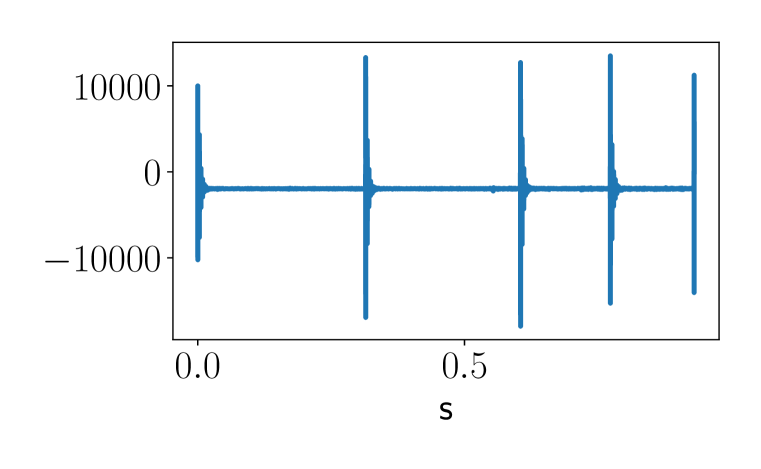
- Train a fiwGAN on raw sperm whale coda recordings to learn meaningful representations without prior feature engineering.
- Manipulate individual latent variables to extreme values (e.g., ±1) to probe their effects on output properties.
- Apply causal inference techniques—specifically ATE (Average Treatment Effect) and SHAP values—to estimate causal effects of latent units on observable output features.
- Use heatmap visualizations to track how changes in latent unit values affect output properties across the latent space.
- Leverage the model’s ability to generate novel, plausible codas not seen during training to test structural consistency.
- Assess consistency of outputs under fixed (X,t) inputs to support ignorability and consistency assumptions in causal inference.
Experimental results
Research questions
- RQ1Which properties of sperm whale codas are encoded in the latent space of a generative model trained on raw audio?
- RQ2Can extreme-value manipulation of latent variables reveal causal relationships between latent units and observable acoustic features?
- RQ3Do the discovered properties align with existing biological hypotheses about sperm whale communication?
- RQ4Can the model generate plausible novel coda types not present in the training data, indicating structural rule learning?
- RQ5To what extent can causal inference methods be applied to interpret black-box deep generative models in low-supervision, high-complexity domains?
Key findings
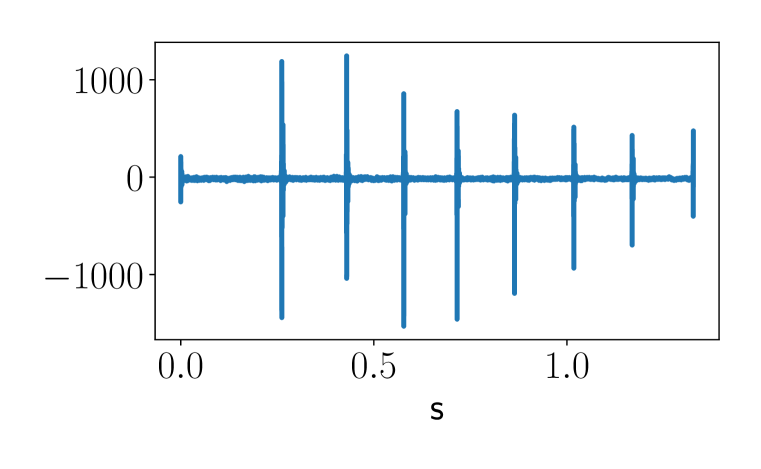
- The model identifies that the number of clicks in a coda is encoded in the latent space, consistent with prior biological hypotheses.
- Timing regularity and spectral mean are found to be encoded in distinct latent units, suggesting they carry independent information.
- Acoustic regularity is encoded primarily in latent bit 3, with supporting evidence from SHAP and heatmap analyses.
- The model generates novel coda types not in the training set, indicating it has learned underlying structural rules of the communication system.
- Causal inference results show consistent disentanglement behavior across estimators, supporting the validity of the method despite model complexity.
- Some findings, such as the role of spectral regularity, are proposed for the first time, expanding the hypothesis space for sperm whale communication.
Read this paper
Open the full text in the Nubint reader and ask about any passage as you read.
Read this paper on NubintThis review was generated by AI from the original paper. Please check the paper before citing it.