
[Paper Review] Auditing Elon Musk's Impact on Hate Speech and Bots
The study analyzes Twitter before and after Elon Musk's 2022 acquisition, finding increases in hate speech and bot activity, with astroturf bots decreasing among the control group.
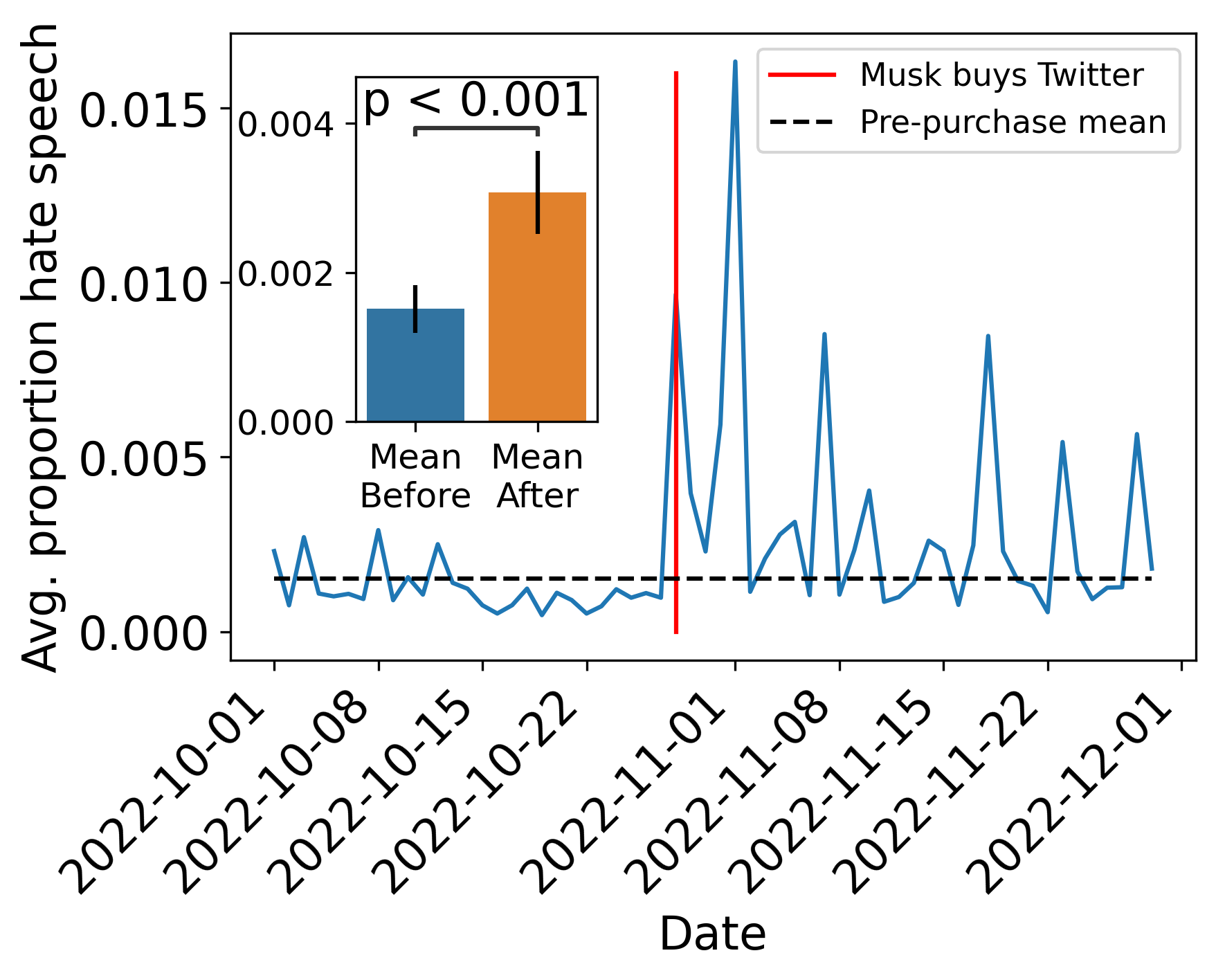
On October 27th, 2022, Elon Musk purchased Twitter, becoming its new CEO and firing many top executives in the process. Musk listed fewer restrictions on content moderation and removal of spam bots among his goals for the platform. Given findings of prior research on moderation and hate speech in online communities, the promise of less strict content moderation poses the concern that hate will rise on Twitter. We examine the levels of hate speech and prevalence of bots before and after Musk's acquisition of the platform. We find that hate speech rose dramatically upon Musk purchasing Twitter and the prevalence of most types of bots increased, while the prevalence of astroturf bots decreased.
Motivation & Objective
- Assess whether hate speech on Twitter rose after Musk's acquisition.
- Assess whether bot prevalence on Twitter changed after the acquisition.
- Estimate the robustness of hate speech and bot changes across methodological thresholds.
- Discuss potential implications for platform moderation and policy.
Proposed method
- Identify hate speech keywords from Reddit-based hate lexicons and validate them on Twitter data.
- Extract tweets containing hate keywords and filter for toxicity using Google's Perspective API.
- Sample a baseline tweet stream to compare overall activity levels.
- Compute Botometer scores for accounts posting hateful tweets to assess bot likelihood.
- Compare distributions of bot scores before and after the acquisition with Mann-Whitney U tests.
- Acknowledge limitations and avoid causal claims linking specific policy changes to observed effects.
Experimental results
Research questions
- RQ1Did the prevalence of hate speech on Twitter increase after Musk's takeover?
- RQ2Did the prevalence or character of bots on Twitter change following the takeover?
- RQ3Are observed changes robust to different toxicity and explicit-content thresholds?
- RQ4What are the potential implications of these changes for Twitter moderation and user safety?
Key findings
- Hate speech by hateful users increased after Musk’s purchase, with the average daily proportion of hate speech rising and the post-purchase level exceeding pre-purchase maximums.
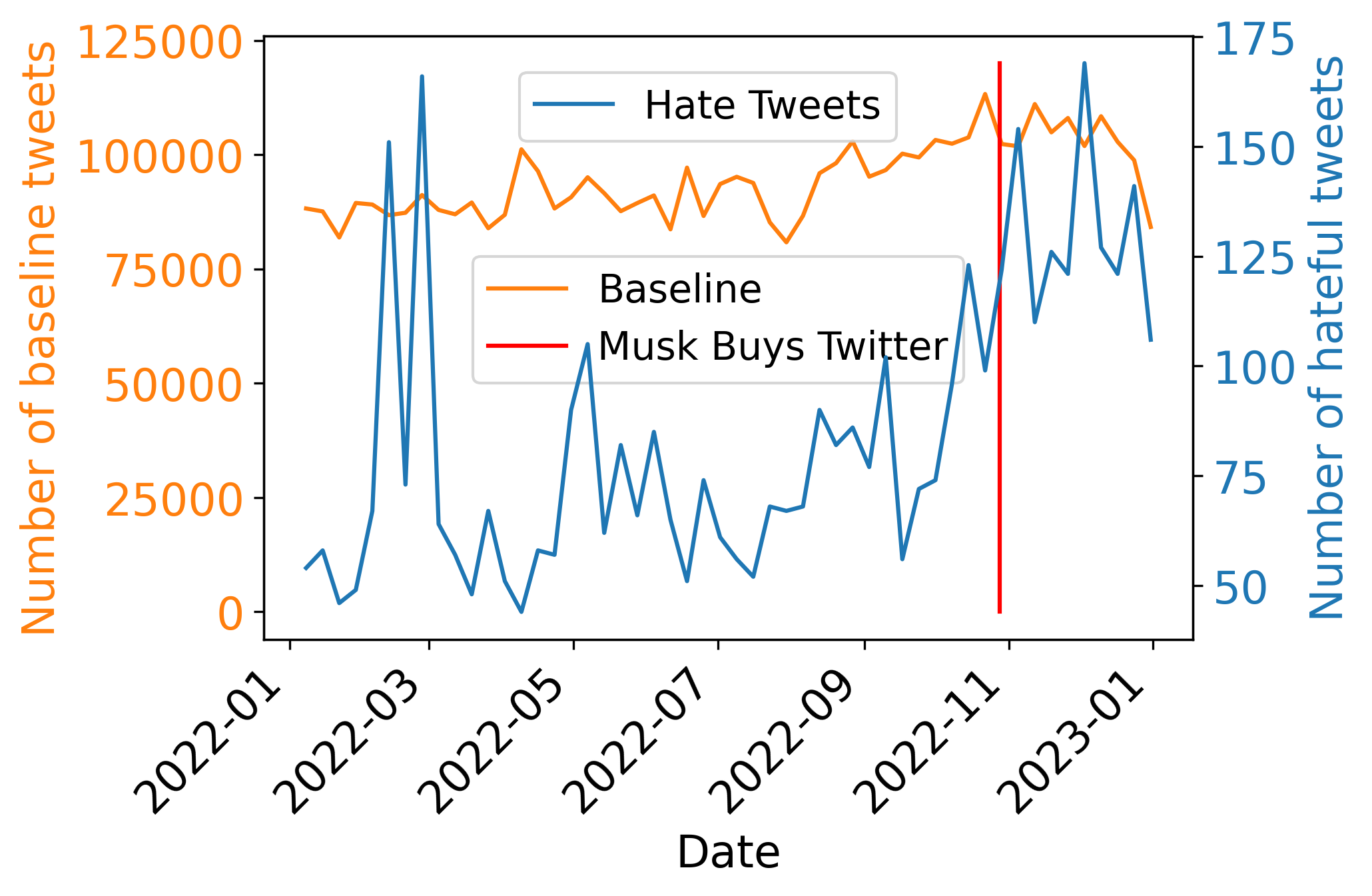
- The overall volume of hateful tweets rose dramatically in 2022, relative to a stable baseline, remaining elevated after the initial spike.
- Botometer scores for accounts posting hateful tweets increased in several categories (spam, fake followers), while astroturf scores decreased for control accounts.
- The observed changes are not proven causal and may be influenced by factors such as reduced workforce and anti-bot policy changes, but are consistent with concerns about lighter moderation.
Read this paper
Open the full text in the Nubint reader and ask about any passage as you read.
Read this paper on NubintThis review was generated by AI from the original paper. Please check the paper before citing it.