
[Paper Review] Autonomous Driving with Deep Reinforcement Learning in CARLA Simulation
This paper proposes a Deep Q-Network (DQN)-based reinforcement learning approach to train an autonomous vehicle for high-speed lane-keeping while avoiding collisions in the CARLA simulation environment. The method uses raw sensor observations as input, learns a policy through end-to-end training, and achieves a 68% collision rate reduction and 8.71 km/h average speed in diverse weather and traffic conditions compared to a random baseline.
Nowadays, autonomous vehicles are gaining traction due to their numerous potential applications in resolving a variety of other real-world challenges. However, developing autonomous vehicles need huge amount of training and testing before deploying it to real world. While the field of reinforcement learning (RL) has evolved into a powerful learning framework to the development of deep representation learning, and it is now capable of learning complicated policies in high-dimensional environments like in autonomous vehicles. In this regard, we make an effort, using Deep Q-Learning, to discover a method by which an autonomous car may maintain its lane at top speed while avoiding other vehicles. After that, we used CARLA simulation environment to test and verify our newly acquired policy based on the problem formulation.
Motivation & Objective
- To develop a deep reinforcement learning policy that enables autonomous vehicles to maintain high speed while avoiding collisions in complex highway environments.
- To design a custom observation, action, and reward formulation tailored for lane-keeping and collision avoidance in CARLA.
- To evaluate the performance of the trained DQN agent across multiple towns, weather conditions, and traffic densities.
- To compare the performance of the trained DQN agent (S) against a fixed-random-weight baseline (U) to validate learning effectiveness.
- To assess the generalization capability of the DQN policy across unseen environments and scenarios in CARLA.
Proposed method
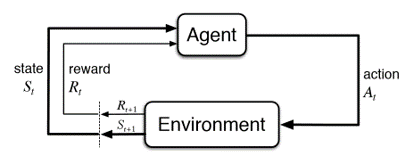
- The agent uses raw camera and LiDAR-like sensor observations as input state representation, processed by a convolutional neural network.
- A Deep Q-Network (DQN) is trained using experience replay and target network updates to stabilize learning and minimize temporal correlation.
- The action space consists of discrete control commands: throttle, brake, and steering angle, mapped to discrete actions for end-to-end control.
- A dense reward function is designed to encourage high speed (within 20–30 km/h range), penalize collisions, and reward progress toward the goal.
- Training is conducted in Town04 under standard weather conditions, with evaluation performed across eight towns and two weather sets (easy and hard).
- Performance is evaluated using four metrics: collision rate, average speed, total episodic reward, and number of timesteps before failure.
Experimental results
Research questions
- RQ1Can a DQN agent learn a high-speed, collision-free lane-keeping policy using only raw sensor inputs in a simulated highway environment?
- RQ2How does the performance of a trained DQN agent compare to a fixed-random baseline in terms of collision rate, speed, and reward?
- RQ3To what extent does the DQN policy generalize across different towns, weather conditions, and traffic densities in CARLA?
- RQ4Does the reward shaping design effectively guide the agent toward safe, high-speed driving behavior?
- RQ5What is the convergence behavior of the DQN training process in terms of cumulative episodic reward?
Key findings
- The trained DQN agent (S) achieved a 68% collision rate across all test scenarios, significantly lower than the 96% collision rate of the untrained baseline (U).
- The DQN agent maintained an average speed of 8.71 km/h in test scenarios, compared to 6.10 km/h for the untrained baseline, indicating improved performance under the same conditions.
- The total episodic reward for the DQN agent averaged 1954, far exceeding the 513 reward of the untrained baseline, demonstrating effective policy learning.
- The DQN agent completed an average of 373 timesteps per episode before collision or failure, compared to 241 for the untrained baseline, indicating better policy stability.
- The cumulative reward curve showed convergence with an upward trend after approximately 3000 training steps, indicating stable policy learning.
- The policy demonstrated generalization across multiple towns (Town01 to Town10), weather presets (including WetCloudySunset and HardRainNoon), and traffic levels (no, regular, dense).
Read this paper
Open the full text in the Nubint reader and ask about any passage as you read.
Read this paper on NubintThis review was generated by AI from the original paper. Please check the paper before citing it.