
[Paper Review] <b>Low Complex Blind Video Quality Predictor based on Support Vector Machines</b>
The paper investigates coding estimation under rate-distortion control for H.264 encoded videos with a focus on subjective quality refinement and Blahut-based validation, concluding that channel capacity rather than coding inefficiency drives perceptual degradation.
<b>Image quality assessment (IQA) evaluates the quality of an image by computing the difference between the reference and reconstructed image in case of lossy or distorted image in case of lossless compression. Generally, IQA methods are classified into full-reference, reduced-reference, and no reference but our interest lies within case study of image compression towards quality assessment and to evaluate the trade-off of compression and image quality assessment, and it has been concluded that rate-distortion analysis should only be utilized for compression, not for quality estimation.</b>
Motivation & Objective
- Assess how coding conditions affect perceptual quality in H.264/AVC videos.
- Refine subjective quality scores to improve data consistency for QoE studies.
- Validate the coding estimation approach using rate-distortion control and Blahut-based analysis.
Proposed method
- Conduct 120 test scenarios with low spatial/temporal information to study artifacts.
- Apply a two-step subjective score refinement process to remove outliers and ensure normality.
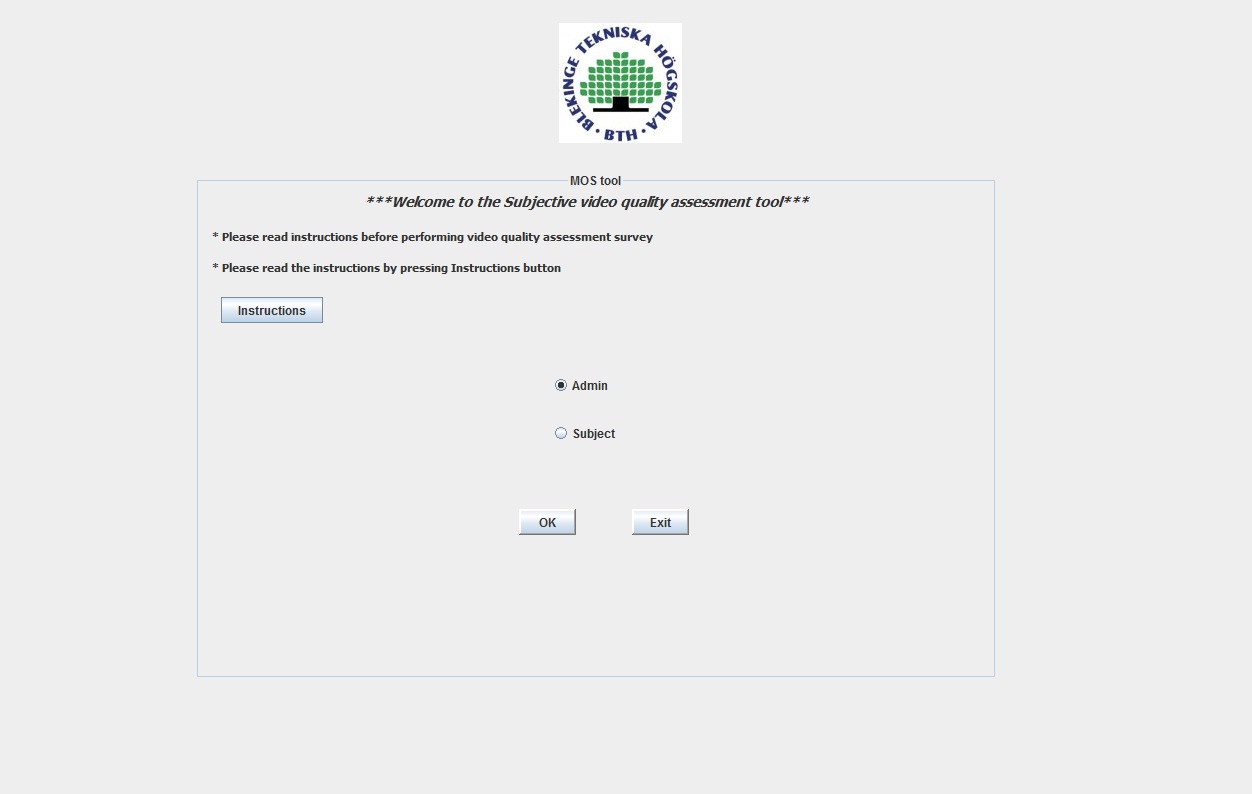
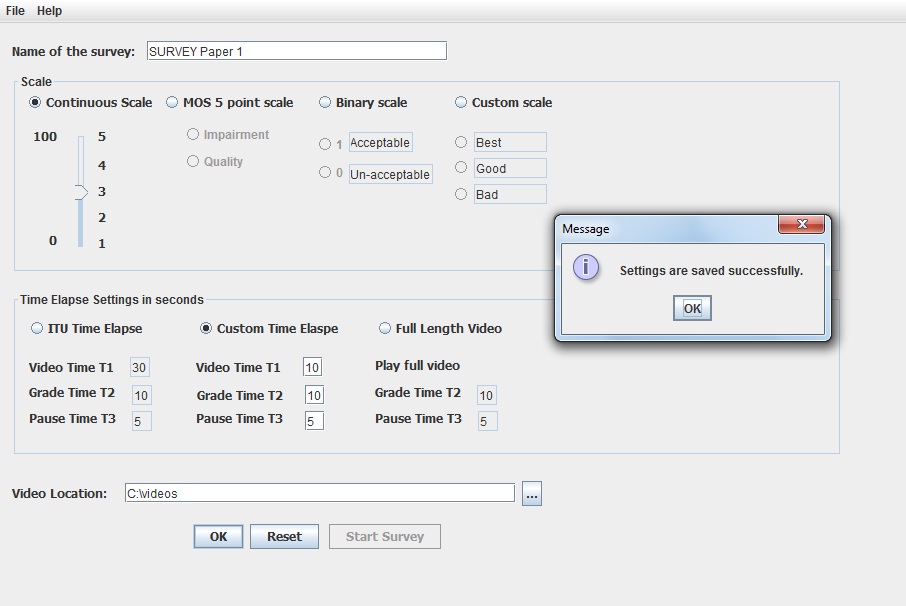
- Use MOS and ITU/SSCQ-based protocols to collect subjective quality data.
- Propose a Blahut algorithm–based evaluation to link rate-distortion control with perceived quality.
Experimental results
Research questions
- RQ1How do coding conditions and rate-distortion characteristics affect perceptual video quality in H.264-encoded sequences?
- RQ2Can subjective quality scores be refined to reveal true sources of degradation (coding vs. channel capacity)?
- RQ3Does Blahut-based analysis corroborate that channel capacity limits drive QoE degradation more than coding artifacts?
Key findings
- Subjective scores achieve higher data consistency after a two-step outlier/removal refinement.
- Refined scores indicate degradation is not solely due to coding but related to channel capacity constraints.
- 95% confidence interval analysis supports improved reliability after refinement.
- Rate-distortion control analysis via Blahut algorithm aligns with observed subjective quality trends.
- Objective metrics alone may misattribute QoE degradation without score refinement.
Read this paper
Open the full text in the Nubint reader and ask about any passage as you read.
Read this paper on NubintThis review was generated by AI from the original paper. Please check the paper before citing it.