
[Paper Review] BEIR-PL: Zero Shot Information Retrieval Benchmark for the Polish Language
This paper introduces BEIR-PL, a zero-shot information retrieval benchmark for the Polish language, created by translating 13 existing English IR datasets into Polish. It evaluates lexical (BM25) and neural retrieval models, revealing that BM25 underperforms significantly in Polish due to its morphological complexity, and demonstrates that fine-tuned transformer rerankers, especially HerBERT and T5 models, substantially improve retrieval performance over baselines.
The BEIR dataset is a large, heterogeneous benchmark for Information Retrieval (IR) in zero-shot settings, garnering considerable attention within the research community. However, BEIR and analogous datasets are predominantly restricted to the English language. Our objective is to establish extensive large-scale resources for IR in the Polish language, thereby advancing the research in this NLP area. In this work, inspired by mMARCO and Mr.~TyDi datasets, we translated all accessible open IR datasets into Polish, and we introduced the BEIR-PL benchmark -- a new benchmark which comprises 13 datasets, facilitating further development, training and evaluation of modern Polish language models for IR tasks. We executed an evaluation and comparison of numerous IR models on the newly introduced BEIR-PL benchmark. Furthermore, we publish pre-trained open IR models for Polish language,d marking a pioneering development in this field. Additionally, the evaluation revealed that BM25 achieved significantly lower scores for Polish than for English, which can be attributed to high inflection and intricate morphological structure of the Polish language. Finally, we trained various re-ranking models to enhance the BM25 retrieval, and we compared their performance to identify their unique characteristic features. To ensure accurate model comparisons, it is necessary to scrutinise individual results rather than to average across the entire benchmark. Thus, we thoroughly analysed the outcomes of IR models in relation to each individual data subset encompassed by the BEIR benchmark. The benchmark data is available at URL {\bf https://huggingface.co/clarin-knext}.
Motivation & Objective
- To address the lack of large-scale, multilingual IR benchmarks for low-resource languages by creating a Polish-specific benchmark.
- To evaluate the performance of lexical and neural IR models on Polish text, focusing on zero-shot transfer learning.
- To establish a baseline for future research in Polish language information retrieval using state-of-the-art models.
- To investigate the impact of morphological complexity on retrieval performance, particularly for BM25 in Polish.
- To release pre-trained IR models and the BEIR-PL benchmark to support open research in Polish NLP.
Proposed method
- Translated 13 existing English IR datasets from the BEIR benchmark into Polish to create BEIR-PL, ensuring linguistic and task consistency.
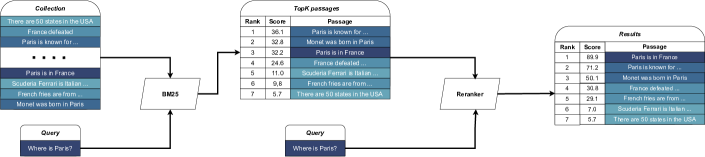
- Evaluated BM25 as a lexical baseline and compared its performance to multiple neural reranking models, including BERT, T5, ColBERT, and HerBERT.
- Fine-tuned five neural models (HerBERT base/large, T5 base/large, mMiniLM) for the re-ranking task using contrastive learning and the Inverse Cloze Task (ICT).
- Trained an unsupervised dense bi-encoder using ICT and compared it with multilingual sentence embedding models like LaBSE and mMiniLM.
- Used MRR@10 and NDCG@10 as primary evaluation metrics across all datasets to ensure consistent comparison.
- Conducted per-dataset analysis to avoid misleading overall averages, highlighting dataset-specific performance variations.
Experimental results
Research questions
- RQ1How does BM25 perform on Polish IR tasks compared to English, and what factors contribute to its underperformance?
- RQ2To what extent do fine-tuned transformer-based reranking models improve retrieval performance on Polish text?
- RQ3How do different model architectures (e.g., T5, HerBERT, ColBERT) compare in terms of effectiveness and efficiency on the BEIR-PL benchmark?
- RQ4Can unsupervised dense retrieval via ICT outperform multilingual sentence embeddings in zero-shot Polish IR?
- RQ5Does the heterogeneous nature of the BEIR benchmark necessitate per-dataset evaluation rather than overall averaging?
Key findings
- BM25 achieved significantly lower performance on Polish IR tasks (MRR@10: 51.43) compared to English, indicating that high morphological complexity in Polish hinders lexical matching.
- HerBERT large outperformed all other models on the CQDupstack dataset with an MRR@10 of 56.19, demonstrating strong zero-shot transfer for Polish.
- T5 large achieved the highest NDCG@10 (68.03) on the CQDupstack dataset, indicating strong performance in dense retrieval for Polish.
- The mMiniLM model achieved the highest MRR@10 (60.33) on the CQDupstack dataset, showing strong performance despite being a smaller model.
- Performance varied significantly across datasets, with BM25 performing best on 'webmasters' (MRR@10: 50.85) and worst on 'physics' (MRR@10: 13.72), highlighting dataset-specific challenges.
- The study confirms that overall benchmark averages can be misleading, and per-dataset analysis is essential for accurate model comparison.
Read this paper
Open the full text in the Nubint reader and ask about any passage as you read.
Read this paper on NubintThis review was generated by AI from the original paper. Please check the paper before citing it.