
[Paper Review] Can ChatGPT Write a Good Boolean Query for Systematic Review Literature Search?
The study evaluates ChatGPT for formulating and refining Boolean queries for systematic reviews, finding high precision but lower recall, with prompts and example quality significantly impacting performance; multi-step guided prompting improves results and prompts with HQE examples help most.
Systematic reviews are comprehensive reviews of the literature for a highly focused research question. These reviews are often treated as the highest form of evidence in evidence-based medicine, and are the key strategy to answer research questions in the medical field. To create a high-quality systematic review, complex Boolean queries are often constructed to retrieve studies for the review topic. However, it often takes a long time for systematic review researchers to construct a high quality systematic review Boolean query, and often the resulting queries are far from effective. Poor queries may lead to biased or invalid reviews, because they missed to retrieve key evidence, or to extensive increase in review costs, because they retrieved too many irrelevant studies. Recent advances in Transformer-based generative models have shown great potential to effectively follow instructions from users and generate answers based on the instructions being made. In this paper, we investigate the effectiveness of the latest of such models, ChatGPT, in generating effective Boolean queries for systematic review literature search. Through a number of extensive experiments on standard test collections for the task, we find that ChatGPT is capable of generating queries that lead to high search precision, although trading-off this for recall. Overall, our study demonstrates the potential of ChatGPT in generating effective Boolean queries for systematic review literature search. The ability of ChatGPT to follow complex instructions and generate queries with high precision makes it a valuable tool for researchers conducting systematic reviews, particularly for rapid reviews where time is a constraint and often trading-off higher precision for lower recall is acceptable.
Motivation & Objective
- Assess whether ChatGPT can generate high-quality systematic review Boolean queries.
- Compare ChatGPT-generated queries to state-of-the-art automatic query methods.
- Evaluate how prompt design, including examples and guiding prompts, affects query effectiveness.
- Identify caveats and limitations of using ChatGPT for query formulation in systematic reviews.
Proposed method
- Design and evaluate prompts of varying complexity (simple, detailed, with examples) for query formulation.
- Evaluate unguided versus guided prompting approaches.
- Use single-prompt and multi-prompt refinement workflows to generate and refine queries.
- Test prompts on standard collections (CLEF TAR 2017/2018 and Seed Collection) with seed studies when available.
- Execute generated PubMed queries via Entrez API and compute precision, recall, and F-measures.
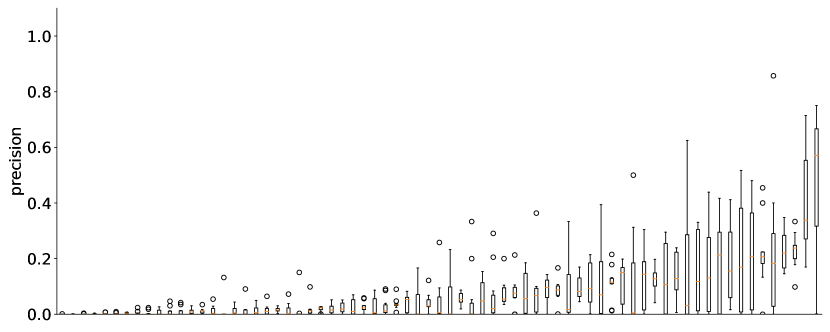
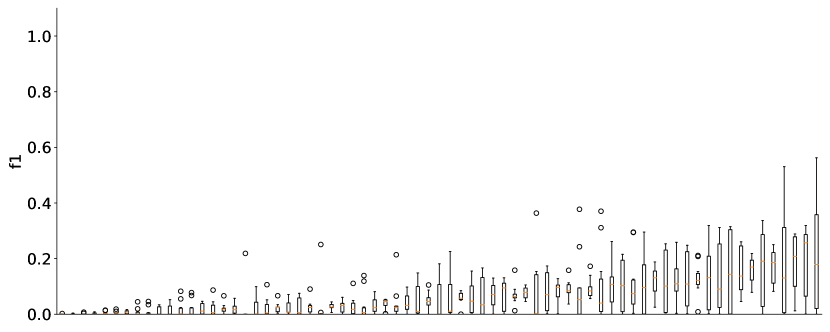
- Analyze variability across runs to assess prompt stability and robustness.
Experimental results
Research questions
- RQ1RQ1: How does ChatGPT compare with current state-of-the-art methods for formulating and refining systematic review Boolean queries?
- RQ2RQ2: To what extent do the prompts used to generate systematic review Boolean queries impact the effectiveness of the Boolean queries produced by ChatGPT?
- RQ3RQ3: What is the effect of guiding the query formulation process with ChatGPT through multiple prompts that mimic the process of the current state-of-the-art automated Boolean query generation methods?
- RQ4RQ4: What are the caveats and potential challenges of using ChatGPT to create systematic review Boolean queries?
Key findings
- ChatGPT-generated queries generally achieve higher precision than baseline automated methods but at a cost of lower recall.
- Using prompts that include a high-quality example from a real systematic review (HQE) consistently improves F1 and F3 scores and recall compared to prompts without such examples.
- Guided prompting (multi-step prompts) can outperform single-prompt formulations when seed studies are available, particularly in formulation tasks.
- Query refinement with ChatGPT increases precision and F1 while reducing recall; starting from a high-recall seed query is advisable to retain coverage after refinement.
- Effectiveness varies across runs and prompts, indicating volatility; MeSH term suggestions by ChatGPT are notably weak.
- Providing sample queries within prompts (example queries) generally benefits performance more than merely describing the task.
Read this paper
Open the full text in the Nubint reader and ask about any passage as you read.
Read this paper on NubintThis review was generated by AI from the original paper. Please check the paper before citing it.