
[Paper Review] CaRE: Finding Root Causes of Configuration Issues in Highly-Configurable Robots
CaRE is a causality-based method that diagnoses root causes of functional faults in highly-configurable robotic systems by learning causal structures between configuration options and performance metrics. It identifies high-impact configuration parameters via average causal effect estimation and demonstrates transferability of causal models from simulation to physical robots, enabling accurate fault diagnosis across platforms.
Robotic systems have subsystems with a combinatorially large configuration space and hundreds or thousands of possible software and hardware configuration options interacting non-trivially. The configurable parameters are set to target specific objectives, but they can cause functional faults when incorrectly configured. Finding the root cause of such faults is challenging due to the exponentially large configuration space and the dependencies between the robot's configuration settings and performance. This paper proposes CaRE -- a method for diagnosing the root cause of functional faults through the lens of causality. CaRE abstracts the causal relationships between various configuration options and the robot's performance objectives by learning a causal structure and estimating the causal effects of options on robot performance indicators. We demonstrate CaRE's efficacy by finding the root cause of the observed functional faults and validating the diagnosed root cause by conducting experiments in both physical robots (Husky and Turtlebot 3) and in simulation (Gazebo). Furthermore, we demonstrate that the causal models learned from robots in simulation (e.g., Husky in Gazebo) are transferable to physical robots across different platforms (e.g., Husky and Turtlebot 3).
Motivation & Objective
- To address the challenge of diagnosing functional faults in highly-configurable robotic systems with combinatorially large configuration spaces.
- To overcome limitations of predictive models in capturing causal relationships, handling environmental shifts, and ensuring transferability across platforms.
- To enable accurate root cause diagnosis by modeling causal effects of configuration options on mission performance objectives.
- To validate that causal models learned in simulation are transferable to different physical robotic platforms.
- To provide a framework that supports interventional and counterfactual reasoning for robust performance debugging in robotics.
Proposed method
- CaRE constructs a causal structure model from observational data, identifying manipulable variables (configuration options), non-manipulable variables (performance metrics), and performance objectives.
- It learns the underlying causal graph using structure learning algorithms to represent dependencies between configuration parameters and system outcomes.
- The method estimates average causal effects (ACE) for each configuration option on performance objectives using do-calculus-based interventions.
- It identifies root causes by analyzing causal paths from configuration options to performance degradation, prioritizing options with the highest causal impact.
- Causal models are trained on data from simulation environments (e.g., Gazebo with Husky) and validated on physical robots (Husky and Turtlebot 3).
- Transferability is evaluated by applying simulation-learned models to physical robots without retraining, demonstrating cross-platform generalization.
Experimental results
Research questions
- RQ1Can causal inference effectively identify the root causes of functional faults in highly-configurable robotic systems with complex configuration spaces?
- RQ2How do causal models learned in simulation transfer to different physical robotic platforms with varying hardware and software stacks?
- RQ3To what extent do causal models outperform predictive models in diagnosing misconfigurations under environmental shifts or unexpected conditions?
- RQ4Which configuration options have the highest causal effect on mission success and performance degradation metrics?
- RQ5Can interventional and counterfactual analyses based on learned causal models provide actionable insights for system tuning and debugging?
Key findings
- CaRE successfully diagnosed the root cause of functional faults in both simulated and physical robotic systems, including Husky and Turtlebot 3.
- The causal model learned in simulation (e.g., Husky in Gazebo) was transferable to physical robots on different platforms (e.g., Husky and Turtlebot 3) without retraining.
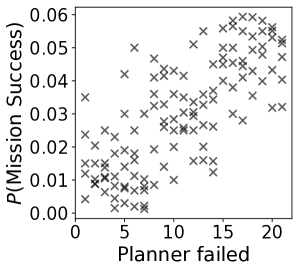
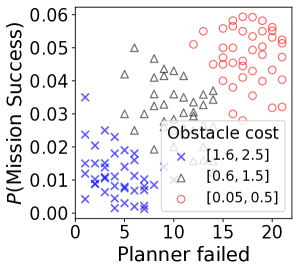
- Causal models outperformed purely predictive models by correctly identifying negative correlations between planner failures and mission success, avoiding spurious associations.
- Configuration options with the highest average causal effect were identified as primary contributors to performance degradation, enabling targeted tuning.
- The framework enabled accurate counterfactual reasoning, such as predicting outcomes under hypothetical configuration changes.
- The approach reduced reliance on human expertise and expensive physical testing by enabling data-efficient, transferable fault diagnosis.
Read this paper
Open the full text in the Nubint reader and ask about any passage as you read.
Read this paper on NubintThis review was generated by AI from the original paper. Please check the paper before citing it.