
[Paper Review] Challenges and Practices of Deep Learning Model Reengineering: A Case Study on Computer Vision
This paper investigates deep learning model reengineering in computer vision through a mixed-methods case study, analyzing 348 defects from open-source projects and interviewing practitioners on a two-year reengineering effort. It identifies key challenges—model operationalization, performance debugging, portability of operations, and customized data pipelines—and proposes a novel reengineering workflow annotated with defect frequencies and best practices.
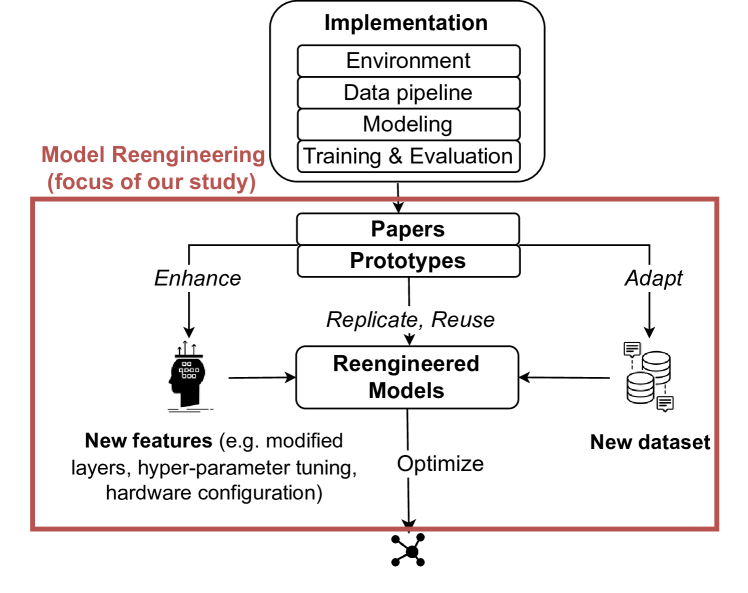
Many engineering organizations are reimplementing and extending deep neural networks from the research community. We describe this process as deep learning model reengineering. Deep learning model reengineering - reusing, reproducing, adapting, and enhancing state-of-the-art deep learning approaches - is challenging for reasons including under-documented reference models, changing requirements, and the cost of implementation and testing. In addition, individual engineers may lack expertise in software engineering, yet teams must apply knowledge of software engineering and deep learning to succeed. Prior work has examined on DL systems from a "product" view, examining defects from projects regardless of the engineers' purpose. Our study is focused on reengineering activities from a "process" view, and focuses on engineers specifically engaged in the reengineering process. Our goal is to understand the characteristics and challenges of deep learning model reengineering. We conducted a case study of this phenomenon, focusing on the context of computer vision. Our results draw from two data sources: defects reported in open-source reeengineering projects, and interviews conducted with open-source project contributors and the leaders of a reengineering team. Our results describe how deep learning-based computer vision techniques are reengineered, analyze the distribution of defects in this process, and discuss challenges and practices. Integrating our quantitative and qualitative data, we proposed a novel reengineering workflow. Our findings inform several future directions, including: measuring additional unknown aspects of model reengineering; standardizing engineering practices to facilitate reengineering; and developing tools to support model reengineering and model reuse.
Motivation & Objective
- To understand the challenges and practices involved in reengineering deep learning models, particularly in computer vision.
- To analyze the characteristics and root causes of defects in deep learning reengineering projects.
- To identify recurring issues in environment configuration, training, and model deployment that hinder reproducibility and reliability.
- To develop a process-oriented framework for deep learning model reengineering based on empirical data from open-source projects and practitioner teams.
- To inform future tooling and standardization efforts in deep learning engineering by identifying gaps in current practices.
Proposed method
- Conducted a mixed-methods case study combining quantitative defect analysis from 27 open-source computer vision projects with qualitative insights from interviews.
- Analyzed 348 defects reported in open-source reengineering projects, categorized by defect type, stage of the DL lifecycle, and root cause.
- Interviewed 2 practitioners and 6 team leaders from a two-year deep learning model reengineering effort to understand real-world challenges and practices.
- Adapted and applied existing defect taxonomies to classify defects, with inter-rater agreement and calibration to ensure reliability.
- Integrated quantitative defect data with qualitative insights to develop a novel reengineering workflow annotated with challenges, practices, and defect frequencies.
- Validated findings through member checking with team leaders and addressed potential bias via iterative framework refinement and external validation.
Experimental results
Research questions
- RQ1What are the most common types and root causes of defects in deep learning model reengineering projects in computer vision?
- RQ2How do defect patterns vary across different stages of the deep learning lifecycle (e.g., environment setup, training, inference)?
- RQ3What are the primary challenges faced by engineering teams during the reengineering of pre-trained deep learning models?
- RQ4How do environment-related defects, particularly interface and API issues, contribute to reengineering failures?
- RQ5What practices and workflow patterns emerge from experienced teams engaged in long-term deep learning model reengineering?
Key findings
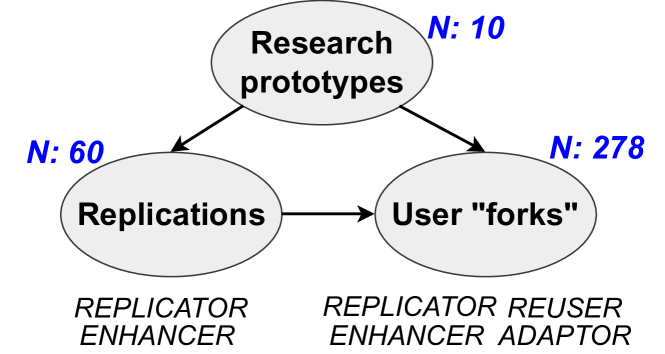
- 58% of defects in deep learning reengineering were reported by re-users, indicating that reuse is a major source of failure.
- 68% of reproducibility-related defects were discovered during the training phase, highlighting training as a critical failure point.
- 88% of environment defects were interface-related, and 46% were caused by API defects, underscoring the fragility of library and framework integration.
- Training defects exhibited diverse symptoms and root causes, including hyperparameter tuning issues and data quality problems, which were more prevalent than in prior product-focused studies.
- Four core challenges emerged: model operationalization, performance debugging, portability of deep learning operations, and customized data pipeline management.
- The study developed a novel reengineering workflow integrating quantitative defect frequencies and qualitative practices, providing a process-oriented framework for DL reengineering.
Read this paper
Open the full text in the Nubint reader and ask about any passage as you read.
Read this paper on NubintThis review was generated by AI from the original paper. Please check the paper before citing it.