
[Paper Review] ChiENN: Embracing Molecular Chirality with Graph Neural Networks
This paper proposes ChiENN, a novel graph neural network layer that enables GNNs to distinguish molecular chirality by making message passing sensitive to the spatial order of neighboring atoms. By redefining message aggregation to respect neighbor orientation, ChiENN outperforms state-of-the-art methods in chiral-sensitive molecular property prediction tasks, achieving SOTA performance on R/S, enantiomer ranking, and binding affinity benchmarks.
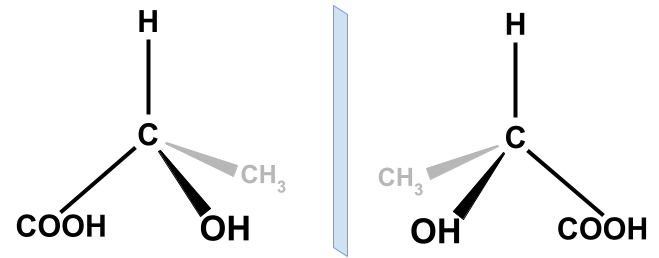
Graph Neural Networks (GNNs) play a fundamental role in many deep learning problems, in particular in cheminformatics. However, typical GNNs cannot capture the concept of chirality, which means they do not distinguish between the 3D graph of a chemical compound and its mirror image (enantiomer). The ability to distinguish between enantiomers is important especially in drug discovery because enantiomers can have very distinct biochemical properties. In this paper, we propose a theoretically justified message-passing scheme, which makes GNNs sensitive to the order of node neighbors. We apply that general concept in the context of molecular chirality to construct Chiral Edge Neural Network (ChiENN) layer which can be appended to any GNN model to enable chirality-awareness. Our experiments show that adding ChiENN layers to a GNN outperforms current state-of-the-art methods in chiral-sensitive molecular property prediction tasks.
Motivation & Objective
- Address the limitation of standard GNNs in distinguishing molecular enantiomers due to permutation-invariant message passing.
- Develop a theoretically grounded, general-purpose message-passing scheme sensitive to the spatial order of node neighbors to capture chirality.
- Construct a plug-in GNN layer (ChiENN) that enables chirality awareness in existing molecular GNN architectures without requiring domain-specific modifications.
- Demonstrate that ChiENN significantly improves performance on chiral-sensitive molecular property prediction tasks compared to existing methods.
- Validate the method across diverse benchmarks, including R/S classification, enantiomer ranking, binding affinity, and toxicity prediction, to show robustness and generalization.
Proposed method
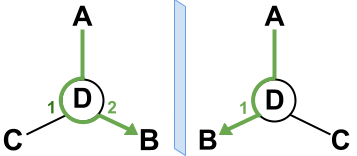
- Propose a general order-sensitive message-passing framework where messages are aggregated based on the cyclic order of neighboring nodes, breaking permutation invariance.
- Introduce a k-ary message aggregation function that encodes the relative orientation of neighbors using a fixed-order representation, enabling chirality detection.
- Design the ChiENN layer as a differentiable, learnable module that replaces standard message-passing layers in GNNs, preserving architectural compatibility.
- Apply the edge graph transformation to represent molecular graphs with directed edges encoding neighbor order, enabling orientation-aware aggregation.
- Use geometric information (3D coordinates) to compute the cyclic order of neighbors around each atom, ensuring spatial consistency in chirality representation.
- Train the model end-to-end using standard GNN loss functions, with ChiENN layers integrated into existing architectures like GPS or GCN.
Experimental results
Research questions
- RQ1Can a message-passing scheme be designed to make GNNs sensitive to the spatial order of node neighbors, thereby enabling chirality detection?
- RQ2How does the proposed order-sensitive aggregation compare to existing methods that rely on chiral tagging or torsion angles in molecular property prediction?
- RQ3To what extent does integrating ChiENN into existing GNN models improve performance on chiral-sensitive tasks compared to state-of-the-art approaches?
- RQ4Does the ChiENN layer generalize across diverse molecular property prediction tasks, including those where chirality effects are subtle or unclear?
- RQ5What is the optimal k-arity for the message aggregation function in capturing chiral information without overfitting or performance degradation?
Key findings
- ChiENN achieves 98.9% accuracy on the R/S classification task, significantly outperforming the baseline GPS model (50.0%) and other variants.
- On the enantiomer ranking task, ChiENN achieves 76.0% accuracy, outperforming the baseline GPS (0.0%) and chiral tag-only baselines (66.9%).
- For binding affinity prediction, ChiENN reduces MAE to 0.258, compared to 0.330 for the baseline GPS, indicating improved regression performance.
- In the BACE dataset, the GPS+ChiENN configuration achieves an AUC of 0.839, outperforming the baseline GPS (0.841) and other configurations, showing consistent improvement.
- The ablation study confirms that ChiENN layers alone outperform chiral tagging in chirality-sensitive tasks, and combining them with edge graph transformation yields the best overall performance.
- The k=3 configuration of the message function yields the best performance across all tasks, with k=2 showing a significant drop in performance on BACE, justifying k=3 as optimal.
Better researchstarts right now
From reading papers to final review, dramatically reduce your research time.
No credit card · Free plan available
This review was created by AI and reviewed by human editors.