
[Paper Review] Comparative Analysis of Generative Models: Enhancing Image Synthesis with VAEs, GANs, and Stable Diffusion
The paper compares VAEs, GANs, and Stable Diffusion for image synthesis and examines how Grounding DINO and Grounded SAM improve Stable Diffusion inpainting and segmentation.
This paper examines three major generative modelling frameworks: Variational Autoencoders (VAEs), Generative Adversarial Networks (GANs), and Stable Diffusion models. VAEs are effective at learning latent representations but frequently yield blurry results. GANs can generate realistic images but face issues such as mode collapse. Stable Diffusion models, while producing high-quality images with strong semantic coherence, are demanding in terms of computational resources. Additionally, the paper explores how incorporating Grounding DINO and Grounded SAM with Stable Diffusion improves image accuracy by utilising sophisticated segmentation and inpainting techniques. The analysis guides on selecting suitable models for various applications and highlights areas for further research.
Motivation & Objective
- Assess the strengths and limitations of Variational Autoencoders (VAEs), Generative Adversarial Networks (GANs), and Stable Diffusion for image synthesis.
- Evaluate how diffusion-based approaches address issues seen in VAEs (blurriness) and GANs (mode collapse, instability).
- Explore how integrating Grounding DINO and Grounded SAM with Stable Diffusion improves segmentation, inpainting, and contextual coherence.
Proposed method
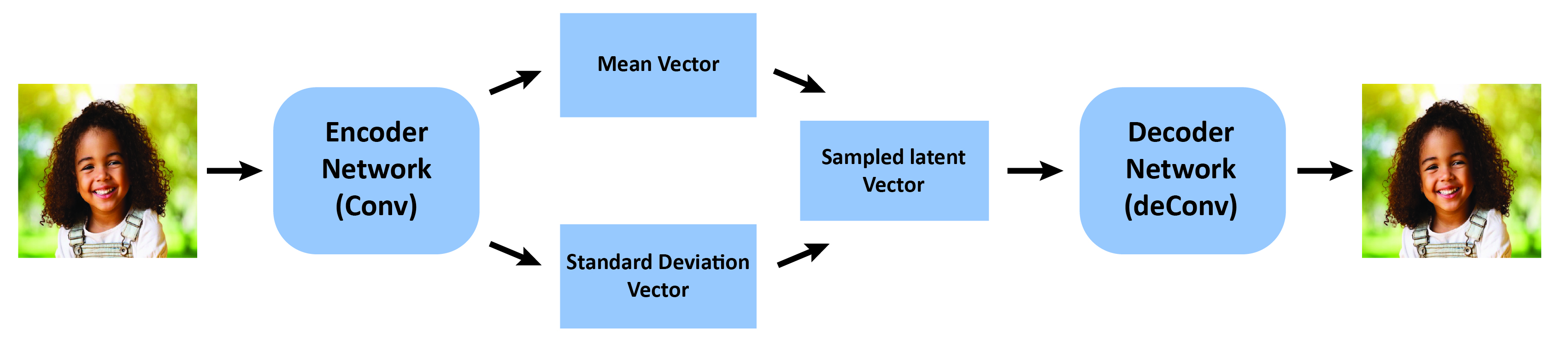
- Describe VAEs as latent-space encoders/decoders with the reparameterization trick and discuss their blurriness and posterior collapse.
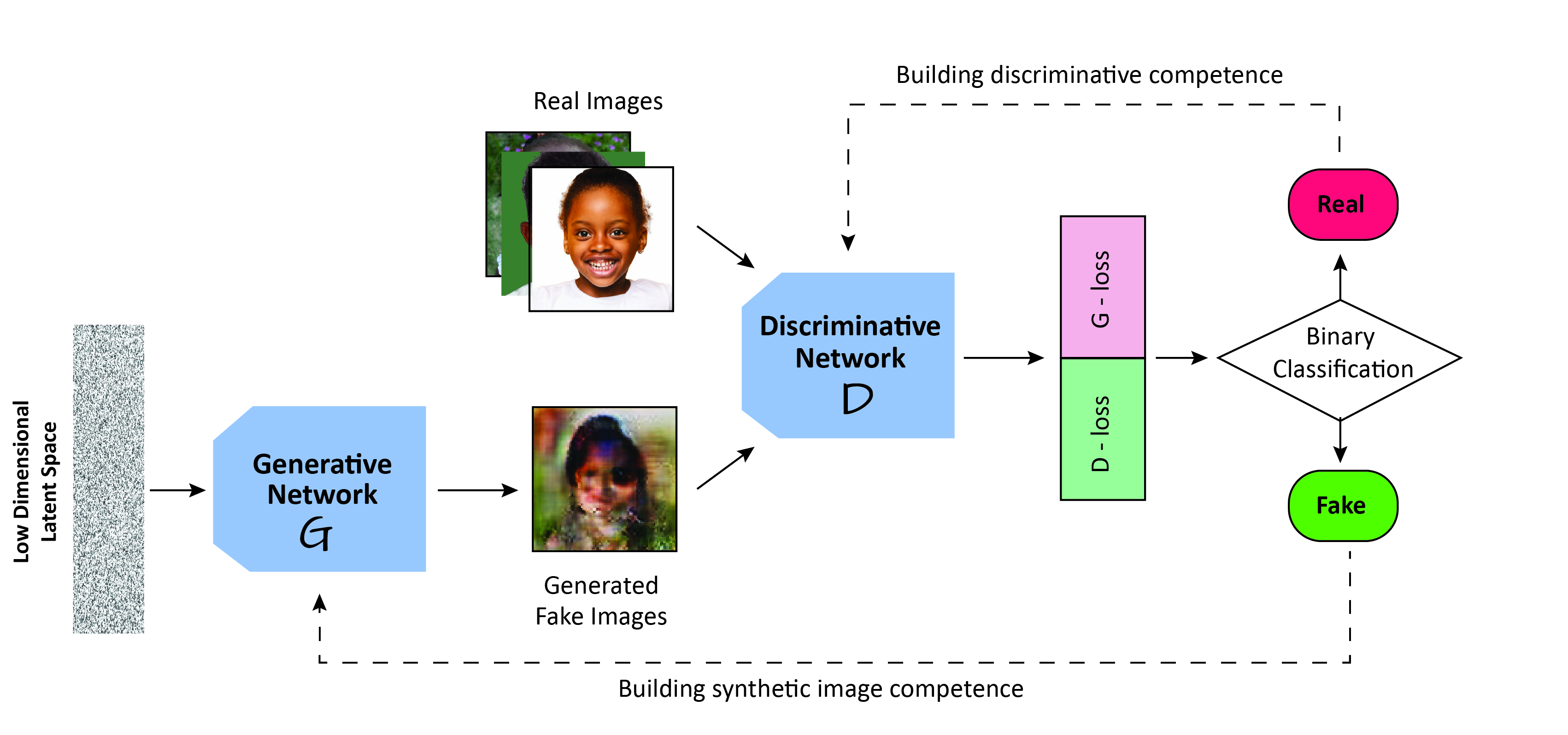
- Outline GANs with Generator–Discriminator adversarial training and discuss mode collapse and training instability.
- Explain Stable Diffusion as a diffusion-based pipeline using VAE, U-Net, and text encoder to produce high-resolution, semantically coherent images.
- Discuss integration of Grounding DINO and Grounded SAM with Stable Diffusion to enable precise segmentation and context-aware inpainting.
Experimental results
Research questions
- RQ1What are the comparative advantages and limitations of VAEs, GANs, and Stable Diffusion for image synthesis?
- RQ2How does Stable Diffusion performance change with integration of Grounding DINO and Grounded SAM for segmentation and inpainting?
- RQ3What applications suit each generative framework given their trade-offs in quality, diversity, and computational demands?
Key findings
- VAEs offer efficient latent-space representations but often produce blurry reconstructions and risk posterior collapse.
- GANs deliver high-quality, realistic images but suffer from mode collapse, unstable training, and high computational cost.
- Stable Diffusion provides high-resolution, diverse, and semantically coherent images but is computationally intensive and time-consuming during inference.
- Integrating Grounding DINO and Grounded SAM with Stable Diffusion enhances segmentation accuracy and contextual inpainting, at the cost of increased complexity and resources.
- The discussion highlights that model choice should align with application needs, balancing quality, diversity, and computational considerations.
Read this paper
Open the full text in the Nubint reader and ask about any passage as you read.
Read this paper on NubintThis review was generated by AI from the original paper. Please check the paper before citing it.