
[Paper Review] Confidence-based Reliable Learning under Dual Noises
This paper proposes a confidence-based reliable learning framework for deep neural networks under joint image and label noise, using predictive confidence from deep ensemble models to filter noisy samples and penalize model uncertainty on detected noisy data. The method achieves state-of-the-art performance on CIFAR-100, TinyImageNet, and WebVision without requiring noise ratio estimation or hyperparameter tuning.
Deep neural networks (DNNs) have achieved remarkable success in a variety of computer vision tasks, where massive labeled images are routinely required for model optimization. Yet, the data collected from the open world are unavoidably polluted by noise, which may significantly undermine the efficacy of the learned models. Various attempts have been made to reliably train DNNs under data noise, but they separately account for either the noise existing in the labels or that existing in the images. A naive combination of the two lines of works would suffer from the limitations in both sides, and miss the opportunities to handle the two kinds of noise in parallel. This work provides a first, unified framework for reliable learning under the joint (image, label)-noise. Technically, we develop a confidence-based sample filter to progressively filter out noisy data without the need of pre-specifying noise ratio. Then, we penalize the model uncertainty of the detected noisy data instead of letting the model continue over-fitting the misleading information in them. Experimental results on various challenging synthetic and real-world noisy datasets verify that the proposed method can outperform competing baselines in the aspect of classification performance.
Motivation & Objective
- To address the challenge of deep learning under joint (image, label)-noise, which is more realistic but underexplored compared to single-noise settings.
- To develop a unified, scalable, and practical method that does not require prior knowledge of noise ratios or extensive hyperparameter tuning.
- To improve model robustness by leveraging uncertainty-based deep models, specifically deep ensembles, to detect and mitigate the impact of noisy data.
- To provide a strong, easy-to-implement baseline for reliable learning under dual noises that is applicable beyond deep ensembles.
Proposed method
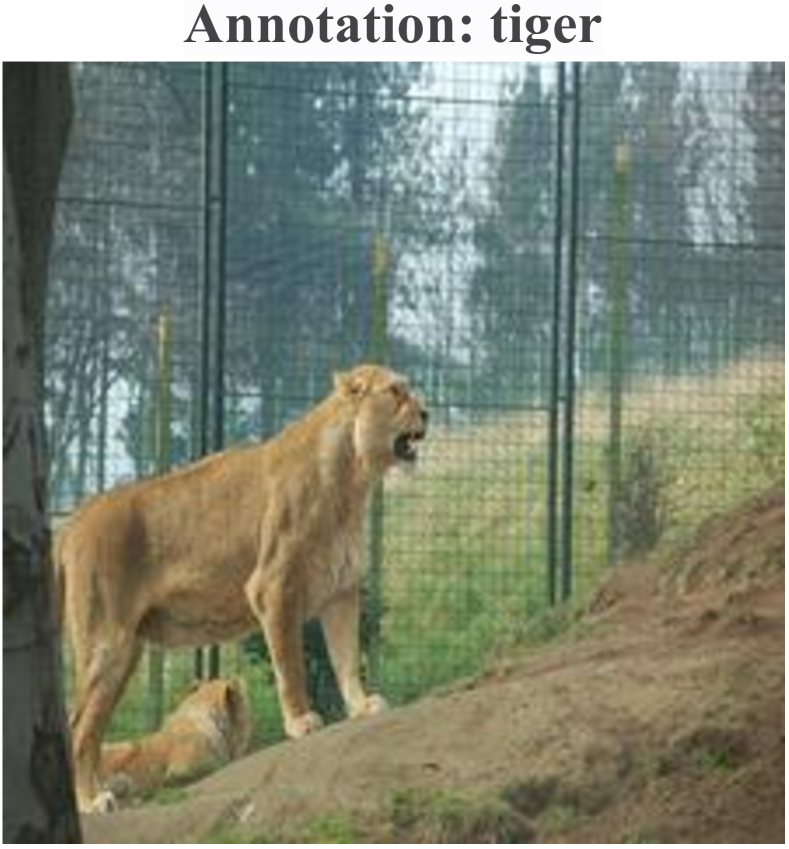
- Uses predictive confidence from deep ensemble models to detect noisy samples: label confidence for label noise and maximum confidence for image noise.
- Applies a confidence-based sample filter to progressively identify and exclude noisy data without requiring noise ratio estimation.
- Penalizes model uncertainty on detected noisy samples to prevent overfitting while preserving useful information from corrupted images.
- Employs a learning objective that combines standard cross-entropy with an uncertainty penalty term to regularize predictions on noisy data.
- Utilizes deep ensemble models for calibrated uncertainty estimation, enabling reliable confidence-based filtering and robustness under distribution shift.
- The framework is generalizable and can be adapted to other uncertainty-based models like Bayesian Neural Networks.
Experimental results
Research questions
- RQ1Can uncertainty-based deep models effectively detect both image and label noise in a unified framework?
- RQ2How can model uncertainty be leveraged to improve generalization when both image and label noise are present?
- RQ3Does a confidence-based filtering strategy combined with uncertainty penalization outperform existing methods under joint (x,y)-noise?
- RQ4How robust is the proposed method to hyperparameter choices such as confidence thresholds?
- RQ5Can the method generalize to real-world noisy datasets like WebVision without requiring noise ratio annotations?
Key findings
- On CIFAR-100 with 0.4 label noise and 0.3 image noise, the proposed method achieves 63.02% validation accuracy, outperforming the best baseline by 3.59 percentage points.
- On TinyImageNet with the same noise levels, the method achieves 49.68% accuracy, surpassing the best baseline by 2.67 percentage points.
- The method shows minimal sensitivity to confidence thresholds ε₁ and ε₂, maintaining strong performance across a wide range of values, indicating robustness to hyperparameter settings.
- Ablation studies confirm that uncertainty penalization significantly improves performance, with a 3.59% accuracy gap observed when the penalty is removed on CIFAR-100 under 0.4y+0.3x noise.
- On the real-world WebVision benchmark, the method demonstrates superior generalization, confirming its effectiveness beyond synthetic noise settings.
- The method achieves state-of-the-art performance on all evaluated datasets, including both synthetic and real-world noisy data, without requiring noise ratio estimation.
Read this paper
Open the full text in the Nubint reader and ask about any passage as you read.
Read this paper on NubintThis review was generated by AI from the original paper. Please check the paper before citing it.