
[Paper Review] ConSiDERS-The-Human Evaluation Framework: Rethinking Human Evaluation for Generative Large Language Models
This paper introduces ConSiDERS, a six-pillar human evaluation framework for generative large language models (LLMs), emphasizing cognitive biases, usability, and scalability. It advocates for multidisciplinary human-centered evaluation to ensure reliable, valid, and scalable assessments that distinguish fluency from substance and differentiate model capabilities effectively.
In this position paper, we argue that human evaluation of generative large language models (LLMs) should be a multidisciplinary undertaking that draws upon insights from disciplines such as user experience research and human behavioral psychology to ensure that the experimental design and results are reliable. The conclusions from these evaluations, thus, must consider factors such as usability, aesthetics, and cognitive biases. We highlight how cognitive biases can conflate fluent information and truthfulness, and how cognitive uncertainty affects the reliability of rating scores such as Likert. Furthermore, the evaluation should differentiate the capabilities and weaknesses of increasingly powerful large language models -- which requires effective test sets. The scalability of human evaluation is also crucial to wider adoption. Hence, to design an effective human evaluation system in the age of generative NLP, we propose the ConSiDERS-The-Human evaluation framework consisting of 6 pillars -- Consistency, Scoring Criteria, Differentiating, User Experience, Responsible, and Scalability.
Motivation & Objective
- To address the growing need for reliable, valid, and scalable human evaluation of generative LLMs amid increasing model capabilities.
- To highlight how cognitive biases and usability factors—such as fluency and aesthetics—can distort human judgments and compromise evaluation integrity.
- To propose a structured, customizable framework that integrates insights from UX research and behavioral psychology into human evaluation pipelines.
- To differentiate model capabilities and weaknesses through effective, discriminative test sets.
- To promote responsible AI evaluation by embedding considerations of bias, safety, and privacy into human evaluation design.
Proposed method
- Proposes the ConSiDERS framework with six pillars: Consistency, Scoring Criteria, Differentiating test sets, User Experience, Responsible AI, and Scalability.
- Integrates principles from user experience (UX) and cognitive psychology to mitigate biases such as processing fluency and the 'what is beautiful is useful' effect.
- Recommends tailored scoring criteria that balance general metrics (e.g., readability) with task-specific or domain-specific evaluation goals.
- Emphasizes the design of test sets capable of detecting subtle differences in model performance across capabilities and failure modes.
- Advocates for scalable human evaluation pipelines to enable wider adoption while maintaining reliability and consistency.
- Provides actionable recommendations to reduce cognitive bias in human raters, including training, interface design, and rating protocol standardization.
Experimental results
Research questions
- RQ1How do cognitive biases such as processing fluency and aesthetic perception distort human judgments in LLM evaluations?
- RQ2To what extent do current human evaluation practices fail to distinguish between fluency and factual correctness or model capability?
- RQ3How can human evaluation be redesigned to be more consistent, scalable, and representative of real-world model behavior?
- RQ4What role should user experience and psychological factors play in shaping evaluation design for generative LLMs?
- RQ5How can test sets be constructed to effectively differentiate between the strengths and weaknesses of increasingly capable LLMs?
Key findings
- Cognitive biases such as processing fluency significantly influence human raters, often leading them to conflate fluent output with truthfulness or quality.
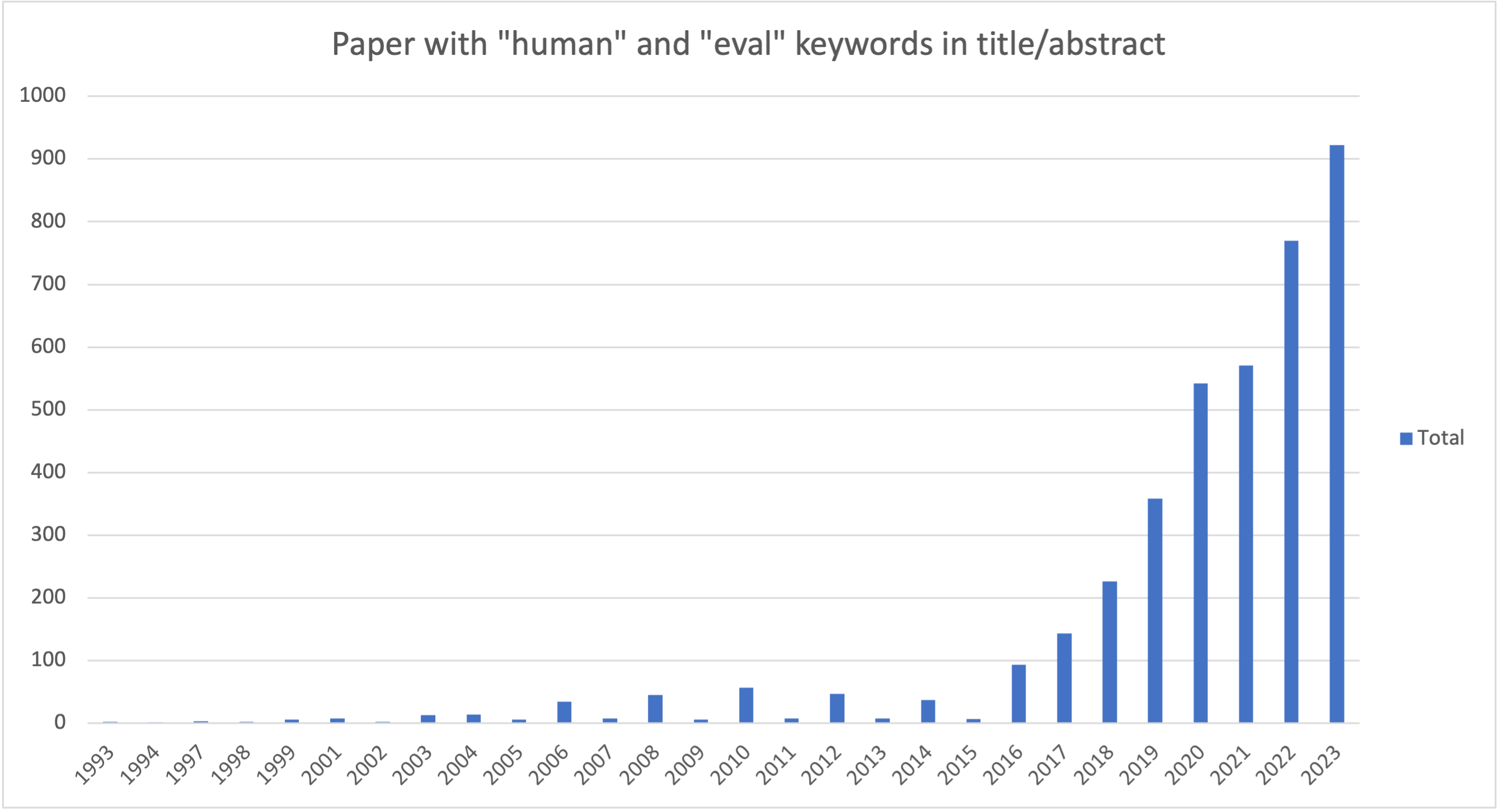
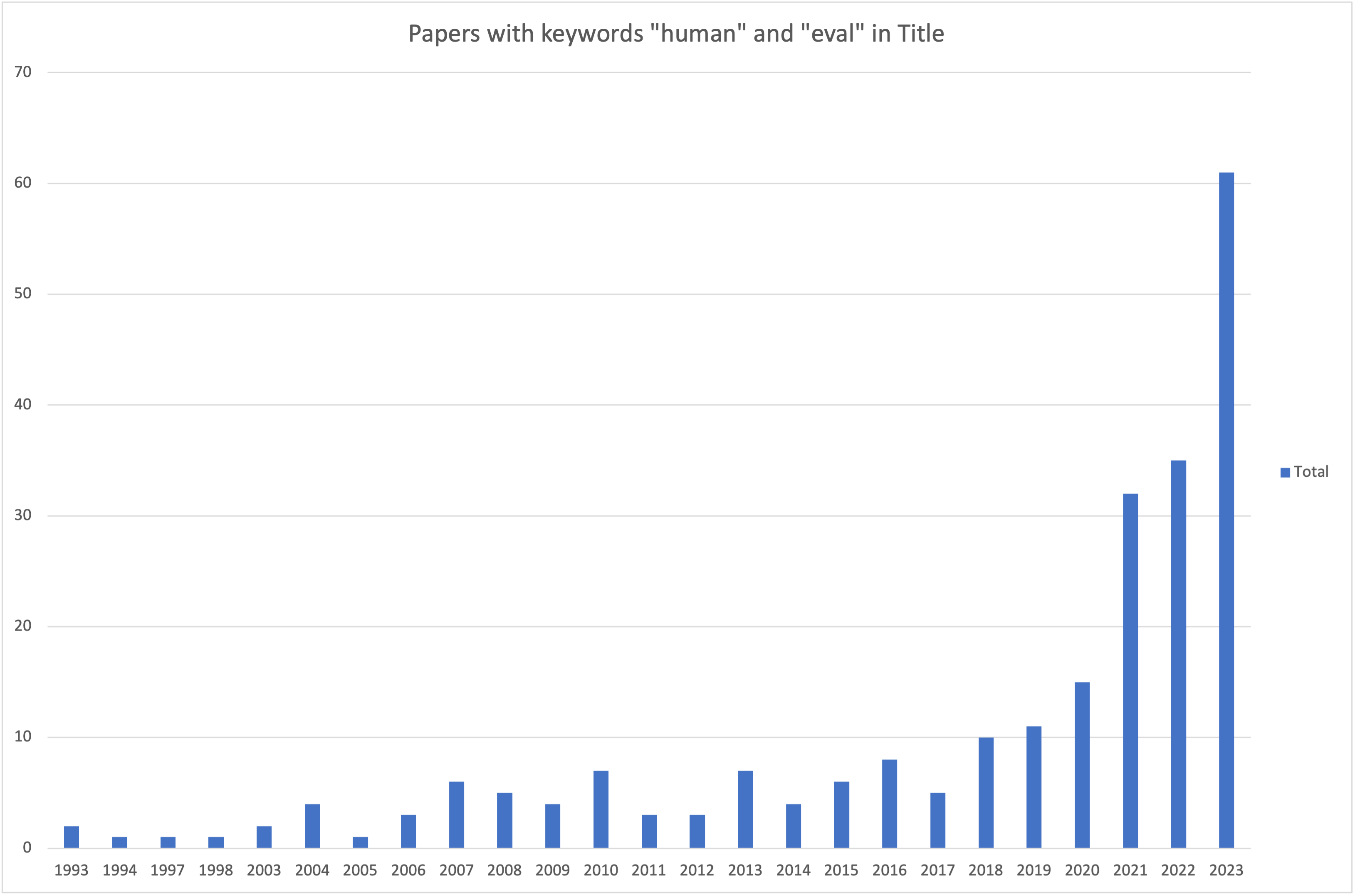
- Less than 7% of NLP papers with 'human' and 'eval' in their titles between 2000 and 2023 mention user experience-related keywords, indicating a critical gap in evaluation design.
- The ConSiDERS framework provides a structured, customizable approach to human evaluation that enhances reliability, scalability, and validity by integrating UX and behavioral science principles.
- Ineffective test sets fail to differentiate model capabilities, undermining the validity of evaluation results even when raters are well-trained.
- Scoring criteria must be both general (e.g., readability) and task-specific to ensure accurate assessment of model performance.
- Human evaluation remains essential for generative LLMs due to the poor correlation of automated metrics with human judgment, but only when designed with cognitive and usability insights in mind.
Read this paper
Open the full text in the Nubint reader and ask about any passage as you read.
Read this paper on NubintThis review was generated by AI from the original paper. Please check the paper before citing it.