
[Paper Review] Consumer, Commercial and Industrial IoT (In)Security: Attack Taxonomy and Case Studies
This paper proposes a layered attack taxonomy for consumer, commercial, and industrial IoT systems, categorizing threats across device, infrastructure, communication, and service layers. Using nine real-world case studies, it identifies vulnerabilities, attack vectors, and mitigation strategies, offering a systematic framework to proactively address IoT security across diverse sectors.
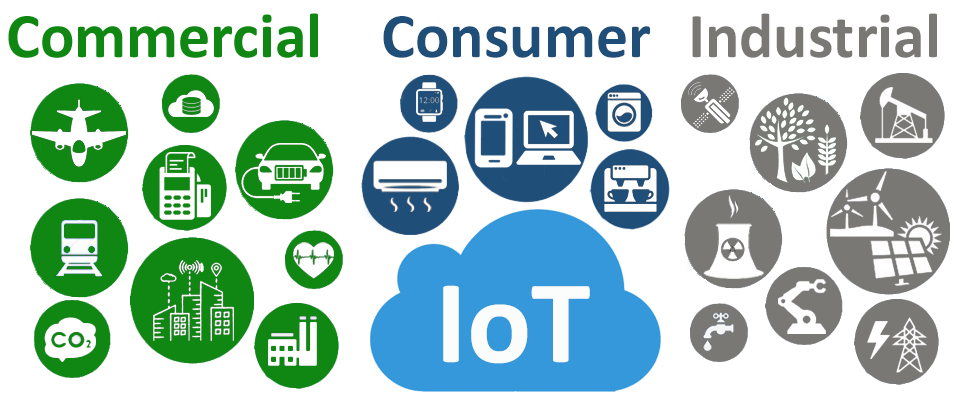
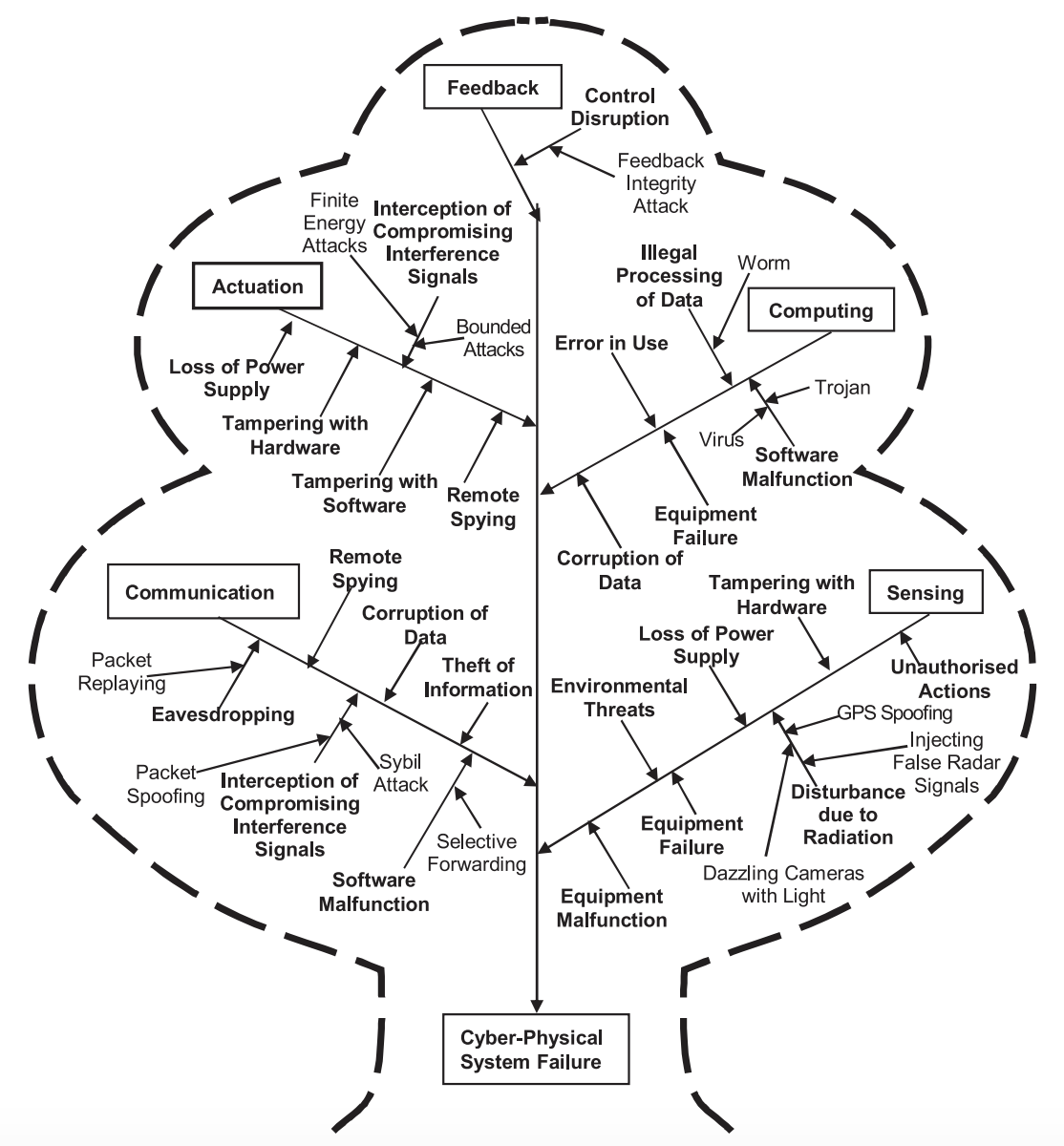
Internet of Things (IoT) devices are becoming ubiquitous in our lives, with applications spanning from the consumer domain to commercial and industrial systems. The steep growth and vast adoption of IoT devices reinforce the importance of sound and robust cybersecurity practices during the device development life-cycles. IoT-related vulnerabilities, if successfully exploited can affect, not only the device itself, but also the application field in which the IoT device operates. Evidently, identifying and addressing every single vulnerability is an arduous, if not impossible, task. Attack taxonomies can assist in classifying attacks and their corresponding vulnerabilities. Security countermeasures and best practices can then be leveraged to mitigate threats and vulnerabilities before they emerge into catastrophic attacks and ensure overall secure IoT operation. Therefore, in this paper, we provide an attack taxonomy which takes into consideration the different layers of IoT stack, i.e., device, infrastructure, communication, and service, and each layer's designated characteristics which can be exploited by adversaries. Furthermore, using nine real-world cybersecurity incidents, that had targeted IoT devices deployed in the consumer, commercial, and industrial sectors, we describe the IoT-related vulnerabilities, exploitation procedures, attacks, impacts, and potential mitigation mechanisms and protection strategies. These (and many other) incidents highlight the underlying security concerns of IoT systems and demonstrate the potential attack impacts of such connected ecosystems, while the proposed taxonomy provides a systematic procedure to categorize attacks based on the affected layer and corresponding impact.
Motivation & Objective
- To address the growing security risks posed by the rapid proliferation of IoT devices across consumer, commercial, and industrial domains.
- To identify and classify IoT-specific attack vectors that exploit vulnerabilities in device, infrastructure, communication, and service layers.
- To analyze real-world cyber incidents targeting IoT ecosystems to expose common attack patterns and systemic weaknesses.
- To propose actionable mitigation strategies and security countermeasures tailored to each IoT sector’s unique operational constraints and threat surface.
- To establish a unified, systematic taxonomy that enables proactive threat modeling and accelerates response to emerging IoT threats.
Proposed method
- Developed a four-layer attack taxonomy mapping threats to device, infrastructure, communication, and service layers of the IoT stack.
- Collected and analyzed nine real-world IoT cyber incidents from consumer, commercial, and industrial sectors to extract attack chains and root vulnerabilities.
- Mapped each incident to the proposed taxonomy to demonstrate layer-specific attack patterns and impact vectors.
- Identified common vulnerabilities such as default credentials, unencrypted communications, and lack of network segmentation across all sectors.
- Proposed targeted mitigation strategies, including secure-by-design principles, protocol hardening, and network segmentation, based on incident analysis.
- Integrated insights from prior research and industry practices to recommend policy and technical frameworks for holistic IoT security.
Experimental results
Research questions
- RQ1How can IoT attacks be systematically classified across different layers of the IoT architecture in consumer, commercial, and industrial contexts?
- RQ2What are the most prevalent vulnerabilities exploited in real-world IoT attacks across the three major IoT sectors?
- RQ3How do attack chains and exploitation techniques differ between consumer, commercial, and industrial IoT environments?
- RQ4What are the most effective technical and policy-level countermeasures to prevent or mitigate such attacks?
- RQ5To what extent do common vulnerabilities like default credentials or unencrypted data transmission persist across diverse IoT ecosystems?
Key findings
- The study identified that 30% of mobile and wireless network attacks in 2020 involved IoT devices, highlighting their growing threat profile.
- Bluetooth Low Energy (BLE) protocols were found vulnerable to data exfiltration and authentication bypass due to plaintext transmission and flawed pairing mechanisms.
- Default credentials and lack of network segmentation were recurring vulnerabilities across consumer, commercial, and industrial IoT systems.
- Real-world incidents demonstrated that compromised medical devices and industrial control systems could lead to critical safety and operational disruptions.
- The proposed attack taxonomy enables systematic classification of threats by layer, reducing the need for ad-hoc analysis of individual attacks.
- A unified, policy-driven approach combining technical hardening and regulatory enforcement is essential to improve IoT security across heterogeneous ecosystems.
Read this paper
Open the full text in the Nubint reader and ask about any passage as you read.
Read this paper on NubintThis review was generated by AI from the original paper. Please check the paper before citing it.