
[Paper Review] Critical Infrastructure Protection: Generative AI, Challenges, and Opportunities
The paper surveys Critical Infrastructure Protection (CIP) threats, trust/privacy/resilience requirements, and the integration of Generative AI and LLMs into a CIP lifecycle with sector applications and future directions.
Critical National Infrastructure (CNI) encompasses a nation's essential assets that are fundamental to the operation of society and the economy, ensuring the provision of vital utilities such as energy, water, transportation, and communication. Nevertheless, growing cybersecurity threats targeting these infrastructures can potentially interfere with operations and seriously risk national security and public safety. In this paper, we examine the intricate issues raised by cybersecurity risks to vital infrastructure, highlighting these systems' vulnerability to different types of cyberattacks. We analyse the significance of trust, privacy, and resilience for Critical Infrastructure Protection (CIP), examining the diverse standards and regulations to manage these domains. We also scrutinise the co-analysis of safety and security, offering innovative approaches for their integration and emphasising the interdependence between these fields. Furthermore, we introduce a comprehensive method for CIP leveraging Generative AI and Large Language Models (LLMs), giving a tailored lifecycle and discussing specific applications across different critical infrastructure sectors. Lastly, we discuss potential future directions that promise to enhance the security and resilience of critical infrastructures. This paper proposes innovative strategies for CIP from evolving attacks and enhances comprehension of cybersecurity concerns related to critical infrastructure.
Motivation & Objective
- Assess cybersecurity and reliability challenges facing Critical National Infrastructure (CNI) and the need for integrated protection.
- Examine trust, privacy, and resilience requirements and regulatory standards shaping CIP.
- Investigate the co-analysis of safety and security (SSCA) and its integration for CIP.
- Propose a comprehensive CIP method leveraging Generative AI and LLMs with a tailored lifecycle and sector-specific applications.
- Outline future directions to enhance the security and resilience of critical infrastructure.
Proposed method
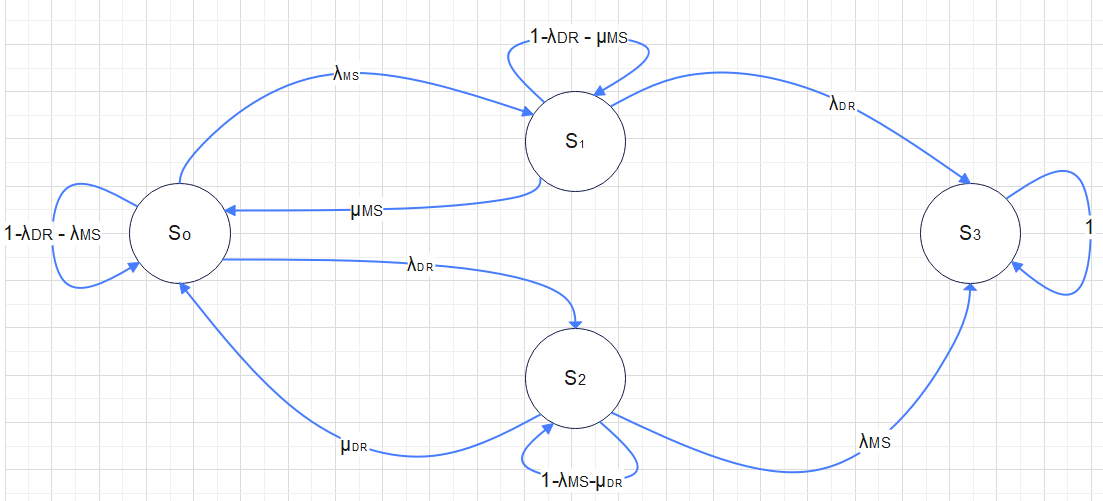
- Review reliability techniques for CNIs including Weibull analysis, Markov chains, and Monte Carlo simulation.
- Analyze cybersecurity threats to CNIs and their potential impact on reliability and continuity.
- Discuss trust, privacy, and resilience requirements across regulatory frameworks (e.g., GDPR, HIPAA, PDPA) and their implications for CIP.
- Explore the co-analysis of safety and security (SSCA) and present approaches for integrating safety and security considerations.
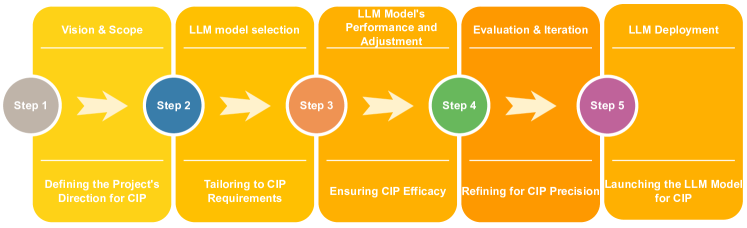
- Present a Generative AI and LLM-based CIP method with a five-step LLM lifecycle (Vision & Scope, Model Selection, Performance & Adjustment, Evaluation & Iteration, Deployment).
- Illustrate applications of LLMs in energy grid protection, automated incident response, and regulatory/compliance documentation within CIP.
Experimental results
Research questions
- RQ1What are the cybersecurity and reliability challenges facing Critical National Infrastructures (CNIs) and how do they interact?
- RQ2How do trust, privacy, and resilience requirements shape CIP standards and practice across regions?
- RQ3How can Generative AI and LLMs be tailored and integrated into a CIP lifecycle to improve resilience and security?
- RQ4What are the practical applications and limitations of LLMs for CIP across sectors such as energy, water, and transportation?
- RQ5What future directions and challenges remain for deploying AI-enabled CIP solutions?
Key findings
- CIP reliability analysis benefits from Weibull, Markov chains, and Monte Carlo simulations to assess and improve maintenance and resilience.
- Cyber threats such as malware, ransomware, supply chain attacks, phishing, DDoS, SQL injection, and zero-day exploits threaten CNIs and can cascade across sectors.
- Trust, privacy, and resilience requirements vary by region and regulation, necessitating multi-layered defense and compliance strategies.
- Safety and security are interdependent, and integrating SSCA can improve accident prevention and incident response in critical sectors.
- A five-step LLM lifecycle for CIP (Vision & Scope, Model Selection, Performance & Adjustment, Evaluation & Iteration, Deployment) enables CIP-specific model development and deployment.
- Applications include predictive threat analysis in energy grids, automated incident response in transportation, and automated policy/compliance reporting in water treatment facilities, alongside recognizing challenges such as data privacy and dataset construction.
Read this paper
Open the full text in the Nubint reader and ask about any passage as you read.
Read this paper on NubintThis review was generated by AI from the original paper. Please check the paper before citing it.