
[Paper Review] $CrowdDiff$: Multi-hypothesis Crowd Density Estimation using Diffusion Models
CrowdDiff treats crowd density map generation as a conditional denoising diffusion process to produce high-fidelity, narrow-kernel density maps and leverages multi-realization fusion for improved counting.
Crowd counting is a fundamental problem in crowd analysis which is typically accomplished by estimating a crowd density map and summing over the density values. However, this approach suffers from background noise accumulation and loss of density due to the use of broad Gaussian kernels to create the ground truth density maps. This issue can be overcome by narrowing the Gaussian kernel. However, existing approaches perform poorly when trained with ground truth density maps with broad kernels. To deal with this limitation, we propose using conditional diffusion models to predict density maps, as diffusion models show high fidelity to training data during generation. With that, we present $CrowdDiff$ that generates the crowd density map as a reverse diffusion process. Furthermore, as the intermediate time steps of the diffusion process are noisy, we incorporate a regression branch for direct crowd estimation only during training to improve the feature learning. In addition, owing to the stochastic nature of the diffusion model, we introduce producing multiple density maps to improve the counting performance contrary to the existing crowd counting pipelines. We conduct extensive experiments on publicly available datasets to validate the effectiveness of our method. $CrowdDiff$ outperforms existing state-of-the-art crowd counting methods on several public crowd analysis benchmarks with significant improvements.
Motivation & Objective
- Motivate crowd counting with density maps but mitigate background noise and kernel loss by using a narrow Gaussian kernel.
- Propose a conditional diffusion model framework to generate density maps and learn population distribution more faithfully.
- Introduce a counting mechanism via thresholding of narrow-kernel density maps and a fusion strategy across multiple diffusion realizations.
- Incorporate an auxiliary regression branch during training to improve feature learning for counting.
- Demonstrate state-of-the-art performance on multiple public crowd counting datasets.
Proposed method
- Formulate density map generation as a denoising diffusion process conditioned on the input image.
- Adopt a narrow Gaussian kernel (3x3, sigma=0.5) to generate ground-truth density maps and reduce background interference.
- Train a denoising U-Net with a hybrid loss combining noise prediction and a counting loss.
- Include a counting branch during training that regresses counts from encoder-decoder features.
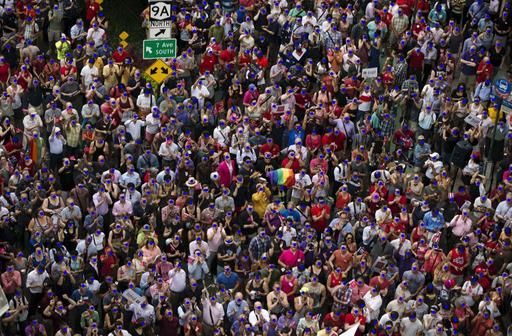
- Produce multiple density map realizations via stochastic diffusion and fuse them to improve counting (crowd map fusion).
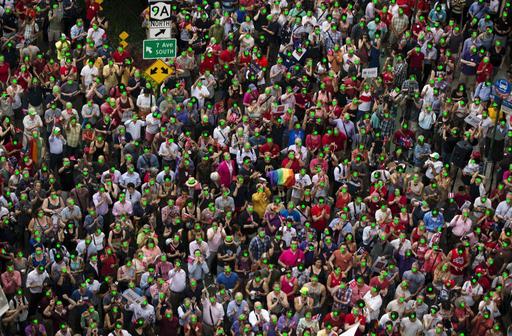
- During fusion, threshold density maps to obtain dot maps, then combine realizations by an SSIM-guided, rejection-radius mechanism to avoid duplicate counts.
Experimental results
Research questions
- RQ1Can conditional diffusion models generate high-fidelity density maps for crowd images while mitigating background noise?
- RQ2Does using a narrow kernel improve density map fidelity and counting accuracy over broad-kernel ground truths?
- RQ3Can multi-hypothesis realizations from diffusion models be fused to yield better counting than single realizations?
- RQ4Does auxiliary regression supervision during training enhance feature learning for counting in diffusion-based crowd counting?
- RQ5How does CrowdDiff perform on standard crowd counting benchmarks relative to state-of-the-art methods?
Key findings
- CrowdDiff achieves state-of-the-art results on multiple public datasets (e.g., JHU-Crowd++, ShanghaiTech, UCF-QNRF, NWPU-Crowd).
- A narrow kernel leads to density maps that better preserve density in congested regions and reduces information loss compared to broad kernels.
- Thresholding-based counting on density maps (instead of summing pixel values) reduces background noise and improves robustness.
- Multi-realization fusion (crowd map fusion) leverages diffusion stochasticity to improve counting, outperforming single-realization baselines.
- A counting branch trained with intermediate diffusion features improves counting performance and reduces variability across realizations.
- Across datasets, CrowdDiff shows strong performance in both dense and sparse crowd scenarios.
Read this paper
Open the full text in the Nubint reader and ask about any passage as you read.
Read this paper on NubintThis review was generated by AI from the original paper. Please check the paper before citing it.