
[Paper Review] Data Preservation in High Energy Physics
This paper presents a comprehensive review of data preservation in high energy physics (HEP), advocating for structured, long-term preservation of experimental data, software, and metadata across international collaborations. It outlines methodologies, tools like REANA and CERN Open Data Portal, and successful case studies—such as JADE and CERNLIB porting—to ensure reproducibility and scientific reuse, with the goal of sustaining scientific return from legacy and future HEP datasets under open science principles.
Data preservation is a mandatory specification for any present and future experimental facility and it is a cost-effective way of doing fundamental research by exploiting unique data sets in the light of the continuously increasing theoretical understanding. This document summarizes the status of data preservation in high energy physics. The paradigms and the methodological advances are discussed from a perspective of more than ten years of experience with a structured effort at international level. The status and the scientific return related to the preservation of data accumulated at large collider experiments are presented, together with an account of ongoing efforts to ensure long-term analysis capabilities for ongoing and future experiments. Transverse projects aimed at generic solutions, most of which are specifically inspired by open science and FAIR principles, are presented as well. A prospective and an action plan are also indicated.
Motivation & Objective
- Address the challenge of preserving complex, high-volume HEP data from legacy collider experiments for future scientific reuse.
- Establish a coordinated, international collaboration (DPHEP) to standardize and sustain data preservation practices across HEP laboratories.
- Ensure long-term analysis capability by modernizing legacy software (e.g., CERNLIB, JADE) for execution on contemporary systems.
- Promote open science and FAIR principles through shared tools, repositories, and community engagement.
- Support future experiments by embedding data preservation into design and funding models from the outset.
Proposed method
- Adopt a holistic definition of data preservation encompassing data, metadata, software, documentation, and publications.
- Implement standardized frameworks such as REANA for reproducible analysis workflows and CERN Open Data Portal for public access.
- Use containerization and CI/CD pipelines (e.g., GitLab CI) to ensure backward compatibility of legacy software on modern platforms.
- Re-implement legacy codebases (e.g., CERNLIB) using modern build systems like CMake to support diverse compilers and architectures.
- Establish governance models with flexible collaboration rules to sustain long-term preservation with reduced resources.
- Foster inter-laboratory cooperation through regular reports, workshops, and shared infrastructure to scale preservation efforts.
Experimental results
Research questions
- RQ1How can high-energy physics experiments ensure long-term accessibility and reproducibility of their data and analysis software?
- RQ2What technical and organizational frameworks are most effective for preserving complex, legacy HEP data across decades?
- RQ3How can open science principles and FAIR data practices be integrated into HEP data preservation strategies?
- RQ4What role do transverse projects (e.g., HEPData, CERNVM) play in enabling cross-experiment data reuse and reproducibility?
- RQ5How can future HEP experiments be designed with data preservation as a core requirement from the outset?
Key findings
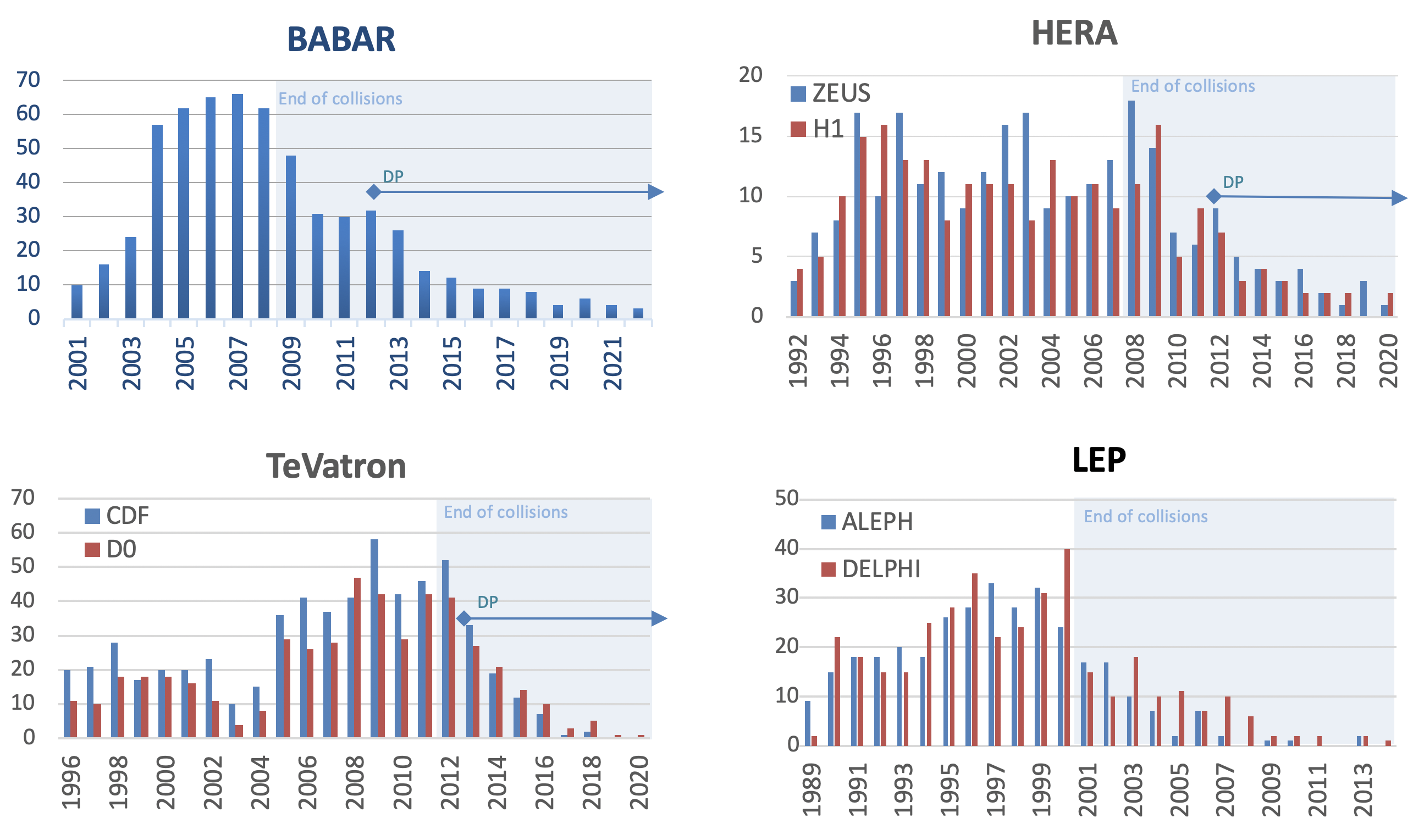
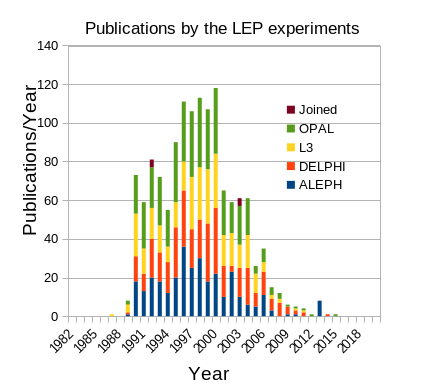
- The DPHEP collaboration has successfully preserved and made accessible data from major legacy experiments such as JADE, LEP, HERA, and Tevatron, enabling new scientific results years after data collection.
- The JADE experiment’s data resurrection project demonstrated that decades-old data can be recovered and analyzed using modern tools, with results published in 2022.
- CERNLIB was successfully re-implemented using CMake, enabling compilation on modern systems including RHEL4+ i686, x86_64, ppc64, and macOS with GNU, Clang, Intel, and NVIDIA compilers.
- The updated CERNLIB is available in GitLab and can be packaged as an RPM, serving as a drop-in replacement for the 2006 version.
- Transverse projects like REANA, CERN Open Data Portal, and HEPData have become essential enablers of reproducible, community-wide analysis of preserved HEP data.
- Despite progress, only a minority of HEP data sets are currently preserved with full long-term sustainability, highlighting the need for increased coordination and funding.
Read this paper
Open the full text in the Nubint reader and ask about any passage as you read.
Read this paper on NubintThis review was generated by AI from the original paper. Please check the paper before citing it.