
[Paper Review] Deep Architectures for Modulation Recognition
This paper applies deep neural networks, particularly Convolutional LSTM Networks (CLDNNs), to radio modulation recognition, demonstrating that network depth alone does not limit performance. The key contribution is identifying that synchronization and equalization—rather than depth—are the main bottlenecks, with CLDNNs outperforming other architectures, especially above -8 dB SNR, and revealing learned filters that resemble known modulation types.
We survey the latest advances in machine learning with deep neural networks by applying them to the task of radio modulation recognition. Results show that radio modulation recognition is not limited by network depth and further work should focus on improving learned synchronization and equalization. Advances in these areas will likely come from novel architectures designed for these tasks or through novel training methods.
Motivation & Objective
- To evaluate the effectiveness of deep neural networks in radio modulation recognition, a critical cognitive radio task.
- To investigate whether network depth limits performance in modulation recognition, as it does in vision and NLP tasks.
- To identify key limitations in current deep learning approaches for RF signals, particularly related to synchronization and channel impairments.
- To explore architectural innovations that improve classification accuracy under low SNR and real-world signal distortions.
- To understand what features deep networks learn in the context of RF signal processing through filter visualization and activation analysis.
Proposed method
- Employs a CLDNN architecture combining 1D convolutional layers with long short-term memory (LSTM) recurrent layers for temporal modeling of RF signals.
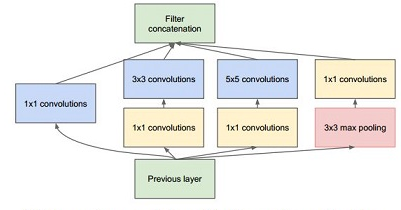
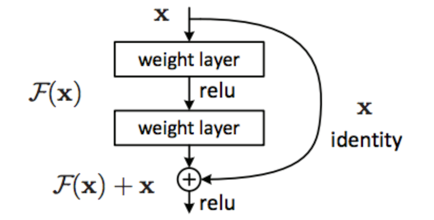
- Uses a residual-like skip connection that concatenates raw waveform input with the output of the first convolutional layer to stabilize training and improve performance.
- Applies categorical cross-entropy loss with softmax output for multi-class modulation classification, optimized via backpropagation and gradient descent.
- Visualizes learned convolutional filters by performing gradient ascent on random input to maximize activation of specific filters, revealing modulated signal-like patterns.
- Uses frequency-domain analysis (zero-padded FFT) to interpret filter responses, showing low-pass, band-pass, and sinc-like spectral shapes.
- Evaluates performance across varying SNR levels and compares multiple architectures, including standard CNNs, RNNs, and stacked architectures with and without skip connections.
Experimental results
Research questions
- RQ1Does increasing the depth of deep neural networks improve modulation recognition performance in RF signals, as seen in computer vision?
- RQ2What architectural components (e.g., skip connections, residual paths) significantly enhance classification accuracy in RF modulation recognition?
- RQ3Which signal characteristics (e.g., analog vs. digital modulations, high-order QAMs) are most challenging for deep networks to distinguish?
- RQ4To what extent do learned filters in convolutional layers resemble known modulation types, and what does this imply about feature learning in RF data?
- RQ5What are the primary performance bottlenecks in deep learning for RF signal processing—network depth, synchronization, or channel distortion?
Key findings
- CLDNN architectures with skip connections (concatenating raw input and convolutional output) achieve the highest classification accuracy, especially above -8 dB SNR.
- Performance is not limited by network depth, indicating that deeper networks do not inherently improve recognition beyond a certain point.
- The most significant confusion occurs between analog modulations (e.g., FM, FM) and between higher-order QAMs, suggesting these are the most challenging classification pairs.
- Visualized filters in the first layer show frequency responses resembling low-pass, DC-blocking, and sinc-like filters, with time-domain responses that are not immediately interpretable.
- Gradient ascent on filter activations produces input patterns resembling BPSK and FM/FSK modulations, indicating that the network learns to detect known modulation structures.
- Pooling layers degrade performance, suggesting that preserving temporal resolution is critical for accurate modulation recognition in RF signals.
Read this paper
Open the full text in the Nubint reader and ask about any passage as you read.
Read this paper on NubintThis review was generated by AI from the original paper. Please check the paper before citing it.