
[Paper Review] Deep Learning-Based Channel Estimation for Double-RIS Aided Massive MIMO System
This paper proposes a skip-connection attention (SC-attention) network for deep learning-based channel estimation in double-reconfigurable intelligent surface (RIS)-aided massive MIMO systems. By integrating self-attention layers and skip-connection structures, the network enhances feature representation and mitigates vanishing gradients, achieving up to 16% lower normalized mean square error (NMSE) than baseline methods, especially at low SNR, demonstrating superior accuracy and robustness in noisy, high-dimensional cascaded channel estimation.
Reconfigurable Intelligent Surface (RIS) is considered as an energy-efficient solution for future wireless communication networks due to its fast and low-cost configuration. In this letter, we consider the estimation of cascaded channels in a double-RIS aided massive multiple-input multiple-output system, which is a critical challenge due to the large number of antennas equipped at the base station and passive RIS elements. To tackle this challenge, we propose a skip-connection attention (SC-attention) network that utilizes self-attention layers and skip-connection structure to improve the channel estimation performance from the noisy pilot-based observations. Simulation results compare the proposed SC-attention network with other benchmark methods and show that SC-attention network can effectively improve the accuracy performance on normalized mean square error (NMSE) for cascaded links in a double-RIS aided system.
Motivation & Objective
- Address the high-dimensional, noisy channel estimation challenge in double-RIS-aided massive MIMO systems with large-scale antennas and passive RIS elements.
- Overcome the limitations of conventional linear estimators (e.g., LS, LMMSE) in low SNR environments and high-dimensional cascaded channel estimation.
- Improve estimation accuracy and robustness by leveraging deep learning to model complex non-linear spatial features in noisy pilot observations.
- Integrate self-attention mechanisms and skip-connection structures to enhance receptive field size, model capacity, and gradient flow in the neural network.
- Demonstrate superior performance over existing DL-based and conventional estimators across varying SNR conditions.
Proposed method
- Model the channel estimation problem as a denoising task, where the input is a noisy observation of the cascaded channel matrix from pilot signals.
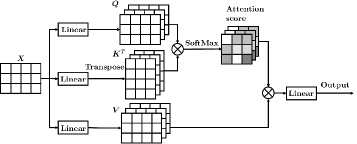
- Design a skip-connection attention (SC-attention) network that combines self-attention layers to capture long-range spatial dependencies and improve feature representation.
- Incorporate skip-connections to preserve low-level features and prevent gradient vanishing or exploding during training, enhancing training stability and performance.
- Use a residual-like architecture where the input is directly concatenated with the output of attention blocks to facilitate learning of residual mappings.
- Train the network end-to-end using a large dataset of 120,000 samples with SNR ranging from -10 dB to 15 dB to ensure generalization across diverse conditions.
- Evaluate performance using normalized mean square error (NMSE) as the primary metric for both single- and double-reflection links.

Experimental results
Research questions
- RQ1Can a deep learning-based approach outperform conventional linear estimators (LS and LMMSE) in estimating high-dimensional cascaded channels in double-RIS-aided massive MIMO systems?
- RQ2To what extent does integrating self-attention layers improve the estimation accuracy by enhancing the receptive field and model capacity?
- RQ3How effective is the skip-connection structure in mitigating gradient issues and improving estimation performance, especially in low SNR regimes?
- RQ4Does the proposed SC-attention network generalize well across different SNR levels and maintain robustness in noisy environments?
- RQ5How does the performance of the SC-attention network compare to existing deep learning baselines like SF-CNN in terms of NMSE across various channel conditions?
Key findings
- The SC-attention network achieves up to 16% lower NMSE than the attention-only baseline at -10 dB SNR, demonstrating significant improvement in low-SNR environments.
- At high SNR (15 dB), the performance gap between the SC-attention network and conventional estimators narrows, as expected due to reduced noise, but the network still maintains a slight edge.
- Visualization of the attention blocks shows a progressive reduction in noise intensity from input to output, confirming the effectiveness of the block-by-block denoising mechanism.
- The SC-attention network outperforms both the LS and LMMSE estimators across all SNR levels, particularly in low-SNR conditions where linear methods struggle.
- The network also surpasses the SF-CNN baseline, indicating that the integration of self-attention and skip-connections leads to superior feature learning and estimation accuracy.
- The proposed method maintains robustness and generalization across the entire SNR range from -10 dB to 15 dB, validated on independent test data.
Better researchstarts right now
From reading papers to final review, dramatically reduce your research time.
No credit card · Free plan available
This review was created by AI and reviewed by human editors.