
[Paper Review] Deep Learning for Computer Vision based Activity Recognition and Fall Detection of the Elderly: a Systematic Review
This systematic review analyzes deep learning (DL)-based computer vision approaches for human activity recognition (HAR) and fall detection in elderly care, synthesizing 137 studies to evaluate DL architectures, datasets, sensors (e.g., depth, thermal cameras), and privacy practices. It identifies key gaps—especially insufficient elderly representation in datasets and weak privacy measures—and provides curated resources, including benchmark datasets, models, and hardware, to guide future research in ambient assisted living (AAL).
As the percentage of elderly people in developed countries increases worldwide, the healthcare of this collective is a worrying matter, especially if it includes the preservation of their autonomy. In this direction, many studies are being published on Ambient Assisted Living (AAL) systems, which help to reduce the preoccupations raised by the independent living of the elderly. In this study, a systematic review of the literature is presented on fall detection and Human Activity Recognition (HAR) for the elderly, as the two main tasks to solve to guarantee the safety of elderly people living alone. To address the current tendency to perform these two tasks, the review focuses on the use of Deep Learning (DL) based approaches on computer vision data. In addition, different collections of data like DL models, datasets or hardware (e.g. depth or thermal cameras) are gathered from the reviewed studies and provided for reference in future studies. Strengths and weaknesses of existing approaches are also discussed and, based on them, our recommendations for future works are provided.
Motivation & Objective
- To systematically evaluate deep learning-based computer vision methods for human activity recognition (HAR) and fall detection in elderly care.
- To identify and categorize the deep learning architectures, datasets, sensor types (e.g., RGB, depth, thermal), and hardware used in existing studies.
- To assess privacy protection strategies in camera-based systems and highlight gaps in user-centered design and elderly representation in datasets.
- To provide a comprehensive, structured reference of publicly available datasets, models, and system integrations for future research in ambient assisted living (AAL).
- To offer evidence-based recommendations for improving generalization, privacy, and real-world deployment of HAR and fall detection systems for older adults.
Proposed method
- Conducted a systematic literature review (SLR) following Kitchenham and Charters' guidelines for software engineering, ensuring methodological rigor and minimizing bias.
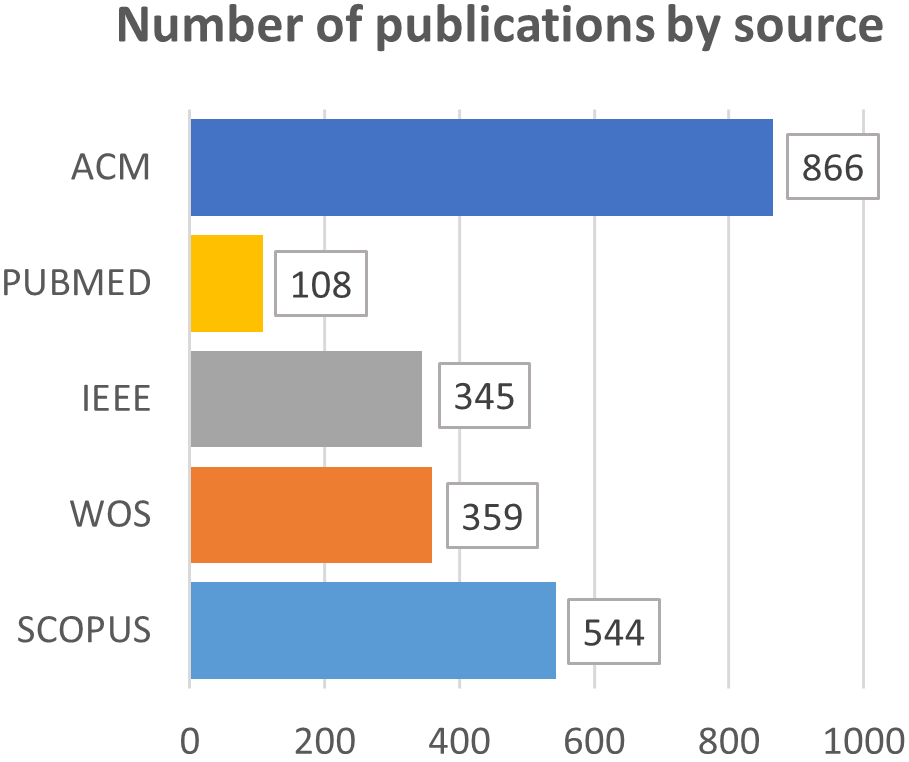
- Searched multiple databases (e.g., Scopus, IEEE Xplore, Web of Science) using predefined keywords related to deep learning, computer vision, HAR, fall detection, and elderly care.
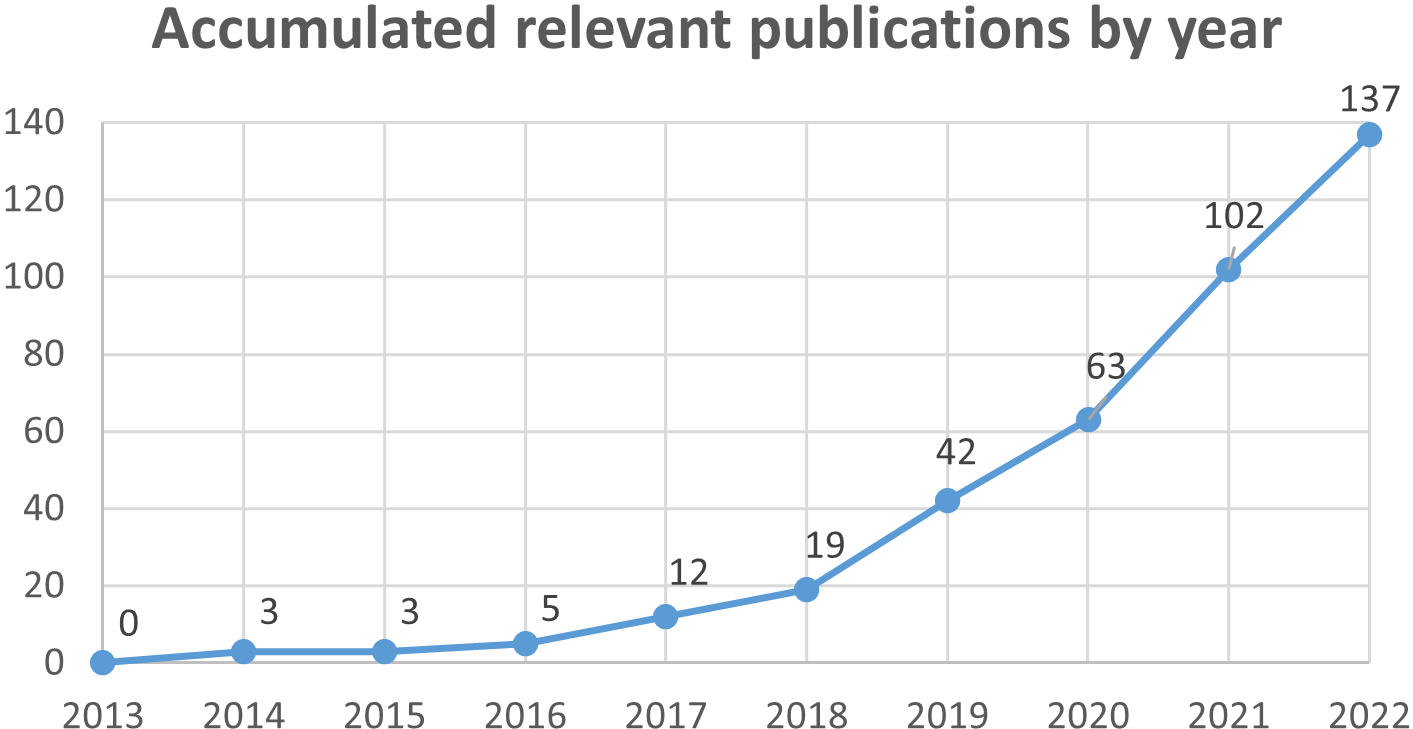
- Applied strict inclusion and exclusion criteria to select 137 relevant studies based on relevance, publication date (2010–2023), and focus on computer vision and elderly populations.
- Extracted and structured data on DL models (e.g., CNNs, RNNs, Transformers), datasets (e.g., URFD, MultiCam, ETRIActivity3D), sensor types (RGB, depth, thermal), and privacy mechanisms.
- Performed quality assessment and data synthesis to identify trends, limitations, and research gaps, particularly in dataset diversity and privacy compliance.
- Compiled comprehensive tables summarizing models (Table 7), datasets (Table 8), hardware (Table 9), and system integrations (Section 5.5) for reuse in future studies.
Experimental results
Research questions
- RQ1Which deep learning architectures are most commonly used in computer vision-based HAR and fall detection for elderly individuals?
- RQ2What types of datasets, sensors (e.g., depth, thermal), and hardware configurations are predominantly used in current research?
- RQ3How do existing studies address privacy concerns when using camera-based systems for elderly monitoring?
- RQ4What are the key limitations in current datasets, particularly regarding representation of elderly populations and data diversity?
- RQ5What are the most effective and practical system integrations for real-world deployment of HAR and fall detection in ambient assisted living environments?
Key findings
- 44% of reviewed studies used skeleton joint estimation as input data, making it the most common privacy-preserving method, followed by the use of depth or infrared-only cameras.
- Only 55% of studies addressed privacy explicitly, with 45% offering no privacy measures at all, indicating a major gap in ethical deployment.
- The ETRIActivity3D dataset was identified as the most suitable for fall detection due to its elderly-specific data and 3D motion capture, while ToyotaSmartHome and ETRIActivity3D were the best options for HAR.
- Most datasets, including widely used ones like URFD and MultiCam, contain fewer than 200 samples, limiting model generalization and robustness.
- Convolutional neural networks (CNNs) dominate for feature extraction (e.g., OpenPose for pose estimation), while recurrent networks (e.g., LSTMs) are preferred for temporal modeling of skeletal sequences.
- Despite the rise of deep learning, only a small fraction of studies (not quantified but noted as limited) have evaluated their systems in real-world or long-term deployment settings, highlighting a gap in practical validation.
Read this paper
Open the full text in the Nubint reader and ask about any passage as you read.
Read this paper on NubintThis review was generated by AI from the original paper. Please check the paper before citing it.