
[Paper Review] Deep Recurrent Neural Network for Mobile Human Activity Recognition with High Throughput
This paper proposes a deep recurrent neural network (DRNN) for real-time human activity recognition using raw accelerometer data, achieving high accuracy and throughput by eliminating feature extraction. The DRNN reaches 95.42% recognition accuracy on single-activity trials and 83.43% on sequential trials, with inference latency of only 1.347 ms—8.19× faster than traditional methods that require 11.031 ms, including feature computation.
In this paper, we propose a method of human activity recognition with high throughput from raw accelerometer data applying a deep recurrent neural network (DRNN), and investigate various architectures and its combination to find the best parameter values. The "high throughput" refers to short time at a time of recognition. We investigated various parameters and architectures of the DRNN by using the training dataset of 432 trials with 6 activity classes from 7 people. The maximum recognition rate was 95.42% and 83.43% against the test data of 108 segmented trials each of which has single activity class and 18 multiple sequential trials, respectively. Here, the maximum recognition rates by traditional methods were 71.65% and 54.97% for each. In addition, the efficiency of the found parameters was evaluated by using additional dataset. Further, as for throughput of the recognition per unit time, the constructed DRNN was requiring only 1.347 [ms], while the best traditional method required 11.031 [ms] which includes 11.027 [ms] for feature calculation. These advantages are caused by the compact and small architecture of the constructed real time oriented DRNN.
Motivation & Objective
- To develop a real-time human activity recognition system with high throughput using raw accelerometer data.
- To investigate optimal DRNN architectures and hyperparameters for maximizing recognition accuracy and inference speed.
- To compare the performance of the DRNN against traditional machine learning methods that rely on handcrafted feature extraction.
- To evaluate the efficiency and scalability of the DRNN for deployment on mobile devices with limited computational resources.
Proposed method
- Utilizes a deep recurrent neural network (DRNN) to directly process raw time-series accelerometer data without prior feature extraction.
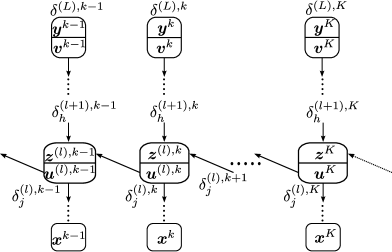
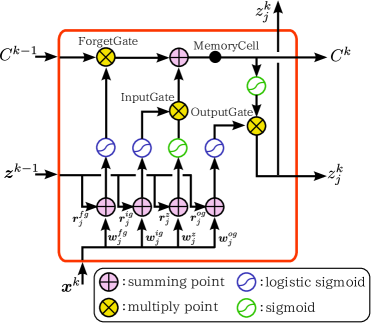
- Employs a stacked RNN architecture with multiple recurrent layers to model temporal dependencies in sequential sensor data.
- Applies gradient clipping and dropout regularization to stabilize training and prevent overfitting.
- Optimizes hyperparameters including truncated backpropagation time, learning rate, and dropout rate through extensive ablation studies.
- Uses the HASC dataset with 432 segmented trials from 7 subjects across 6 activity classes for training and validation.
- Evaluates inference throughput on CPU, measuring recognition latency per input sample to assess real-time feasibility.
Experimental results
Research questions
- RQ1Can a deep recurrent neural network achieve higher recognition accuracy than traditional methods when directly processing raw accelerometer data?
- RQ2What DRNN architecture and hyperparameters (e.g., truncated time, dropout rate) maximize recognition performance on human activity recognition tasks?
- RQ3How does the inference throughput of the DRNN compare to traditional methods that include time-consuming feature extraction?
- RQ4To what extent can the optimized DRNN parameters generalize to other datasets, such as the HAR open dataset?
- RQ5Can the DRNN achieve real-time performance suitable for mobile deployment with minimal computational overhead?
Key findings
- The DRNN achieved a maximum recognition accuracy of 95.42% on single-activity test trials, significantly outperforming traditional methods (71.65%).
- For multiple sequential activity trials, the DRNN reached 83.43% accuracy, compared to 54.97% for traditional methods.
- The DRNN achieved an inference latency of only 1.347 ms per sample, which is 8.19 times faster than the traditional method’s 11.031 ms, including 11.027 ms for feature extraction.
- The DRNN’s total parameter count is less than 10% of conventional CNN+LSTM models, enabling compact deployment on mobile devices.
- Hyperparameter tuning—especially dropout rate around 50%—significantly improved generalization and recognition accuracy.
- The optimized DRNN parameters achieved 95.03% accuracy on the HAR open dataset, confirming transferability and robustness of the learned features.
Read this paper
Open the full text in the Nubint reader and ask about any passage as you read.
Read this paper on NubintThis review was generated by AI from the original paper. Please check the paper before citing it.