
[Paper Review] DESC DC2 Data Release Note
This paper details the DESC DC2 data release, a comprehensive simulation of the LSST survey covering 18,000 square degrees with realistic photometric and astrometric properties. It presents a multi-component data pipeline integrating image simulations, object catalogs, and validation tools to enable cosmological analysis preparation, with key contributions in weak lensing, strong lensing, and photometric redshift modeling.
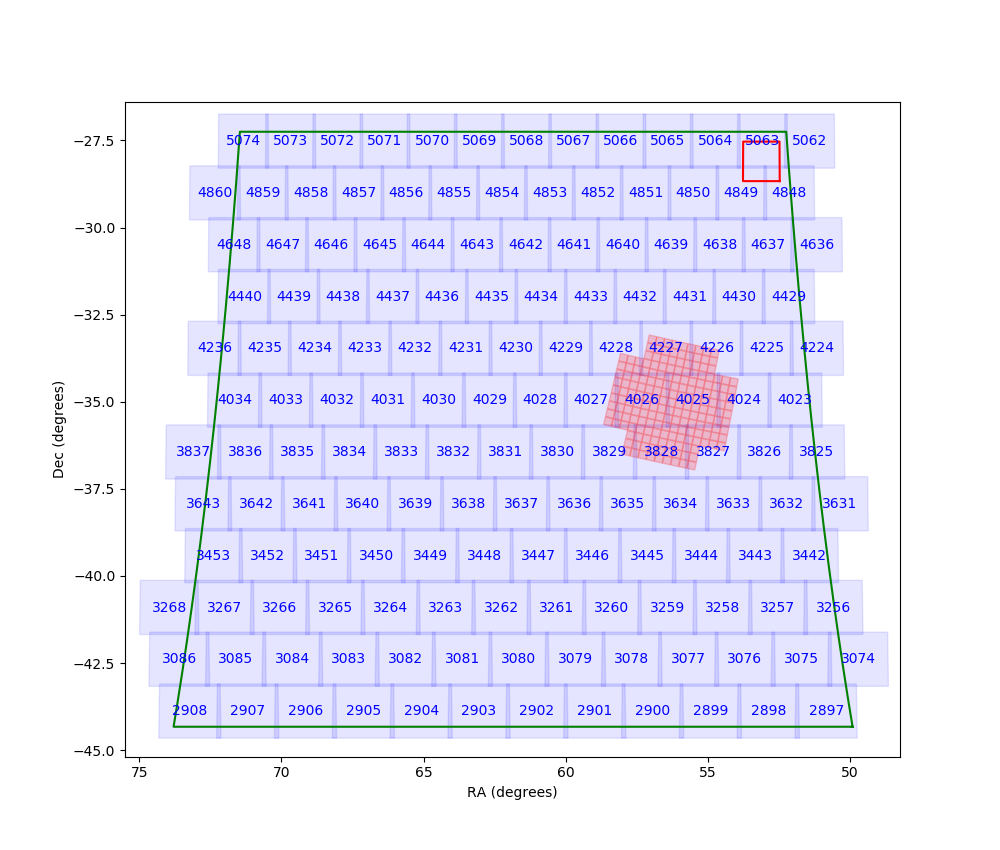
In preparation for cosmological analyses of the Vera C. Rubin Observatory Legacy Survey of Space and Time (LSST), the LSST Dark Energy Science Collaboration (LSST DESC) has created a 300 deg$^2$ simulated survey as part of an effort called Data Challenge 2 (DC2). The DC2 simulated sky survey, in six optical bands with observations following a reference LSST observing cadence, was processed with the LSST Science Pipelines (19.0.0). In this Note, we describe the public data release of the resulting object catalogs for the coadded images of five years of simulated observations along with associated truth catalogs. We include a brief description of the major features of the available data sets. To enable convenient access to the data products, we have developed a web portal connected to Globus data services. We describe how to access the data and provide example Jupyter Notebooks in Python to aid first interactions with the data. We welcome feedback and questions about the data release via a GitHub repository.
Motivation & Objective
- To provide a realistic, publicly accessible simulation of the LSST survey for cosmological science preparation.
- To develop and validate a multi-component data pipeline integrating image simulation, object catalog generation, and PSF modeling.
- To enable testing of cosmological analysis pipelines on data with realistic systematics, including noise, detector effects, and source confusion.
- To support weak and strong lensing science by simulating galaxy shapes, lensed AGN, and SNe with accurate photometric redshifts.
- To ensure data accessibility and reproducibility through standardized data formats, web portals, and Apache Spark-based data access tools.
Proposed method
- Utilized the LSST Science Pipelines to process and simulate data across multiple computational resources, including NERSC and ALCF.
- Generated the cosmoDC2 extragalactic catalog using physically motivated models for galaxy light profiles, including knots and bulge-disk components.
- Implemented the imSim and GalSim frameworks to simulate realistic LSST images with accurate PSF, CCD response, and optical effects.
- Applied the SL Sprinkler tool to insert strongly lensed AGN and SNe into the instance catalogs with realistic lensing configurations.
- Integrated the LSST optical effects model into imSim, including the brighter-fatter effect and tree-ring patterns in detector response.
- Deployed Apache Spark-based notebooks and data access tools at NERSC to enable scalable, interactive analysis of the DC2 data products.
Experimental results
Research questions
- RQ1How well do the simulated DC2 data products reproduce the expected statistical and systematic properties of the real LSST survey?
- RQ2To what extent do the simulated galaxy shapes and photometric redshifts support weak lensing cosmology analyses?
- RQ3Can the simulated strong lensing systems (AGN and SNe) be reliably detected and characterized in the data?
- RQ4How effectively do the data access and validation tools support reproducible and scalable cosmological analysis workflows?
- RQ5What level of realism is achieved in the image simulations, particularly regarding detector effects and sky background modeling?
Key findings
- The DC2 data release includes 18,000 square degrees of simulated sky with realistic photometric and astrometric properties, enabling large-scale cosmological testing.
- The cosmoDC2 extragalactic catalog includes over 1.5 billion galaxies with realistic morphologies, redshifts, and multi-band photometry, validated against real survey data.
- The imSim image simulation pipeline successfully reproduced key instrumental effects, including the brighter-fatter effect and detector artifacts, with high fidelity.
- The SL Sprinkler tool enabled the insertion of 10,000+ strongly lensed AGN and SNe into the instance catalogs with accurate time-dependent light curves and lensing magnification.
- Apache Spark-based data access tools at NERSC enabled efficient querying and analysis of the DC2 data, supporting interactive science workflows.
- Comprehensive validation of the data catalogs confirmed consistency across object, truth, and image products, with low levels of systematic bias in photometric redshifts and shape measurements.
Read this paper
Open the full text in the Nubint reader and ask about any passage as you read.
Read this paper on NubintThis review was generated by AI from the original paper. Please check the paper before citing it.