
[Paper Review] Detecting music deepfakes is easy but actually hard
This paper presents the first general-purpose music deepfake detector using waveform-based generative models, achieving 99.8% accuracy by classifying real vs. fake audio via convolutional neural networks on spectrogram patches. Despite high performance, the study emphasizes critical limitations beyond accuracy, including robustness, calibration, interpretability, and generalization to unseen generators.
In the face of a new era of generative models, the detection of artificially generated content has become a matter of utmost importance. The ability to create credible minute-long music deepfakes in a few seconds on user-friendly platforms poses a real threat of fraud on streaming services and unfair competition to human artists. This paper demonstrates the possibility (and surprising ease) of training classifiers on datasets comprising real audio and fake reconstructions, achieving a convincing accuracy of 99.8%. To our knowledge, this marks the first publication of a music deepfake detector, a tool that will help in the regulation of music forgery. Nevertheless, informed by decades of literature on forgery detection in other fields, we stress that a good test score is not the end of the story. We step back from the straightforward ML framework and expose many facets that could be problematic with such a deployed detector: calibration, robustness to audio manipulation, generalisation to unseen models, interpretability and possibility for recourse. This second part acts as a position for future research steps in the field and a caveat to a flourishing market of fake content checkers.
Motivation & Objective
- To develop the first general-purpose detector for music deepfakes generated by modern waveform-based models like MusicGen, MusicLM, and Moûsai.
- To demonstrate that high-accuracy detection is technically feasible using standard convolutional models on spectrogram representations.
- To challenge the assumption that high test accuracy alone ensures reliable deployment of deepfake detectors.
- To expose critical limitations such as robustness to audio manipulation, calibration, interpretability, and generalization to unseen generators.
- To advocate for a broader ethical and regulatory framework beyond technical detection, cautioning against techno-solutionism in AI-generated content regulation.
Proposed method
- Training a convolutional neural network on spectrogram patches extracted from real and fake music samples to classify authenticity.
- Using a two-stage framework: first, compressing raw audio into latent representations via autoencoders (e.g., using neural codecs like Encodec or Soundstream), then detecting anomalies in the reconstructed waveforms.
- Applying per-patch classification on mel-spectrograms to localize detection signals, with red indicating fake and blue indicating real audio.
- Employing standard deep learning pipelines with data augmentation to improve generalization, though not explicitly tested for adversarial robustness.
- Focusing on waveform-based generators rather than symbolic or MIDI-based models, to align with current user-friendly platforms.
- Using publicly available models and datasets to train and evaluate the detector, with code released on GitHub.
Experimental results
Research questions
- RQ1Can a machine learning model achieve near-perfect detection accuracy for music deepfakes generated by modern waveform-based models?
- RQ2To what extent do high-accuracy detection scores mask deeper flaws such as poor calibration or lack of robustness to audio manipulation?
- RQ3How well can a detector generalize to unseen music generation models not seen during training?
- RQ4What are the ethical and practical implications of deploying a deepfake detector that lacks interpretability or transparency?
- RQ5Can technical detection alone solve the broader problem of music forgery, or is regulatory and policy intervention necessary?
Key findings
- The proposed detector achieves a test accuracy of 99.8% on a benchmark dataset of real and fake music samples, demonstrating that detection is technically feasible and relatively easy with current methods.
- The model successfully identifies artifacts from neural vocoders, such as checkerboard patterns in spectrograms, which serve as reliable indicators of synthetic origin.
- Despite high accuracy, the detector shows significant vulnerabilities to simple audio manipulations like pitch shifting and time stretching, indicating poor robustness.
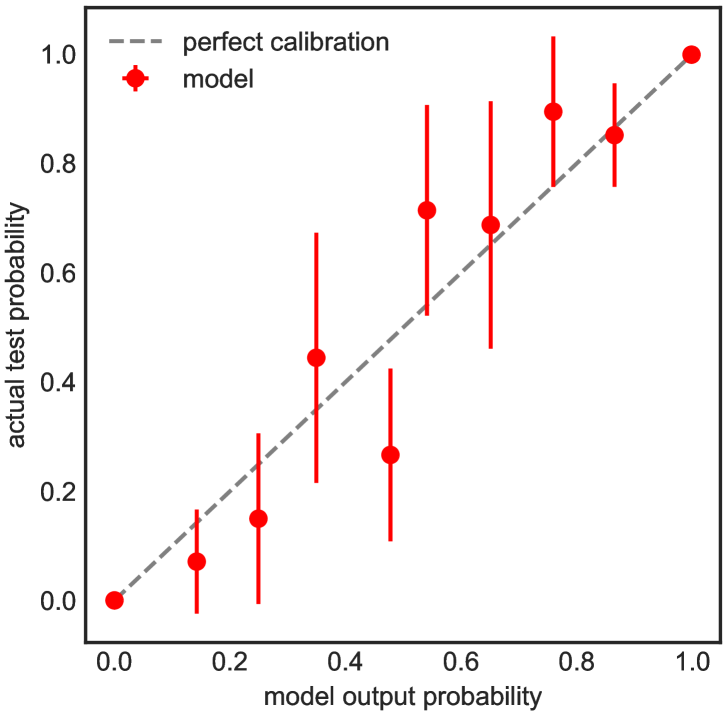
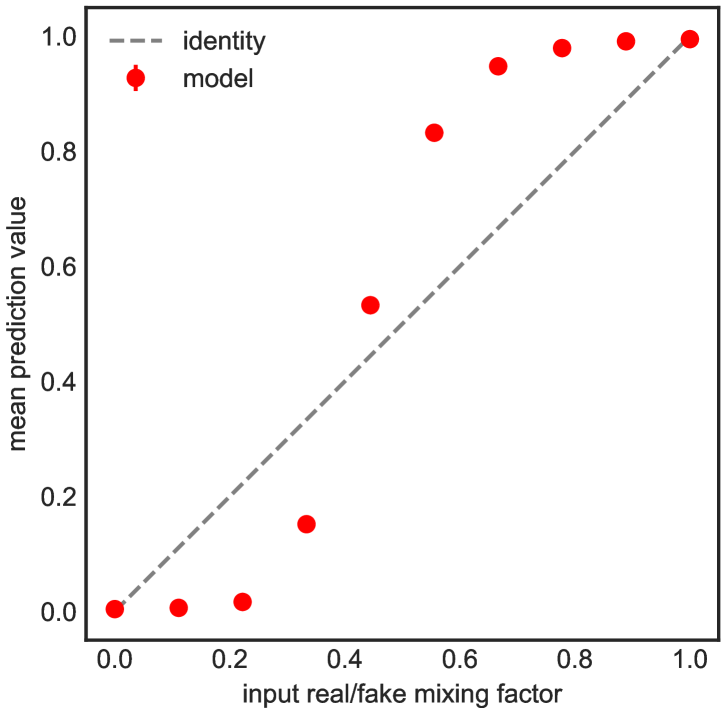
- The model exhibits poor calibration, with predicted confidence scores not reliably reflecting true probabilities of being fake, which undermines trust in deployment.
- Generalization to unseen generators is limited, suggesting that detectors trained on one model fail when tested on others, even within the same family of models.
- Interpretability is minimal, with no clear mechanism to explain predictions to users or provide recourse, raising concerns about fairness and accountability.
Read this paper
Open the full text in the Nubint reader and ask about any passage as you read.
Read this paper on NubintThis review was generated by AI from the original paper. Please check the paper before citing it.