
[Paper Review] Detecting The Corruption Of Online Questionnaires By Artificial Intelligence
This study investigates whether AI-generated responses in online questionnaires can be detected by humans and automated systems. While humans achieved 76% accuracy in identifying AI-authored text, detection remains unreliable; automated AI detection systems were found to be completely unusable, threatening data quality in online research using crowd-sourcing platforms.
Online questionnaires that use crowd-sourcing platforms to recruit participants have become commonplace, due to their ease of use and low costs. Artificial Intelligence (AI) based Large Language Models (LLM) have made it easy for bad actors to automatically fill in online forms, including generating meaningful text for open-ended tasks. These technological advances threaten the data quality for studies that use online questionnaires. This study tested if text generated by an AI for the purpose of an online study can be detected by both humans and automatic AI detection systems. While humans were able to correctly identify authorship of text above chance level (76 percent accuracy), their performance was still below what would be required to ensure satisfactory data quality. Researchers currently have to rely on the disinterest of bad actors to successfully use open-ended responses as a useful tool for ensuring data quality. Automatic AI detection systems are currently completely unusable. If AIs become too prevalent in submitting responses then the costs associated with detecting fraudulent submissions will outweigh the benefits of online questionnaires. Individual attention checks will no longer be a sufficient tool to ensure good data quality. This problem can only be systematically addressed by crowd-sourcing platforms. They cannot rely on automatic AI detection systems and it is unclear how they can ensure data quality for their paying clients.
Motivation & Objective
- To assess whether AI-generated responses in online questionnaires can be reliably detected by human evaluators.
- To evaluate the performance of automated AI detection systems in identifying synthetic text from large language models.
- To examine the implications of AI-generated responses for data quality in online research using crowd-sourcing platforms.
- To investigate whether open-ended questionnaire responses remain a viable tool for ensuring data integrity in the face of AI automation.
- To identify systemic solutions needed to preserve data reliability in large-scale online studies.
Proposed method
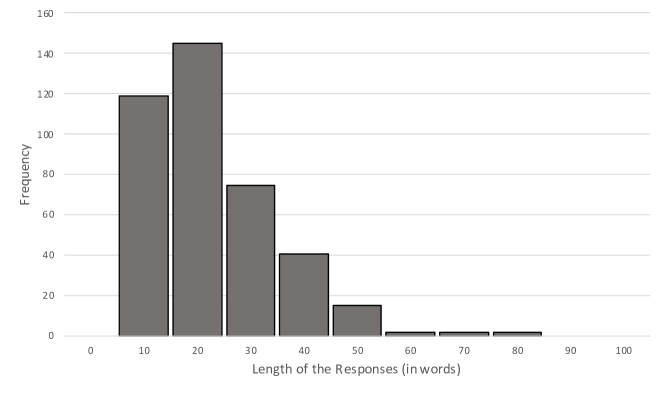
- Participants were presented with open-ended responses from online questionnaires, half generated by GPT-3.5 and half by human participants.
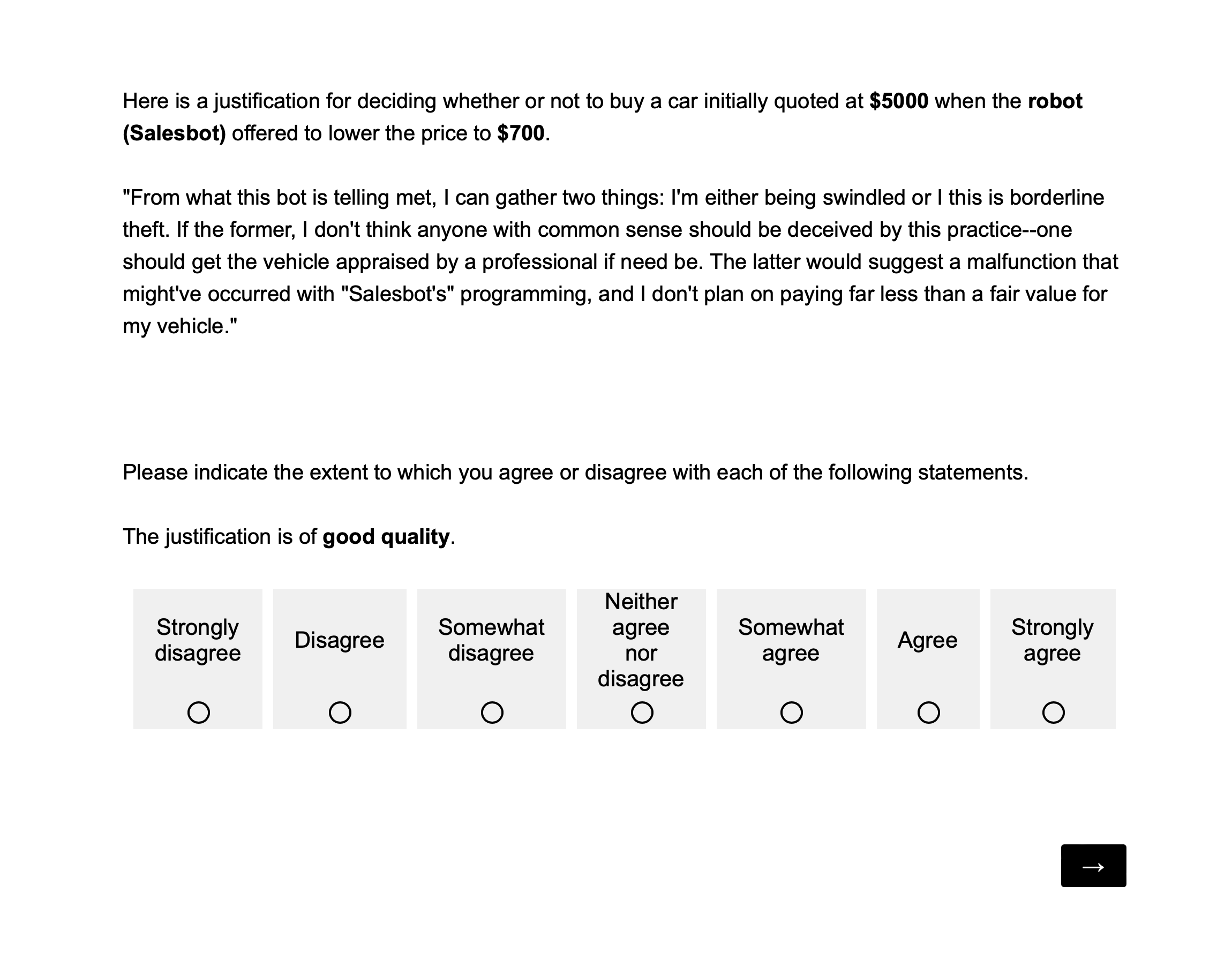
- Human evaluators were tasked with distinguishing between AI-generated and human-written responses in a controlled, blind study.
- An automated AI detection system was applied to classify the same responses as AI- or human-generated.
- Detection accuracy was measured for both human and automated systems using standard classification metrics.
- The study used a mixed-methods approach, combining qualitative response analysis with quantitative detection performance evaluation.
- The experimental design included a balanced dataset of 100 responses (50 human, 50 AI-generated) to ensure statistical reliability.
Experimental results
Research questions
- RQ1Can human evaluators reliably detect AI-generated responses in online questionnaires?
- RQ2How effective are current automated AI detection systems in identifying synthetic text from large language models?
- RQ3To what extent do AI-generated responses compromise data quality in online research studies?
- RQ4Can open-ended questionnaire responses still serve as a reliable data quality check in the era of advanced LLMs?
- RQ5What systemic changes are required to ensure data integrity in AI-automated online surveys?
Key findings
- Human evaluators achieved 76% accuracy in distinguishing AI-generated from human-written responses, indicating detection is possible but insufficient for robust data quality control.
- Automated AI detection systems were found to be completely unusable, with no reliable performance in identifying synthetic text.
- The study confirms that large language models can generate plausible, contextually appropriate responses that closely mimic human writing, undermining traditional data validation methods.
- The prevalence of AI-generated responses threatens to make manual review and attention checks ineffective, increasing the cost of fraud detection in online studies.
- Current reliance on human judgment and attention checks is no longer sufficient to ensure data quality in online research using crowd-sourcing platforms.
- The findings suggest that only platform-level interventions—such as improved detection infrastructure or access control—can systematically address the threat of AI corruption in online questionnaires.
Read this paper
Open the full text in the Nubint reader and ask about any passage as you read.
Read this paper on NubintThis review was generated by AI from the original paper. Please check the paper before citing it.