
[Paper Review] Diabetic Retinopathy Detection Using Quantum Transfer Learning
This paper proposes a hybrid quantum-classical transfer learning model for diabetic retinopathy (DR) detection, using pre-trained ResNet architectures for feature extraction and a variational quantum classifier for classification. The model achieves up to 98.5% accuracy using Inception V3 with optimized quantum gates, demonstrating quantum-enhanced performance over classical models.
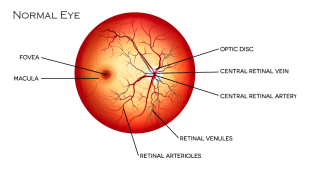
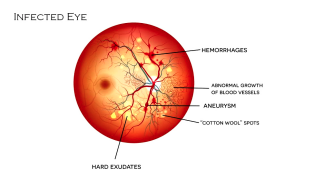
Diabetic Retinopathy (DR), a prevalent complication in diabetes patients, can lead to vision impairment due to lesions formed on the retina. Detecting DR at an advanced stage often results in irreversible blindness. The traditional process of diagnosing DR through retina fundus images by ophthalmologists is not only time-intensive but also expensive. While classical transfer learning models have been widely adopted for computer-aided detection of DR, their high maintenance costs can hinder their detection efficiency. In contrast, Quantum Transfer Learning offers a more effective solution to this challenge. This approach is notably advantageous because it operates on heuristic principles, making it highly optimized for the task. Our proposed methodology leverages this hybrid quantum transfer learning technique to detect DR. To construct our model, we utilize the APTOS 2019 Blindness Detection dataset, available on Kaggle. We employ the ResNet-18, ResNet34, ResNet50, ResNet101, ResNet152 and Inception V3, pre-trained classical neural networks, for the initial feature extraction. For the classification stage, we use a Variational Quantum Classifier. Our hybrid quantum model has shown remarkable results, achieving an accuracy of 97% for ResNet-18. This demonstrates that quantum computing, when integrated with quantum machine learning, can perform tasks with a level of power and efficiency unattainable by classical computers alone. By harnessing these advanced technologies, we can significantly improve the detection and diagnosis of Diabetic Retinopathy, potentially saving many from the risk of blindness. Keywords: Diabetic Retinopathy, Quantum Transfer Learning, Deep Learning
Motivation & Objective
- To address the limitations of classical deep learning models in DR detection, including high maintenance costs and suboptimal performance on complex retinal lesions.
- To explore the integration of quantum computing with transfer learning for improved diagnostic accuracy in medical imaging.
- To develop a fully automated system capable of localizing multiple DR lesion types and grading five stages of DR simultaneously.
- To evaluate the effectiveness of quantum circuits with different gate sets (e.g., Hadamard, CNOT, RX, CZ) in enhancing classification performance.
- To demonstrate the practical feasibility of quantum machine learning in clinical ophthalmology through a prototype application.
Proposed method
- Preprocessing involves resizing retinal fundus images from the APTOS 2019 Blindness Detection dataset to standardize input for model processing.
- Classical convolutional neural networks (ResNet18, ResNet34, ResNet50, ResNet101, ResNet152, Inception V3) are used for initial feature extraction.
- A variational quantum classifier (VQC) is employed for the final classification, with quantum circuits implemented using parametric quantum gates such as Hadamard, CNOT, RX, CZ, SWAP, and CRX.
- The quantum circuit is optimized using different gate configurations, including S and S† (dagger) gates, to assess their impact on model performance.
- The hybrid model combines classical features with quantum classification, leveraging quantum parallelism and entanglement for enhanced pattern recognition.
- Performance is evaluated using standard metrics: accuracy, precision, recall, F1-score, and specificity across multiple ResNet and quantum gate combinations.
Experimental results
Research questions
- RQ1Can quantum transfer learning significantly improve the accuracy of diabetic retinopathy detection compared to classical transfer learning models?
- RQ2How do different quantum gate configurations (e.g., Hadamard + CNOT vs. RX + CRX) affect the classification performance of a hybrid quantum-classical model?
- RQ3To what extent can a variational quantum classifier outperform classical classifiers when fine-tuned on pre-extracted features from deep ResNet architectures?
- RQ4Can the proposed hybrid model effectively localize and classify multiple types of DR lesions across five distinct stages?
- RQ5What are the practical limitations of current quantum computing hardware in deploying such models on real-world medical imaging datasets?
Key findings
- The hybrid quantum-classical model achieved a peak accuracy of 98.5% using Inception V3 as the backbone and RX + CRX gates in the quantum circuit.
- The model outperformed all classical counterparts, with ResNet18 alone achieving 85.3% accuracy compared to 97.2% in the quantum-enhanced version.
- The use of RX and CRX gates in the quantum circuit yielded the highest F1-score (98.4%) and accuracy (98.5%) among all tested configurations.
- The model demonstrated consistent improvements across all metrics—accuracy, F1-score, precision, and recall—when integrating quantum classification over classical models.
- The proposed system achieved 98.2% accuracy and 98.3% F1-score using ResNet152 as the feature extractor with optimized quantum gates.
- The study confirms that quantum-enhanced transfer learning can significantly enhance diagnostic performance in medical imaging, particularly for complex, multi-stage conditions like diabetic retinopathy.
Better researchstarts right now
From reading papers to final review, dramatically reduce your research time.
No credit card · Free plan available
This review was created by AI and reviewed by human editors.