
[Paper Review] Dictionary-based Phrase-level Prompting of Large Language Models for Machine Translation
DiPMT injects dictionary-derived word-level hints into prompting-based MT, improving low-resource and out-of-domain translations by guiding LLMs with translation options for specific words.
Large language models (LLMs) demonstrate remarkable machine translation (MT) abilities via prompting, even though they were not explicitly trained for this task. However, even given the incredible quantities of data they are trained on, LLMs can struggle to translate inputs with rare words, which are common in low resource or domain transfer scenarios. We show that LLM prompting can provide an effective solution for rare words as well, by using prior knowledge from bilingual dictionaries to provide control hints in the prompts. We propose a novel method, DiPMT, that provides a set of possible translations for a subset of the input words, thereby enabling fine-grained phrase-level prompted control of the LLM. Extensive experiments show that DiPMT outperforms the baseline both in low-resource MT, as well as for out-of-domain MT. We further provide a qualitative analysis of the benefits and limitations of this approach, including the overall level of controllability that is achieved.
Motivation & Objective
- Motivate improving MT for low-resource and domain-transfer scenarios using prompting.
- Leverage bilingual dictionaries to provide controlled word-level translation hints in prompts.
- Show that zero-shot prompting with dictionary hints can outperform baselines without model training.
- Analyze controllability and limitations of dictionary-guided prompting in MT.
Proposed method
- Construct prompts with three parts: the source sentence, dictionary-derived word translations, and the target-language translation request.
- Use a demonstration-based prompting setup with four in-context examples.
- Incorporate exact dictionary matches (lemmas considered) for words in the source sentence as hints, up to three translations per word.
- Evaluate with OPT-175B and Bloom-176B on Flores-101 in-domain and De-En out-of-domain data, using ground-truth or domain-specific dictionaries.
- For out-of-domain, generate domain dictionaries via SimAlign and Shi et al. 2021 method and compare DiPMT to baseline, RePP, and kNN-MT.
- Analyze dictionary coverage effects, conduct oracle gold-hint experiments, and assess controllability by measuring hint usage vs baseline.
Experimental results
Research questions
- RQ1Does dictionary-based prompting (DiPMT) improve MT quality in low-resource language pairs compared to prompting without dictionary hints?
- RQ2Can DiPMT improve out-of-domain MT by supplying domain-relevant dictionary hints at inference time?
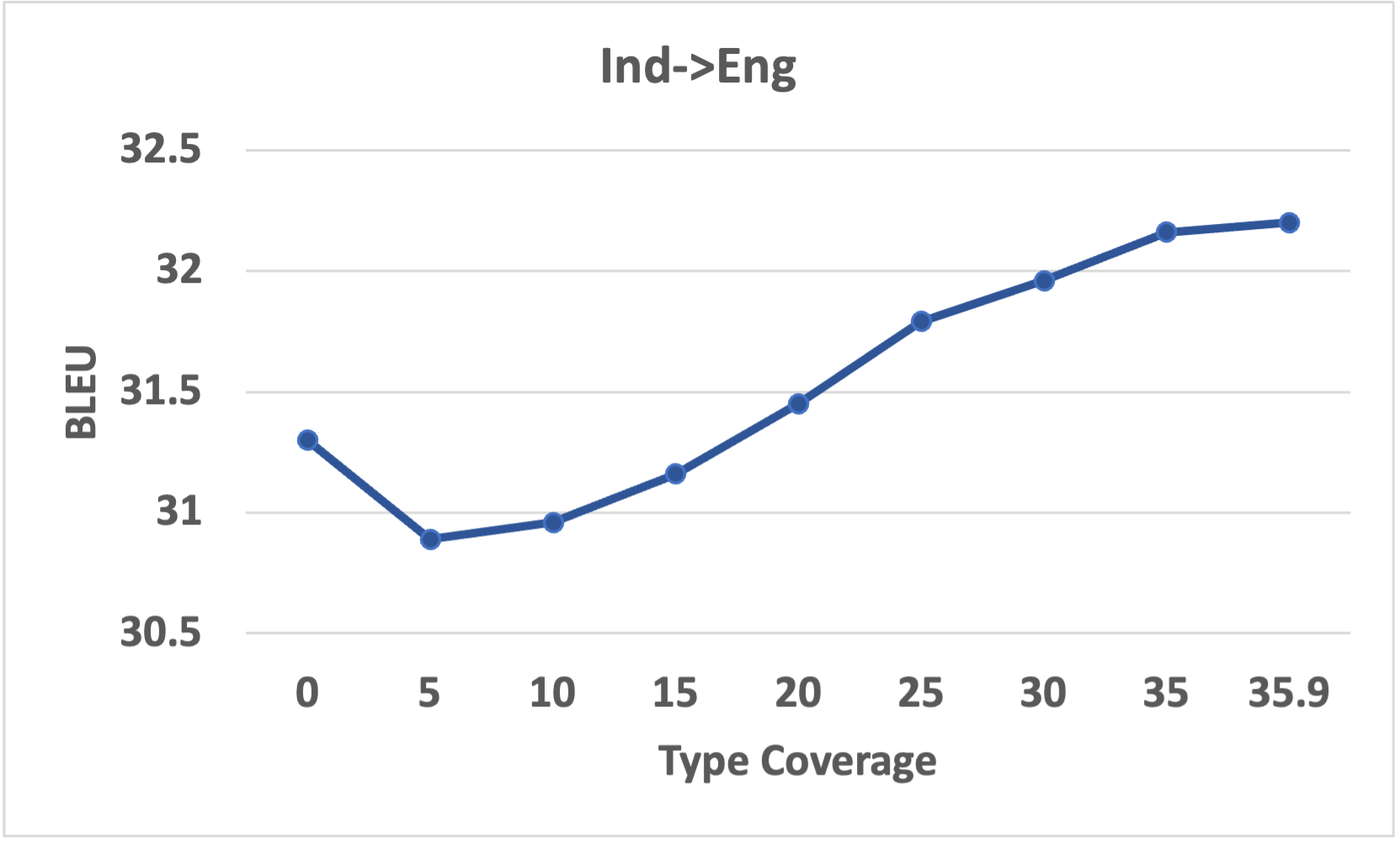
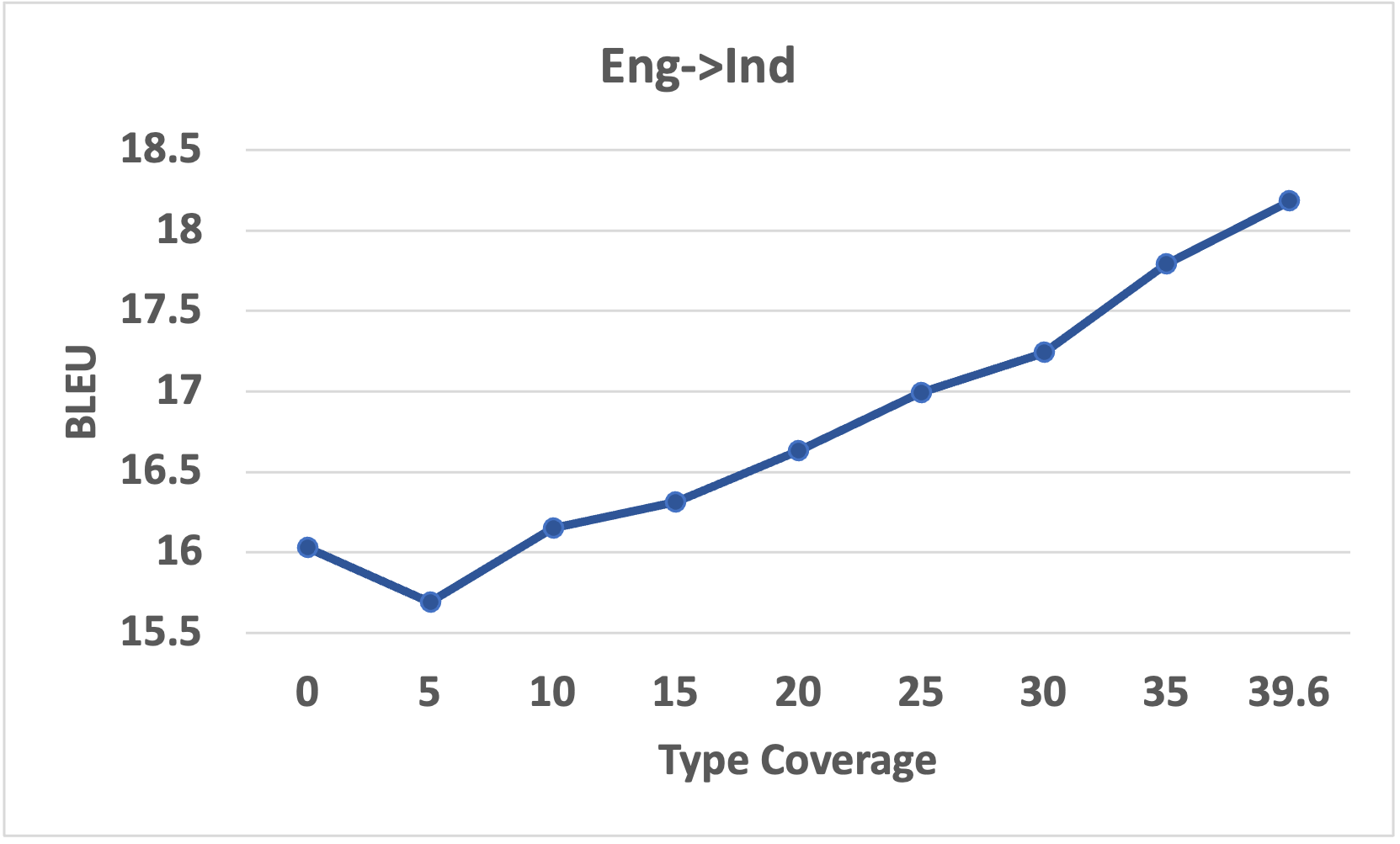
- RQ3How does dictionary coverage affect BLEU gains and what is the upper bound with gold hints?
- RQ4To what extent do language models follow hints, and how controllable is the final translation under different hint strategies?
- RQ5What are the limitations and failure modes when using word-level dictionary hints in prompts?
Key findings
- DiPMT yields average BLEU gains of 0.9 points (OPT) and 1.1 points (Bloom) on low-resource directions.
- In out-of-domain De-En MT, DiPMT improves average BLEU by 9.4 points over baseline and by 3.3 points over RePP.
- Dictionary coverage positively correlates with BLEU improvement, with improvements after 20% type coverage (Ind→Eng) or 5–10% (others).
- Gold hints (oracle translations) raise BLEU by about 1.1 points on average for OPT.
- DiPMT demonstrates substantial controllability, with higher usage of dictionary hints yielding larger translation influence, while false hints have little effect.
- Abnormal cases show hints can help or mislead depending on hint quality and whether the desired translation is among the provided options.
Read this paper
Open the full text in the Nubint reader and ask about any passage as you read.
Read this paper on NubintThis review was generated by AI from the original paper. Please check the paper before citing it.