
[Paper Review] Diffusion Models, Image Super-Resolution And Everything: A Survey
This survey synthesizes the foundations and current trends of applying Diffusion Models to image Super-Resolution, detailing core formulations (DDPMs, SGMs, SDEs), conditioning, and domain-specific challenges.
Diffusion Models (DMs) have disrupted the image Super-Resolution (SR) field and further closed the gap between image quality and human perceptual preferences. They are easy to train and can produce very high-quality samples that exceed the realism of those produced by previous generative methods. Despite their promising results, they also come with new challenges that need further research: high computational demands, comparability, lack of explainability, color shifts, and more. Unfortunately, entry into this field is overwhelming because of the abundance of publications. To address this, we provide a unified recount of the theoretical foundations underlying DMs applied to image SR and offer a detailed analysis that underscores the unique characteristics and methodologies within this domain, distinct from broader existing reviews in the field. This survey articulates a cohesive understanding of DM principles and explores current research avenues, including alternative input domains, conditioning techniques, guidance mechanisms, corruption spaces, and zero-shot learning approaches. By offering a detailed examination of the evolution and current trends in image SR through the lens of DMs, this survey sheds light on the existing challenges and charts potential future directions, aiming to inspire further innovation in this rapidly advancing area.
Motivation & Objective
- Summarize the theoretical foundations of diffusion models as applied to image super-resolution (SR).
- Analyze the unique characteristics, methods, and challenges of DM-based SR compared to previous work.
- Chart current research directions, including input domains, conditioning, guidance, corruption spaces, and zero-shot learning in SR.
- Provide a cohesive roadmap of DM principles and how they influence SR research and practice.
Proposed method
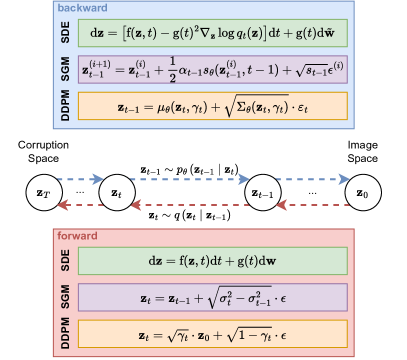
- Explain DDPM, SGM, and SDE formulations and their forward/backward diffusion processes.
- Describe training objectives based on KL divergence/VLB and score matching.
- Discuss conditional variants that incorporate LR inputs and degradation models.
- Outline efficient sampling, likelihood estimation enhancements, and their impact on SR quality.
- Review domain-specific adaptations such as latent/wavelet domains and Null-Space Models.
Experimental results
Research questions
- RQ1What are the core diffusion-model formulations used for image SR (DDPMs, SGMs, SDEs) and how do they relate?
- RQ2What are the main architectural, training, and sampling strategies that enable high-quality SR with diffusion models?
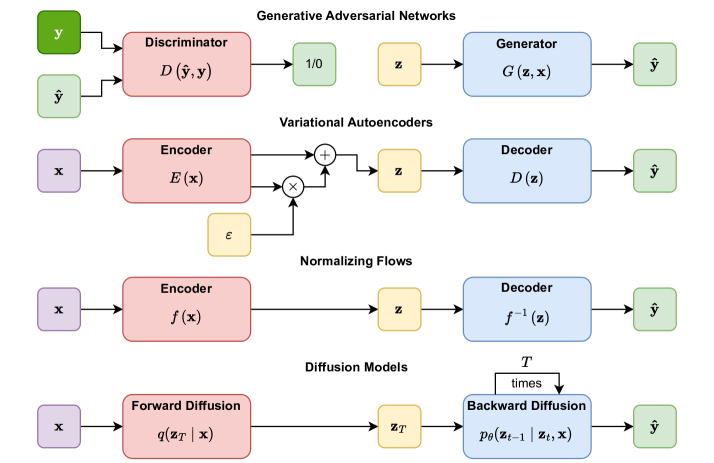
- RQ3How do diffusion models compare to prior generative approaches (GANs, VAEs, flow-based methods) in SR tasks?
- RQ4What are the challenges and domain-specific considerations (e.g., medical imaging, remote sensing) in applying DMs to SR?
- RQ5What future directions and research avenues emerge for DM-based image SR?
Key findings
- Diffusion models have disrupted image SR by producing high-fidelity samples that align with human perceptual judgments.
- DDPMs, SGMs, and SDEs offer complementary views and can be unified under diffusion-based frameworks for SR.
- Conditional diffusion models can integrate LR inputs to perform conditional SR.
- There are trade-offs between sampling efficiency and sample quality that are addressed via improved diffusion formulations and sampling strategies.
- DMs enable exploration of alternative input domains and conditioning strategies for SR, with domain-specific adaptations.
- The survey identifies ongoing challenges such as high computational demands, comparability, explainability, color shifts, and zero-shot learning opportunities.
Read this paper
Open the full text in the Nubint reader and ask about any passage as you read.
Read this paper on NubintThis review was generated by AI from the original paper. Please check the paper before citing it.