
[Paper Review] Digital Twin for Autonomous Surface Vessels: Enabler for Safe Maritime Navigation
This paper proposes a six-level digital twin framework (Levels 0–5) tailored for autonomous surface vessels (ASVs), enabling safe, efficient, and sustainable maritime navigation through real-time simulation, sensor integration, and predictive analytics. The key contribution is a comprehensive methodology that maps digital twin capabilities to ASV operational needs, with actionable recommendations for stakeholders across industry, government, and research to accelerate adoption and ensure safety and environmental performance.
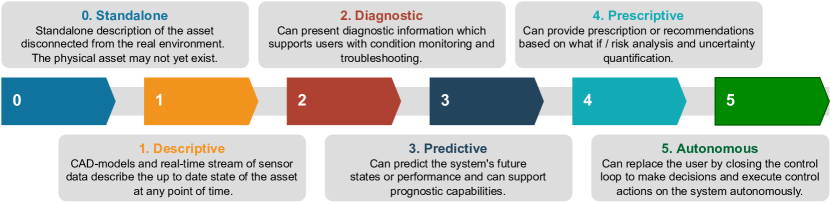
Autonomous surface vessels (ASVs) are becoming increasingly significant in enhancing the safety and sustainability of maritime operations. To ensure the reliability of modern control algorithms utilized in these vessels, digital twins (DTs) provide a robust framework for conducting safe and effective simulations within a virtual environment. Digital twins are generally classified on a scale from 0 to 5, with each level representing a progression in complexity and functionality: Level 0 (Standalone) employs offline modeling techniques; Level 1 (Descriptive) integrates sensors and online modeling to enhance situational awareness; Level 2 (Diagnostic) focuses on condition monitoring and cybersecurity; Level 3 (Predictive) incorporates predictive analytics; Level 4 (Prescriptive) embeds decision-support systems; and Level 5 (Autonomous) enables advanced functionalities such as collision avoidance and path following. These digital representations not only provide insights into the vessel's current state and operational efficiency but also predict future scenarios and assess life endurance. By continuously updating with real-time sensor data, the digital twin effectively corrects modeling errors and enhances decision-making processes. Since DTs are key enablers for complex autonomous systems, this paper introduces a comprehensive methodology for establishing a digital twin framework specifically tailored for ASVs. Through a detailed literature survey, we explore existing state-of-the-art enablers across the defined levels, offering valuable recommendations for future research and development in this rapidly evolving field.
Motivation & Objective
- To address the growing need for safer and more sustainable maritime operations by advancing autonomous surface vessel (ASV) technology.
- To define and structure digital twin capabilities for ASVs across six maturity levels (0–5), from standalone modeling to full autonomy.
- To identify technological enablers—such as sensor integration, predictive analytics, and collision avoidance—critical for digital twin implementation in maritime contexts.
- To provide stakeholder-specific recommendations for industry, government, classification societies, and academia to accelerate digital twin adoption.
- To bridge the gap between theoretical digital twin concepts and practical deployment in autonomous maritime systems through cross-sector collaboration.
Proposed method
- The paper employs a systematic literature review to analyze existing digital twin technologies and their application in maritime autonomous systems.
- It classifies digital twins into six capability levels (0–5), with each level representing increasing complexity in real-time data integration, predictive modeling, and autonomous decision-making.
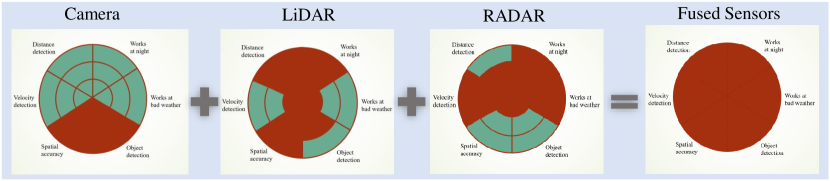
- The methodology emphasizes sensor fusion, real-time data streaming, and dynamic model updating to ensure the digital twin reflects the physical vessel’s current state and predicts future behavior.
- It integrates physics-based and data-driven modeling approaches to enhance situational awareness, condition monitoring, and path optimization in ASVs.
- The framework incorporates advanced control algorithms and cybersecurity measures to support safe and reliable autonomous navigation.
- The approach includes stakeholder engagement and cross-sector collaboration to align technological development with regulatory, safety, and environmental standards.
Experimental results
Research questions
- RQ1How can digital twins be systematically structured and classified to support the development of autonomous surface vessels?
- RQ2What technological enablers—such as sensor integration, predictive analytics, and real-time simulation—are essential for digital twin functionality at each capability level?
- RQ3What are the key challenges and opportunities in deploying digital twins for safe and sustainable maritime operations?
- RQ4How can stakeholders across industry, government, and research collaborate effectively to accelerate digital twin adoption in autonomous shipping?
- RQ5What role do digital twins play in enhancing collision avoidance, fuel efficiency, and environmental performance in ASVs?
Key findings
- Digital twins at Level 5 (Autonomous) enable advanced functionalities such as real-time collision avoidance and path following, significantly improving navigational safety.
- The integration of real-time sensor data into digital twins continuously corrects modeling errors, enhancing accuracy and decision-making reliability.
- Predictive analytics at Level 3 and prescriptive capabilities at Level 4 improve maintenance scheduling and operational efficiency, reducing downtime and emissions.
- Collaboration between industry, research institutions, and regulatory bodies is essential to standardize data exchange, ensure cybersecurity, and accelerate deployment.
- Digital twins reduce the risk of accidents by simulating complex maritime scenarios before real-world implementation, particularly valuable in high-stakes environments like deep-sea shipping.
- The framework supports environmental sustainability by enabling optimal route planning and fuel efficiency, directly contributing to CO2 emission reduction in the maritime sector.
Read this paper
Open the full text in the Nubint reader and ask about any passage as you read.
Read this paper on NubintThis review was generated by AI from the original paper. Please check the paper before citing it.