
[Paper Review] Document-Level Machine Translation with Large Language Models
The paper evaluates GPT-3.5 and GPT-4 for document-level translation, finding strong human-evaluated quality and discourse-awareness, and analyzes prompts, models, and training techniques influencing discourse modeling.
Large language models (LLMs) such as ChatGPT can produce coherent, cohesive, relevant, and fluent answers for various natural language processing (NLP) tasks. Taking document-level machine translation (MT) as a testbed, this paper provides an in-depth evaluation of LLMs' ability on discourse modeling. The study focuses on three aspects: 1) Effects of Context-Aware Prompts, where we investigate the impact of different prompts on document-level translation quality and discourse phenomena; 2) Comparison of Translation Models, where we compare the translation performance of ChatGPT with commercial MT systems and advanced document-level MT methods; 3) Analysis of Discourse Modelling Abilities, where we further probe discourse knowledge encoded in LLMs and shed light on impacts of training techniques on discourse modeling. By evaluating on a number of benchmarks, we surprisingly find that LLMs have demonstrated superior performance and show potential to become a new paradigm for document-level translation: 1) leveraging their powerful long-text modeling capabilities, GPT-3.5 and GPT-4 outperform commercial MT systems in terms of human evaluation; 2) GPT-4 demonstrates a stronger ability for probing linguistic knowledge than GPT-3.5. This work highlights the challenges and opportunities of LLMs for MT, which we hope can inspire the future design and evaluation of LLMs.We release our data and annotations at https://github.com/longyuewangdcu/Document-MT-LLM.
Motivation & Objective
- Assess how context-aware prompts affect document-level translation quality and discourse phenomena.
- Compare ChatGPT with commercial MT systems and advanced document-level MT methods on discourse-aware translation.
- Analyze how ChatGPT and training techniques encode and utilize discourse knowledge for document-level MT.
Proposed method
- Three document-level prompts (P1, P2, P3) to guide ChatGPT in translating long texts.
- Systematic comparison of ChatGPT (GPT-3.5 and GPT-4) with commercial MTs (Google Translate, DeepL, Tencent TranSmart) and document-level MT methods.
- Evaluation using automatic metrics (BLEU, d-BLEU, TER, COMET) and human judgments (general and discourse-aware), plus targeted discourse metrics (cTT, aZPT).
- Probing discourse knowledge with contrastive tests (deixis, lexical consistency, ellipsis) and explanations to assess prediction-explanation alignment.
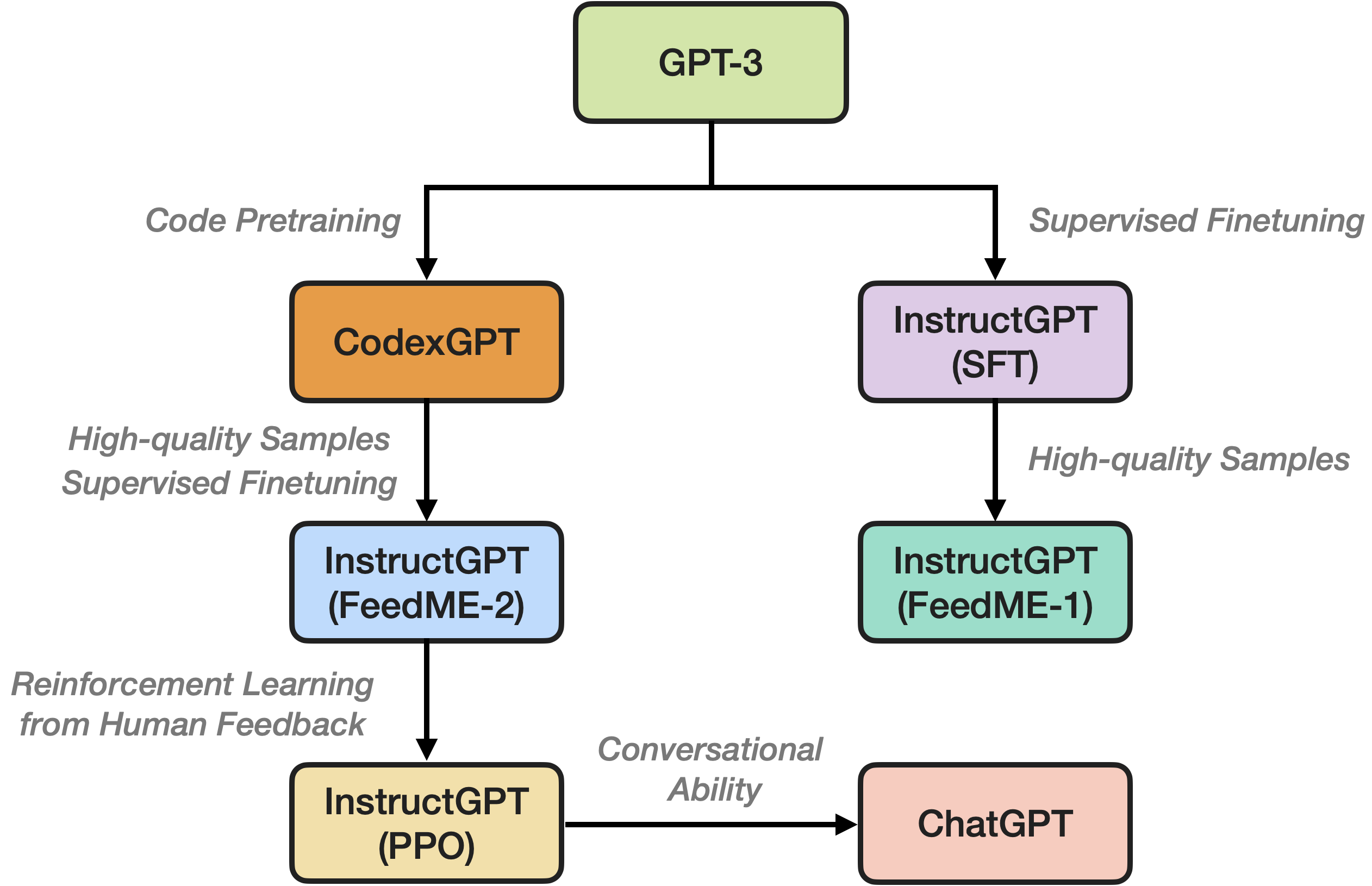
- Analysis of training techniques (SFT, code pretraining, RLHF) and their impact on translation and discourse modeling.
Experimental results
Research questions
- RQ1How do context-aware prompts influence document-level translation quality and discourse phenomena in LLMs?
- RQ2How does ChatGPT compare to commercial MT systems and state-of-the-art document-level MT methods on document-level translation benchmarks?
- RQ3To what extent do LLMs encode and utilize discourse knowledge, and how do training techniques affect discourse modeling?
- RQ4What are the effects and risks of data contamination and evaluation methodologies in assessing LLM-based document MT?
Key findings
- LLMs (GPT-3.5, GPT-4) can outperform commercial MT systems in human evaluations for document-level translation on several domains.
- GPT-4 demonstrates stronger ability for probing linguistic knowledge than GPT-3.5.
- Among prompts, P3 (document-level translation without strict sentence boundaries) generally yields the best results and improves discourse awareness.
- ChatGPT shows superior performance to some document-level MT baselines in human evaluation, though results vary by domain and data.
- Training techniques like code pretraining, supervised fine-tuning (SFT), and RLHF can enhance translation quality and discourse modeling, with RLHF providing notable gains.
- There is a notable discrepancy between automatic metrics (e.g., d-BLEU) and human judgments, highlighting the value of human evaluation in document-level MT.
Read this paper
Open the full text in the Nubint reader and ask about any passage as you read.
Read this paper on NubintThis review was generated by AI from the original paper. Please check the paper before citing it.