
[Paper Review] DoE2Vec: Deep-learning Based Features for Exploratory Landscape Analysis
DoE2Vec proposes a variational autoencoder (VAE)-based method to automatically learn deep latent representations of optimization landscapes from design-of-experiments (DoE) data, eliminating the need for manual feature engineering. It achieves strong performance in classifying landscape properties and significantly boosts accuracy when combined with classical exploratory landscape analysis (ELA) features.
We propose DoE2Vec, a variational autoencoder (VAE)-based methodology to learn optimization landscape characteristics for downstream meta-learning tasks, e.g., automated selection of optimization algorithms. Principally, using large training data sets generated with a random function generator, DoE2Vec self-learns an informative latent representation for any design of experiments (DoE). Unlike the classical exploratory landscape analysis (ELA) method, our approach does not require any feature engineering and is easily applicable for high dimensional search spaces. For validation, we inspect the quality of latent reconstructions and analyze the latent representations using different experiments. The latent representations not only show promising potentials in identifying similar (cheap-to-evaluate) surrogate functions, but also can significantly boost performances when being used complementary to the classical ELA features in classification tasks.
Motivation & Objective
- To develop an automated, self-supervised representation learning method for optimization landscapes that avoids expert-designed feature engineering.
- To address limitations of classical ELA, such as feature redundancy, low expressiveness, and poor scalability to high-dimensional problems.
- To create a scalable, general-purpose feature learning framework applicable to diverse black-box optimization problems.
- To evaluate the effectiveness of learned latent features in downstream meta-learning tasks like landscape property classification.
- To investigate the complementary nature of DoE2Vec features and classical ELA features in improving classification performance.
Proposed method
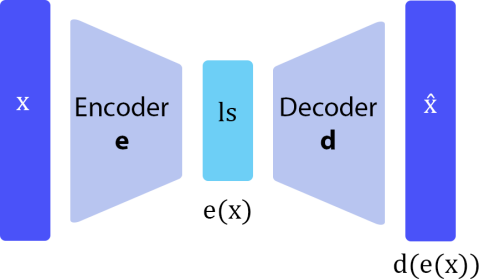
- A deep variational autoencoder (VAE) is trained on objective function values from a DoE of random functions to learn a compact, informative latent representation.
- The input to the VAE is a set of function evaluations $ f(w_i) $ at $ n $ sample points $ w_i \in \mathbb{R}^d $, forming a low-dimensional data structure of the landscape.
- The model is trained on 250,000 random functions using a single T4 GPU, with pre-trained models available on Hugging Face.
- Latent representations from the VAE are used as features for downstream classification tasks, such as predicting BBOB function properties.
- The approach is evaluated by comparing its performance against classical ELA features and their combination in multiclass classification tasks.
- The method is scale-invariant but not rotation- or translation-invariant, suggesting potential for improvement via alternative loss functions.
Experimental results
Research questions
- RQ1Can a self-supervised VAE-based method learn meaningful, generalizable representations of optimization landscapes without manual feature engineering?
- RQ2How do the latent representations from DoE2Vec compare to classical ELA features in classifying landscape properties such as multimodality and global structure?
- RQ3To what extent do DoE2Vec and classical ELA features complement each other in improving classification accuracy?
- RQ4Can the learned latent features be used effectively in downstream meta-learning tasks like algorithm selection?
- RQ5What are the limitations of DoE2Vec in terms of invariance to transformations like rotation and translation?
Key findings
- DoE2Vec achieves high-quality latent reconstructions of optimization landscapes, demonstrating its ability to capture essential structural characteristics from DoE data.
- The latent representations learned by DoE2Vec show strong potential in identifying similar, cheap-to-evaluate surrogate functions, indicating effective landscape characterization.
- When combined with classical ELA features, DoE2Vec significantly improves macro F1 scores in classifying BBOB function properties, with the best performance reaching 0.997 for the funnel property.
- Classical ELA features outperform DoE2Vec alone in most classification tasks, particularly for multimodal and global structure detection, but the combination yields superior results.
- The VAE-32 model combined with ELA features achieves the highest macro F1 score of 0.997 on the funnel property, demonstrating strong complementary effects.
- The method is computationally efficient, with average training time of five minutes on 250,000 random functions using a single T4 GPU, and is carbon-neutral via solar power.
Read this paper
Open the full text in the Nubint reader and ask about any passage as you read.
Read this paper on NubintThis review was generated by AI from the original paper. Please check the paper before citing it.