
[Paper Review] Efficient Egocentric Visual Perception Combining Eye-tracking, a Software Retina and Deep Learning
This paper proposes an efficient egocentric visual perception system that uses human eye-tracking data to guide a software retina model, reducing input data by a factor of 16.7 while achieving 98.2% test accuracy on a 9-class object recognition task via a custom DCNN, demonstrating high performance with significantly reduced computational load through bio-inspired foveated vision and deep learning integration.
We present ongoing work to harness biological approaches to achieving highly efficient egocentric perception by combining the space-variant imaging architecture of the mammalian retina with Deep Learning methods. By pre-processing images collected by means of eye-tracking glasses to control the fixation locations of a software retina model, we demonstrate that we can reduce the input to a DCNN by a factor of 3, reduce the required number of training epochs and obtain over 98% classification rates when training and validating the system on a database of over 26,000 images of 9 object classes.
Motivation & Objective
- To develop an efficient egocentric perception system that leverages human eye-tracking data to guide visual sampling.
- To integrate a high-resolution software retina model with deep learning for reduced input data and improved computational efficiency.
- To demonstrate state-of-the-art classification performance using fixation-guided, space-variant image sampling.
- To enable unconstrained data collection by replacing rigid head stabilization with predictive fixation modeling.
- To explore the use of conformal mapping and cortical image transformation for scale- and rotation-invariant feature extraction.
Proposed method
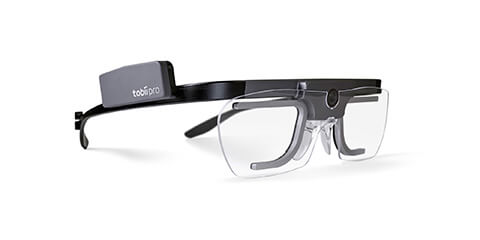
- Eye-tracking glasses (Tobii Pro 2) captured images while human observers fixated on salient object regions.
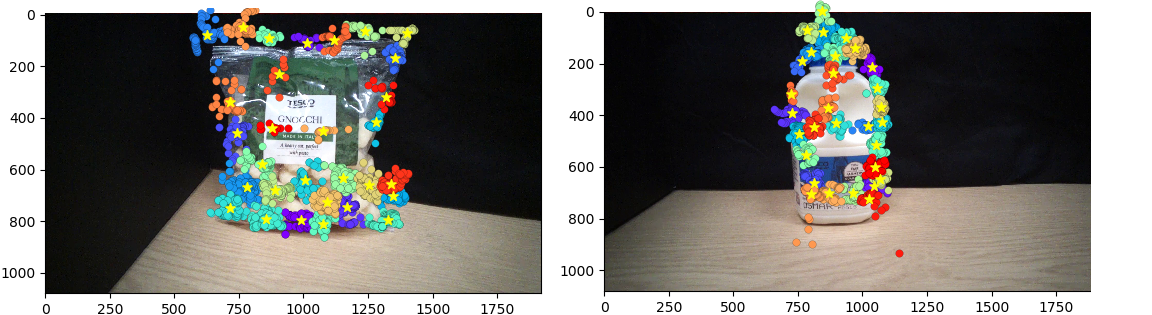
- Fixation locations were clustered using K-means (K = 1% of fixations per class) to identify representative foveal regions.
- A 50K-node software retina model applied complex-log conformal mapping to transform full images into space-variant cortical images of size 399×752px.
- A custom DCNN with seven 3×3 convolutional layers, max pooling, and three 132-node fully connected layers was trained on cortical images.
- The system compared performance using cortical images versus full-resolution fixation crops to benchmark data efficiency and accuracy.
- A scattered datapoint gridding algorithm was applied to cortical images to further reduce input size while maintaining accuracy.
Experimental results
Research questions
- RQ1Can human eye-tracking data be effectively used to guide a software retina for efficient egocentric object recognition?
- RQ2To what extent does the software retina’s space-variant sampling reduce input data while preserving classification performance?
- RQ3How does the performance of a DCNN trained on cortical images compare to one trained on full-resolution fixation crops?
- RQ4Can a custom network layer directly connected to retina outputs improve efficiency beyond generating intermediate cortical images?
- RQ5Can an auxiliary network predict diagnostic fixation points and enable unconstrained data collection in egocentric settings?
Key findings
- The system achieved 98.2% test accuracy on a 9-class object recognition task using cortical images derived from eye-tracking data.
- A 16.7-fold reduction in visual data input was achieved through the software retina’s space-variant sampling, with minimal accuracy loss.
- The cortical image-based DCNN required only 6 seconds to classify the test set, compared to 12 seconds for the full-resolution fixation crop model.
- The full-resolution fixation crop model achieved 99.5% test accuracy but required larger batch sizes and longer training time.
- Subsampling cortical images with a scattered datapoint gridding algorithm achieved a 10.8× input data reduction without performance loss.
- An auxiliary network is being developed to predict diagnostic fixations and enable object segmentation from arbitrary, partially occluded views.
Better researchstarts right now
From reading papers to final review, dramatically reduce your research time.
No credit card · Free plan available
This review was created by AI and reviewed by human editors.