
[Paper Review] EndoGaussians: Single View Dynamic Gaussian Splatting for Deformable Endoscopic Tissues Reconstruction
This paper introduces EndoGaussians, the first Gaussian Splatting-based method for single-view dynamic 3D reconstruction of deformable endoscopic tissues. By leveraging depth-guided 3D Gaussian splatting with hallucination-aware training and physical consistency losses, it achieves state-of-the-art performance in PSNR (41.351), SSIM (0.971), and LPIPS (0.031), while enabling real-time inference at ~40 FPS.
The accurate 3D reconstruction of deformable soft body tissues from endoscopic videos is a pivotal challenge in medical applications such as VR surgery and medical image analysis. Existing methods often struggle with accuracy and the ambiguity of hallucinated tissue parts, limiting their practical utility. In this work, we introduce EndoGaussians, a novel approach that employs Gaussian Splatting for dynamic endoscopic 3D reconstruction. This method marks the first use of Gaussian Splatting in this context, overcoming the limitations of previous NeRF-based techniques. Our method sets new state-of-the-art standards, as demonstrated by quantitative assessments on various endoscope datasets. These advancements make our method a promising tool for medical professionals, offering more reliable and efficient 3D reconstructions for practical applications in the medical field.
Motivation & Objective
- To address the challenge of accurate 3D reconstruction of deformable soft tissues in endoscopic videos under single-view RGBD settings.
- To overcome the limitations of NeRF-based methods, which lack interpretability due to implicit representations and hallucinated tissue parts.
- To improve reconstruction reliability by explicitly identifying and penalizing hallucinated regions using a hallucination map.
- To achieve state-of-the-art performance in reconstruction quality and speed on endoscope datasets.
- To enable practical deployment in medical applications such as VR surgery through faster, more trustworthy 3D reconstructions.
Proposed method
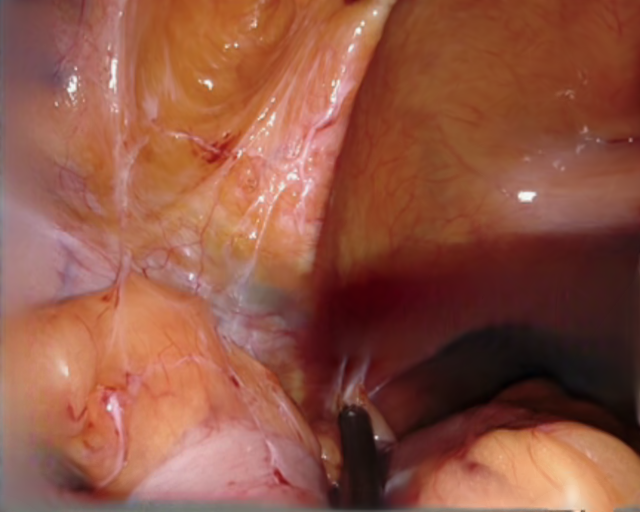
- The method first applies a video inpainting model to remove surgical tools from endoscopic frames, producing clean input for reconstruction.
- It employs depth-guided 3D Gaussian Splatting, where Gaussians are optimized using differentiable rendering and depth supervision.
- A hallucination map is generated during rendering to identify occluded or hallucinated regions, enabling a dedicated L1 loss against ground-truth tool masks.
- The framework integrates physical consistency losses: rigid motion, rotational, and isometric constraints to preserve anatomical plausibility.
- The loss function combines image L1 loss, depth L1 loss (with reduced weight on estimated parts), and regularization terms for rigidity, rotation, and isometry.
- Training is optimized via backpropagation using differentiable depth rasterization and alpha-blending to align rendered depth with estimated depth maps.
Experimental results
Research questions
- RQ1Can Gaussian Splatting be effectively adapted for dynamic, single-view 3D reconstruction of deformable endoscopic tissues?
- RQ2How can hallucinated tissue regions be identified and suppressed during reconstruction to improve reliability?
- RQ3Can physical consistency constraints (rigid motion, rotation, isometry) enhance the realism and accuracy of the reconstructed 3D models?
- RQ4Does the proposed method outperform existing NeRF-based and sparse warp field-based approaches in reconstruction quality and speed?
- RQ5Can the method achieve real-time inference while maintaining high fidelity on real endoscopic datasets?
Key findings
- The proposed method achieves a PSNR of 41.351 on the EndoNeRF dataset, significantly outperforming prior SOTA methods such as EndoGS (37.654) and ForPlane (36.457).
- It attains an SSIM of 0.971, demonstrating superior structural similarity to ground truth, compared to 0.965 for EndoGS and 0.946 for ForPlane.
- The LPIPS score of 0.031 indicates high perceptual fidelity, surpassing EndoGS (0.036) and ForPlane (0.058).
- The method runs at approximately 40 FPS, enabling real-time reconstruction, in contrast to EndoNeRF’s <0.2 FPS and ForPlane’s ~1.7 FPS.
- The hallucination map enables effective detection of non-observed regions, reducing reliance on unverified tissue generation.
- The inclusion of physical consistency losses (rigid, rotational, isometric) leads to more anatomically plausible reconstructions, especially in regions with complex deformations.
Read this paper
Open the full text in the Nubint reader and ask about any passage as you read.
Read this paper on NubintThis review was generated by AI from the original paper. Please check the paper before citing it.