
[Paper Review] Enhancing Large Language Model Performance To Answer Questions and Extract Information More Accurately
The paper shows that fine-tuning LLMs with labeled data and using advanced retrieval strategies (RAG and FLARE) improves QA accuracy on financial datasets over zero-shot baselines, with open-source and closed-source models compared.
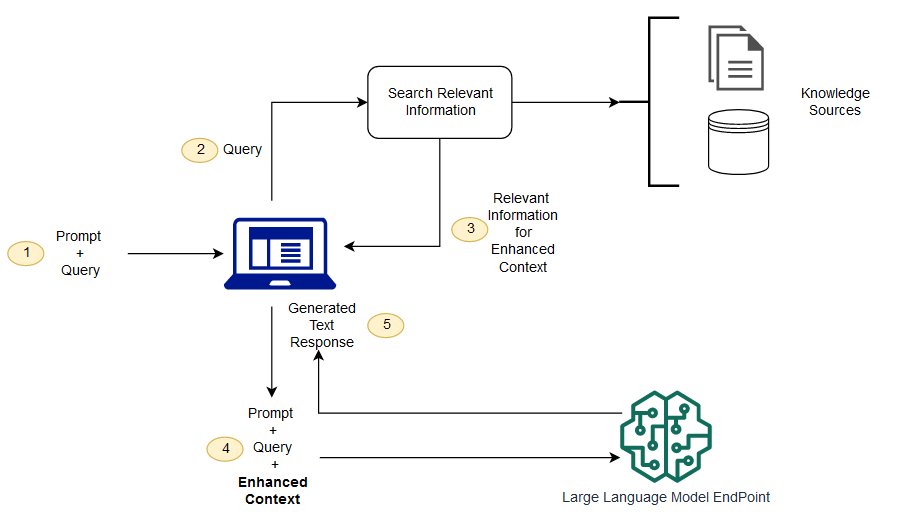
Large Language Models (LLMs) generate responses to questions; however, their effectiveness is often hindered by sub-optimal quality of answers and occasional failures to provide accurate responses to questions. To address these challenges, a fine-tuning process is employed, involving feedback and examples to refine models. The objective is to enhance AI models through continuous feedback loops, utilizing metrics such as cosine similarity, LLM evaluation and Rouge-L scores to evaluate the models. Leveraging LLMs like GPT-3.5, GPT4ALL, and LLaMA2, and Claude, this approach is benchmarked on financial datasets, including the FinanceBench and RAG Instruct Benchmark Tester Dataset, illustrating the necessity of fine-tuning. The results showcase the capability of fine-tuned models to surpass the accuracy of zero-shot LLMs, providing superior question and answering capabilities. Notably, the combination of fine-tuning the LLM with a process known as Retrieval Augmented Generation (RAG) proves to generate responses with improved accuracy.
Motivation & Objective
- Demonstrate that fine-tuning improves QA accuracy on finance-focused datasets.
- Explore the effectiveness of Retrieval Augmented Generation (RAG) and advanced retrieval tactics.
- Assess the impact of parameter-efficient fine-tuning techniques on model performance.
- Compare open-source and closed-source LLMs in finance QA tasks.
- Provide practical guidance for choosing models and methods under privacy and cost constraints.
Proposed method
- Apply supervised fine-tuning and reprompting across several LLMs (GPT-3.5 Turbo, GPT4ALL, Llama2, Claude).
- Use FinanceBench and RAG Instruct Benchmark Tester datasets for evaluation.
- Incorporate RAG to provide external factual context during QA.
- Employ FLARE with HyDE-like hypothetical embeddings to improve retrieval relevance.
- Utilize cosine similarity, ROUGE-L, and LLM evaluation as performance metrics.
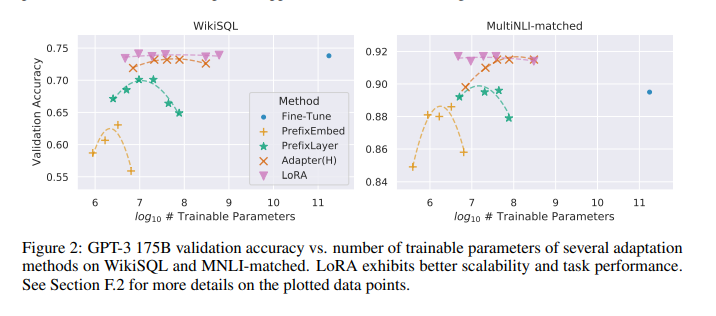
- Discuss PEFT approaches (LoRA, QLoRA) for efficient fine-tuning and compare against full fine-tuning.
Experimental results
Research questions
- RQ1Does fine-tuning with human-labeled data improve QA accuracy on finance-related questions compared to zero-shot LLMs?
- RQ2How do retrieval strategies (standard RAG vs. FLARE) impact correctness and factual grounding in finance QA?
- RQ3What is the effect of combining fine-tuning with RAG on performance across open-source and closed-source LLMs?
- RQ4How do parameter-efficient fine-tuning methods (LoRA, QLoRA) compare to full fine-tuning in this domain?
- RQ5What guidelines emerge for selecting model type (open-source vs. closed-source) given privacy, cost, and performance trade-offs?
Key findings
- Fine-tuning with labeled data consistently improves accuracy across FinanceBench and RAG Instruct Benchmark Tester datasets.
- RAG alone is insufficient for domain-specific questions, and combining fine-tuning with enhanced retrieval yields better results.
- FLARE with HyDE-style hypothetical embeddings helps trigger retrieval when model confidence is low, improving correctness.
- Open-source models (e.g., LLaMA-2) can achieve competitive performance with sufficient fine-tuning and retrieval design, though require more compute.
- PEFT methods (LoRA, QLoRA) offer substantial parameter reduction with comparable performance to full fine-tuning.
- The study highlights the importance of effective retrieval and domain-specific prompting for reducing hallucinations in financial QA.
Read this paper
Open the full text in the Nubint reader and ask about any passage as you read.
Read this paper on NubintThis review was generated by AI from the original paper. Please check the paper before citing it.