
[Paper Review] Equivariantly formal 2-torus actions of complexity one
This paper investigates equivariantly formal 2-torus actions of complexity one on manifolds, proving that the orbit space of such actions is a topological manifold and, under orientability, homeomorphic to a sphere. It establishes that for orientable small covers, the restriction of the 2-torus action to a subgroup of index 2 yields an orbit space homeomorphic to the n-sphere, generalizing known results on real Grassmannians and flag manifolds.
In this paper we study a specific class of actions of a $2$-torus $\mathbb{Z}_2^k$ on manifolds, namely, the actions of complexity one in general position. We describe the orbit space of equivariantly formal $2$-torus actions of complexity one in general position and restricted complexity one actions in the case of small covers. It is observed that the orbit spaces of such actions are topological manifolds. If the action is equivariantly formal, we prove that the orbit space is a $\mathbb{Z}_2$-homology sphere. We study a particular subclass of these $2$-torus actions: restrictions of small covers to a subgroup of index 2 in general position. The subgroup of this form exists if and only if the small cover is orientable, and in this case we prove that the orbit space of a restricted $2$-torus action is homeomorphic to a sphere.
Motivation & Objective
- To characterize the orbit space of equivariantly formal 2-torus actions of complexity one in general position.
- To determine conditions under which a 2-subtorus in general position exists within small covers.
- To prove that the orbit space of such restricted actions is homeomorphic to a sphere when the small cover is orientable.
- To generalize known results on orbit spaces of real Grassmannians and flag manifolds to the broader class of orientable small covers.
Proposed method
- The paper uses the notion of general position for 2-torus actions, requiring that any n−1 weights at a fixed point are linearly independent over Z₂.
- It applies the definition of equivariant formality via the equality of Betti numbers of the fixed point set and the manifold over Z₂.
- It employs the coordinate description of the standard complexity one action on Rⁿ via the subgroup G = {(g₁,…,gn) ∈ Z₂ⁿ : ∏gi = 1}.
- It leverages results from toric topology, particularly the orbit space structure of small covers over simple polytopes.
- It uses the quotient map from the orbit space of the full 2-torus action to the orbit space of the subgroup, showing that the latter is a double of a polytope with identifications on the boundary.
- It applies the criterion that a 2-subtorus G = Ker(ξ) is in general position iff ξ(λᵢ) = 1 for all characteristic vectors λᵢ.
Experimental results
Research questions
- RQ1Under what conditions is the orbit space of an equivariantly formal 2-torus action of complexity one a topological manifold?
- RQ2When does a 2-subtorus of index 2 exist in a small cover, and what is the topological structure of its orbit space?
- RQ3How is the orbit space of a restricted 2-torus action related to the topology of the original small cover?
- RQ4What is the precise topological type of the orbit space when the action is equivariantly formal and in general position?
- RQ5Is the orbit space of a restricted 2-torus action on an orientable small cover always homeomorphic to a sphere?
Key findings
- The orbit space of an equivariantly formal 2-torus action of complexity one in general position is a topological manifold with Z₂-homology sphere cohomology, isomorphic to H*(Sⁿ; Z₂).
- A 2-subtorus in general position exists in a small cover if and only if the small cover is orientable.
- When such a 2-subtorus exists, it is unique.
- The orbit space of the restricted 2-torus action on an orientable small cover is homeomorphic to the n-dimensional sphere Sⁿ.
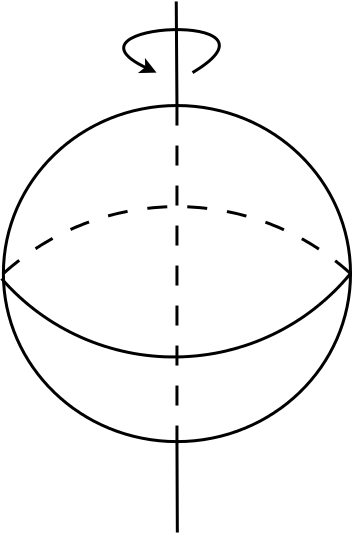
- The orbit space construction is equivalent to gluing two n-discs along their boundary via the quotient map, yielding Sⁿ.
- The condition for general position of G = Ker(ξ) is that ξ(λᵢ) = 1 for all characteristic vectors λᵢ, ensuring that no stabilizer is contained in G.

Read this paper
Open the full text in the Nubint reader and ask about any passage as you read.
Read this paper on NubintThis review was generated by AI from the original paper. Please check the paper before citing it.