
[Paper Review] Espresso: A Fast End-to-end Neural Speech Recognition Toolkit
Espresso is a fast, modular, and extensible end-to-end neural automatic speech recognition (ASR) toolkit built on PyTorch and fairseq, featuring a fully parallelized decoder with look-ahead word-based language model fusion. It achieves state-of-the-art ASR performance on WSJ, LibriSpeech, and Switchboard without data augmentation and is 4–11× faster for decoding than comparable systems like ESPnet.
We present Espresso, an open-source, modular, extensible end-to-end neural automatic speech recognition (ASR) toolkit based on the deep learning library PyTorch and the popular neural machine translation toolkit fairseq. Espresso supports distributed training across GPUs and computing nodes, and features various decoding approaches commonly employed in ASR, including look-ahead word-based language model fusion, for which a fast, parallelized decoder is implemented. Espresso achieves state-of-the-art ASR performance on the WSJ, LibriSpeech, and Switchboard data sets among other end-to-end systems without data augmentation, and is 4--11x faster for decoding than similar systems (e.g. ESPnet).
Motivation & Objective
- Address the limitations of existing end-to-end ASR toolkits, such as poor extensibility and slow decoding, especially in systems like ESPnet that rely on mixed deep learning frameworks.
- Enable fast, scalable training and inference for end-to-end ASR by leveraging PyTorch and fairseq’s distributed training and optimized inference capabilities.
- Introduce a fully parallelized decoder with look-ahead language model fusion to accelerate decoding without sacrificing accuracy.
- Achieve state-of-the-art ASR performance on standard benchmarks (WSJ, LibriSpeech, Switchboard) without data augmentation, demonstrating the effectiveness of the proposed architecture and training techniques.
- Facilitate future integration between speech recognition and NLP by sharing infrastructure with fairseq, enabling unified research in speech-to-text and text-to-speech systems.
Proposed method
- Builds on fairseq and PyTorch to ensure modularity, extensibility, and support for distributed training across GPUs and nodes.
- Uses Kaldi-style SCP format for input data, with sharded loading of acoustic features to balance I/O and memory usage.
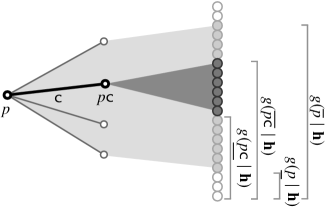
- Implements a parallelized decoder for look-ahead language model fusion, where LM scores are computed across all hypotheses in a batch simultaneously, avoiding sequential computation.
- Introduces an improved coverage mechanism to reduce deletion and insertion errors during decoding, outperforming standard EOS thresholding.
- Supports subword tokenization (SentencePiece) and joint training with cross-entropy loss, with no reliance on CTC or hybrid training.
- Enables seamless interoperability with fairseq’s existing inference and training pipelines, including beam search and bucketed batching.
Experimental results
Research questions
- RQ1Can a modular, PyTorch-based ASR toolkit achieve faster decoding than existing end-to-end systems like ESPnet while maintaining or improving accuracy?
- RQ2Does a fully parallelized implementation of look-ahead language model fusion significantly reduce decoding latency compared to sequential approaches?
- RQ3Can improved coverage mechanisms reduce word error rates more effectively than standard EOS thresholding in end-to-end ASR?
- RQ4To what extent can a unified toolkit built on fairseq enable faster and more maintainable research in speech-to-text and text-to-speech systems?
- RQ5Can state-of-the-art ASR performance be achieved without data augmentation by leveraging better model architecture and decoding techniques?
Key findings
- Espresso achieves state-of-the-art WER on WSJ, LibriSpeech, and Switchboard without data augmentation, with 3.3% WER on LibriSpeech dev-clean and 2.9% on dev-other using improved coverage.
- The system is 17.9% faster for language model training and 16.0% faster for ASR model training compared to ESPnet on the WSJ dataset.
- Decoding is 3.7× faster than ESPnet without language model fusion and over 10× faster with look-ahead language model fusion due to parallelized LM scoring.
- The improved coverage mechanism reduces deletion errors more effectively than EOS thresholding, contributing to lower WER on LibriSpeech and WSJ.
- On Switchboard, Espresso achieves 9.2% WER with subword LM and 10.7% without, outperforming prior end-to-end models without SpecAugment.
- The toolkit supports seamless integration with fairseq, enabling future joint research in speech translation and text-to-speech using shared infrastructure.
Read this paper
Open the full text in the Nubint reader and ask about any passage as you read.
Read this paper on NubintThis review was generated by AI from the original paper. Please check the paper before citing it.