
[Paper Review] Evaluation of Tree Based Regression over Multiple Linear Regression for Non-normally Distributed Data in Battery Performance
This study evaluates tree-based regression (Random Forest) against multiple linear regression (MLR) for predicting battery cycle life from non-normal, multicollinear data. Despite data transformation and stepwise regression, MLR achieved only 81.23% R²; in contrast, Random Forest achieved 97.73% R² without transformation, demonstrating superior performance on skewed, high-dimensional battery datasets due to its non-parametric nature and robustness to multicollinearity and non-normality.
Battery performance datasets are typically non-normal and multicollinear. Extrapolating such datasets for model predictions needs attention to such characteristics. This study explores the impact of data normality in building machine learning models. In this work, tree-based regression models and multiple linear regressions models are each built from a highly skewed non-normal dataset with multicollinearity and compared. Several techniques are necessary, such as data transformation, to achieve a good multiple linear regression model with this dataset; the most useful techniques are discussed. With these techniques, the best multiple linear regression model achieved an R^2 = 81.23% and exhibited no multicollinearity effect for the dataset used in this study. Tree-based models perform better on this dataset, as they are non-parametric, capable of handling complex relationships among variables and not affected by multicollinearity. We show that bagging, in the use of Random Forests, reduces overfitting. Our best tree-based model achieved accuracy of R^2 = 97.73%. This study explains why tree-based regressions promise as a machine learning model for non-normally distributed, multicollinear data.
Motivation & Objective
- To evaluate the performance of tree-based regression versus multiple linear regression on non-normally distributed, multicollinear battery performance data.
- To assess the impact of data transformation and variable selection techniques on MLR model accuracy and validity.
- To determine whether non-parametric models like Random Forest can outperform parametric models in datasets violating classical regression assumptions.
- To identify the most predictive features for battery cycle life using model-interpretability techniques.
- To provide guidance on model selection for battery degradation prediction under real-world data constraints.
Proposed method
- Built two multiple linear regression models: one without data transformation and one with Box-Cox transformation to address non-normality.
- Applied stepwise regression to mitigate multicollinearity in the MLR models.
- Developed a single decision tree and a Random Forest regression (RFR) model without any data transformation, leveraging the non-parametric nature of tree-based models.
- Used 10-fold cross-validation to evaluate model generalization and compute testing accuracy and correlation coefficients.
- Performed residual analysis on MLR models to validate assumptions, while RFR models required no such assumptions.
- Conducted feature importance analysis using the RFR model to rank predictors based on their contribution to cycle life prediction.
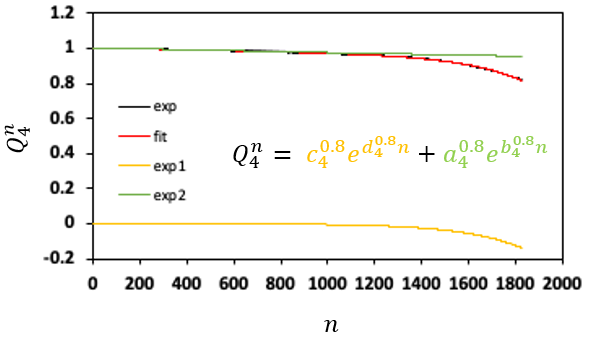
Experimental results
Research questions
- RQ1Does data transformation significantly improve the performance of multiple linear regression on non-normal, multicollinear battery performance data?
- RQ2How do tree-based models like Random Forest compare to transformed and stepwise MLR models in terms of R² accuracy and overfitting on skewed battery datasets?
- RQ3To what extent do tree-based models mitigate issues related to multicollinearity and non-normality compared to parametric models?
- RQ4Which input features are most predictive of battery cycle life, and how do their importances differ between MLR and RFR models?
- RQ5Can tree-based models reliably predict battery end-of-life without data transformation or assumption validation?
Key findings
- The best multiple linear regression model, after Box-Cox transformation and stepwise regression, achieved an R² of 81.23% and eliminated multicollinearity, but still exhibited overfitting and predictive outliers.
- The Random Forest regression model achieved the highest testing accuracy at 97.73%, with no overfitting and no predictive outliers, outperforming all other models.
- The decision tree model achieved 99.73% training accuracy and 97.54% testing accuracy but showed clear overfitting, which was resolved by ensembling into Random Forest.
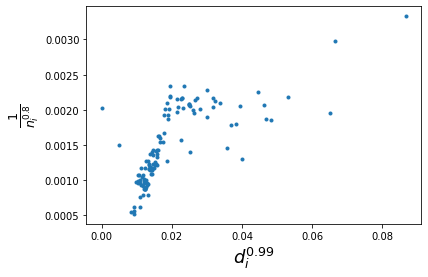
- Feature importance analysis revealed that $d_{i}^{0.97}$ was the most influential predictor (79% importance), followed by $d_{i}^{0.98}$ (16%) and $d_{i}^{0.99}$ (5%) in the RFR model.
- The correlation coefficient between predicted and actual values was 0.99 for both tree-based models, significantly higher than the 0.88–0.91 observed in MLR models.
- Tree-based models, particularly Random Forest, demonstrated robustness to data skewness and multicollinearity without requiring data transformation or assumption checks.
Read this paper
Open the full text in the Nubint reader and ask about any passage as you read.
Read this paper on NubintThis review was generated by AI from the original paper. Please check the paper before citing it.