
[Paper Review] Fairness and Bias Mitigation in Computer Vision: A Survey
This survey provides a comprehensive analysis of fairness and bias mitigation in computer vision, covering definitions, bias detection, mitigation techniques, datasets, and challenges in multimodal foundation and generative models. It synthesizes recent advances, highlights limitations in current approaches, and identifies open problems in ensuring fairness for emerging vision systems with open-vocabulary, zero-shot capabilities.
Computer vision systems have witnessed rapid progress over the past two decades due to multiple advances in the field. As these systems are increasingly being deployed in high-stakes real-world applications, there is a dire need to ensure that they do not propagate or amplify any discriminatory tendencies in historical or human-curated data or inadvertently learn biases from spurious correlations. This paper presents a comprehensive survey on fairness that summarizes and sheds light on ongoing trends and successes in the context of computer vision. The topics we discuss include 1) The origin and technical definitions of fairness drawn from the wider fair machine learning literature and adjacent disciplines. 2) Work that sought to discover and analyze biases in computer vision systems. 3) A summary of methods proposed to mitigate bias in computer vision systems in recent years. 4) A comprehensive summary of resources and datasets produced by researchers to measure, analyze, and mitigate bias and enhance fairness. 5) Discussion of the field's success, continuing trends in the context of multimodal foundation and generative models, and gaps that still need to be addressed. The presented characterization should help researchers understand the importance of identifying and mitigating bias in computer vision and the state of the field and identify potential directions for future research.
Motivation & Objective
- To provide a systematic overview of fairness definitions and technical formulations drawn from fair machine learning and related fields.
- To analyze the origins and manifestations of bias in computer vision datasets and models, particularly through spurious correlations and implicit sensitive attribute encoding.
- To synthesize and categorize existing methods for bias mitigation across various computer vision tasks, including recognition, generation, and representation learning.
- To summarize publicly available datasets and benchmarks for measuring, analyzing, and evaluating fairness in vision systems.
- To identify open challenges and emerging trends in fairness for multimodal foundation models and generative AI, especially regarding zero-shot and open-vocabulary settings.
Proposed method
- Categorizes fairness definitions from fair machine learning into three main types: demographic parity, equal opportunity, and equalized odds, adapted to vision contexts.
- Reviews techniques for bias detection, including statistical analysis of model predictions across sensitive attribute groups inferred from image pixels.
- Classifies mitigation strategies into data-level (e.g., data rebalancing), model-level (e.g., adversarial training, fairness regularizers), and inference-time methods (e.g., reweighting, post-processing).
- Examines prompt engineering and guidance techniques for controlling fairness in text-to-image generation, focusing on disentangling protected attributes from content.
- Analyzes fairness in multimodal foundation models such as CLIP and LLaVA, using methods like prompt tuning, auxiliary modules, and feature mapping to debias representations.
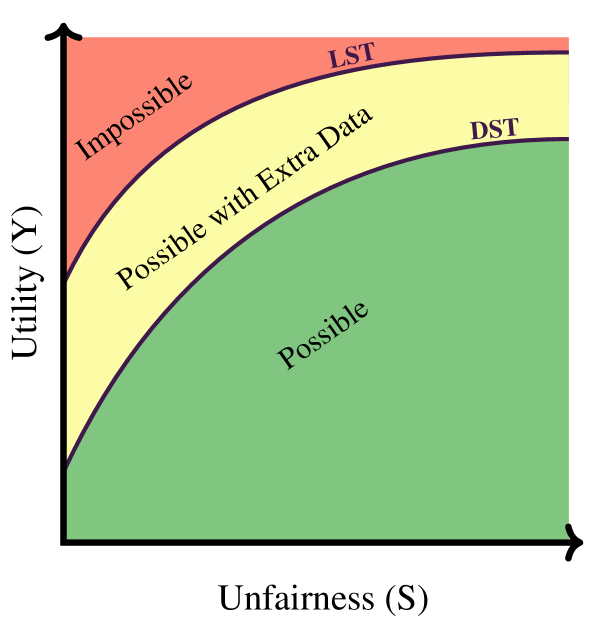
- Highlights the limitations of current fairness metrics in open-vocabulary settings, where traditional closed-vocabulary fairness notions fail to capture real-world fairness in generative and zero-shot tasks.
Experimental results
Research questions
- RQ1How do fairness definitions from machine learning translate to the unique challenges of computer vision, where sensitive attributes are not explicitly labeled?
- RQ2What are the primary sources and manifestations of bias in computer vision systems, particularly through spurious correlations in visual data?
- RQ3How effective are existing mitigation techniques in reducing disparate outcomes across protected groups in vision tasks like image classification and captioning?
- RQ4What are the key challenges in ensuring fairness for multimodal foundation models and generative models, especially in zero-shot and open-vocabulary scenarios?
- RQ5How do current benchmark datasets and evaluation protocols support or limit the development of fair computer vision systems?
Key findings
- Bias in computer vision often arises from implicit correlations between visual appearance (e.g., skin tone, gender cues) and task labels, even without explicit sensitive attribute annotations.
- Methods like FairerCLIP can debias representations without requiring ground-truth labels for sensitive attributes, enabling more scalable fairness interventions.
- Prompt engineering and guidance techniques in text-to-image generation show promise but struggle with fine-grained control due to attribute entanglement.
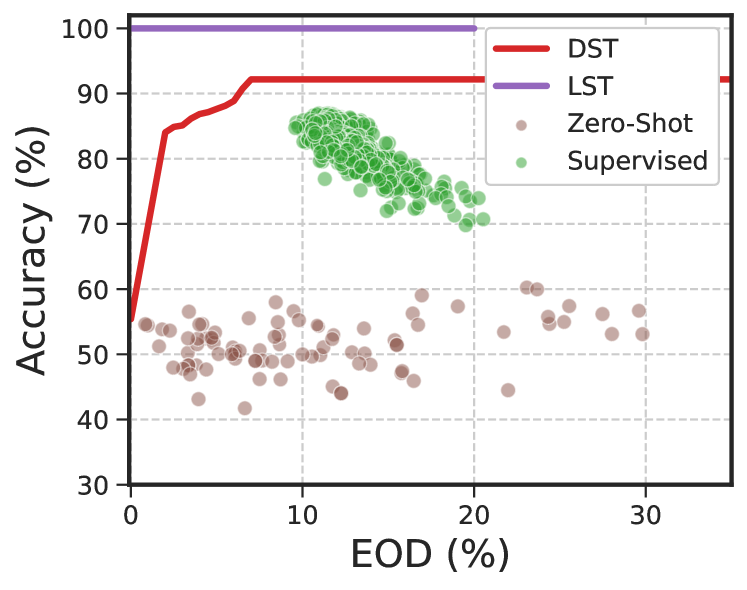
- Foundation models such as CLIP and LLaVA exhibit significant demographic biases in zero-shot classification, retrieval, and VQA tasks, despite their strong generalization capacity.
- Current fairness metrics are ill-suited for open-vocabulary, multimodal models, creating a critical gap in evaluating fairness across diverse, real-world applications.
- There remains a lack of unified fairness evaluation protocols for large multimodal models, especially across the wide range of tasks they support.
Read this paper
Open the full text in the Nubint reader and ask about any passage as you read.
Read this paper on NubintThis review was generated by AI from the original paper. Please check the paper before citing it.