
[Paper Review] Fine-Tuned 'Small' LLMs (Still) Significantly Outperform Zero-Shot Generative AI Models in Text Classification
The study shows that smaller, fine-tuned LLMs consistently outperform zero-shot prompted generative AI models (ChatGPT, Claude Opus) in text classification across diverse tasks and texts, and provides an accessible fine-tuning toolkit.
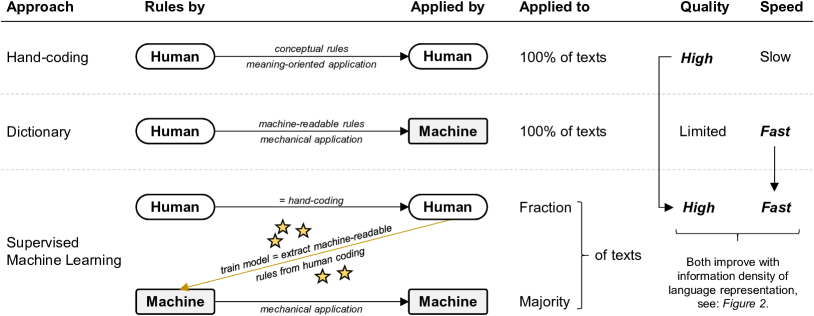
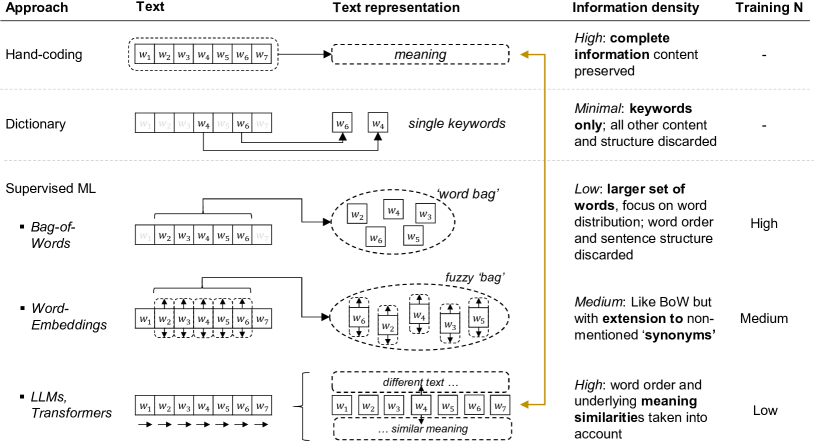
Generative AI offers a simple, prompt-based alternative to fine-tuning smaller BERT-style LLMs for text classification tasks. This promises to eliminate the need for manually labeled training data and task-specific model training. However, it remains an open question whether tools like ChatGPT can deliver on this promise. In this paper, we show that smaller, fine-tuned LLMs (still) consistently and significantly outperform larger, zero-shot prompted models in text classification. We compare three major generative AI models (ChatGPT with GPT-3.5/GPT-4 and Claude Opus) with several fine-tuned LLMs across a diverse set of classification tasks (sentiment, approval/disapproval, emotions, party positions) and text categories (news, tweets, speeches). We find that fine-tuning with application-specific training data achieves superior performance in all cases. To make this approach more accessible to a broader audience, we provide an easy-to-use toolkit alongside this paper. Our toolkit, accompanied by non-technical step-by-step guidance, enables users to select and fine-tune BERT-like LLMs for any classification task with minimal technical and computational effort.
Motivation & Objective
- Motivate the comparison between fine-tuned small LLMs and zero-shot generative AI models for text classification.
- Systematically evaluate performance across diverse tasks, languages, and text genres.
- Provide an accessible toolkit to facilitate fine-tuning of small LLMs for classification tasks.
- Offer insights into data requirements and model choice for practitioners.
Proposed method
- Compare five fine-tuned LLMs (RoBERTa Base/Large, DeBERTa V3, ELECTRA Large, XLNet Large, BART Large) with zero-shot prompts from GPT-3.5, GPT-4, Claude Opus, and BART.
- Evaluate on four case studies: sentiment (NYT economy articles), stance (Kavanaugh tweets), emotion (German political texts), and multi-class nationalist party positions.
- Train each model three times with different seeds and report mean and stddev for Accuracy, Precision, Recall, and F1 (macro and weighted).
- Use a consistent dataset split for fine-tuned models and full-dataset labeling for zero-shot models, with prompts detailed in the appendix.
- Provide an easy-to-use Hugging Face-based Jupyter Notebook toolkit with default hyperparameters for out-of-the-box strong performance.
- Discuss ablation results on training data size for RoBERTa Large.
Experimental results
Research questions
- RQ1Do fine-tuned smaller LLMs outperform zero-shot prompted generative AI models in text classification across tasks and text types?
- RQ2How does performance vary across task difficulty, language, and data size for fine-tuning?
- RQ3What are the practical data and compute requirements to achieve state-of-the-art results with fine-tuned small LLMs?
- RQ4Can an accessible toolkit democratize fine-tuning for broad user audiences?
Key findings
- Fine-tuned RoBERTa Large and DeBERTa V3 achieve top performance across tasks, often surpassing zero-shot GPT-3.5/4 and Claude Opus.
- Across sentiment, stance, and emotion tasks, fine-tuned models generally outperform zero-shot prompts, with stronger gains on specialized tasks.
- Zero-shot prompt-based models show competitive performance but remain behind tuned small LLMs in most cases.
- The paper provides an easy-to-use toolkit enabling non-experts to fine-tune small LLMs for classification with strong out-of-the-box results.
- Ablation studies indicate training data size impacts RoBERTa Large performance, informing data requirements for achieving optimal results.
- Results indicate that model size and complexity do not substitute for application-specific training data.
Read this paper
Open the full text in the Nubint reader and ask about any passage as you read.
Read this paper on NubintThis review was generated by AI from the original paper. Please check the paper before citing it.