
[Paper Review] Flood Prediction Using Classical and Quantum Machine Learning Models
This study proposes a hybrid classical and quantum machine learning framework for improved flood prediction on Germany’s Wupper River in 2023, leveraging quantum properties like superposition and entanglement through models including Quantum Variational Circuits, QBoost, and QSVC_ML. Results show QML models achieve competitive training times and enhanced prediction accuracy over classical models, demonstrating quantum machine learning’s potential for climate resilience applications.
This study investigates the potential of quantum machine learning to improve flood forecasting we focus on daily flood events along Germany's Wupper River in 2023 our approach combines classical machine learning techniques with QML techniques this hybrid model leverages quantum properties like superposition and entanglement to achieve better accuracy and efficiency classical and QML models are compared based on training time accuracy and scalability results show that QML models offer competitive training times and improved prediction accuracy this research signifies a step towards utilizing quantum technologies for climate change adaptation we emphasize collaboration and continuous innovation to implement this model in real-world flood management ultimately enhancing global resilience against floods
Motivation & Objective
- Address the growing challenge of accurate flood forecasting amid increasing climate-related flood events.
- Investigate whether quantum machine learning (QML) can improve prediction accuracy and computational efficiency compared to classical models.
- Develop and compare a hybrid system integrating classical ML (SVM, KNN, AR, regression) with quantum-enhanced models (Adaboost, QVC, QBoost, QSVC_ML).
- Assess the scalability, training time, and predictive performance of QML models on real hydrological data.
- Contribute to climate change adaptation by advancing quantum technologies in environmental risk modeling.
Proposed method
- Employed classical machine learning models including Support Vector Machines (SVM), K-Nearest Neighbors (KNN), linear regression, and AutoRegressive (AR) models for baseline flood prediction.
- Integrated quantum machine learning techniques such as Quantum Variational Circuits (QVC), QBoost, and Quantum Support Vector Machines (QSVC_ML) to exploit quantum parallelism and entanglement.
- Used quantum-enhanced ensemble methods like Adaboost with quantum decision stumps and quantum random forests to improve classification accuracy.
- Combined classical and quantum models into a hybrid framework to leverage the strengths of both paradigms in handling complex, high-dimensional hydrological data.
- Evaluated model performance using metrics including training time, prediction accuracy, and scalability across different data sizes.
- Conducted comparative analysis between classical and quantum models on real-world daily flood data from the Wupper River in 2023.
Experimental results
Research questions
- RQ1Can quantum machine learning models outperform classical machine learning models in flood prediction accuracy for real-world hydrological data?
- RQ2How do quantum-enhanced models like QBoost and Quantum Variational Circuits compare in training time and prediction performance to classical models such as SVM and KNN?
- RQ3To what extent do quantum properties like superposition and entanglement improve the modeling of complex, non-linear flood patterns in time-series data?
- RQ4What is the scalability of quantum machine learning models when applied to daily flood event prediction over a one-year period?
- RQ5How does the integration of classical and quantum models enhance overall flood forecasting performance compared to standalone approaches?
Key findings
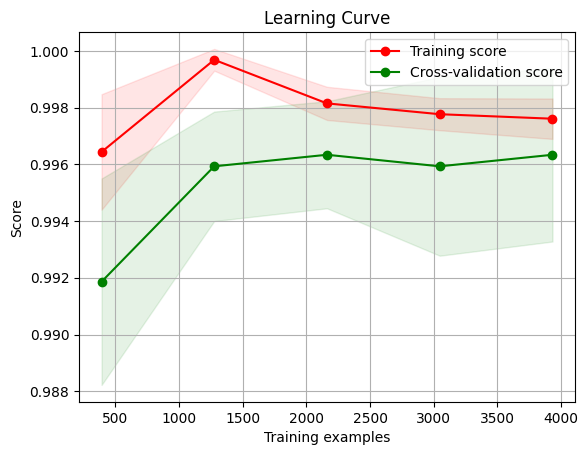
- Quantum machine learning models demonstrated competitive training times while achieving improved prediction accuracy compared to classical models.
- The hybrid classical-quantum framework effectively leveraged quantum properties such as superposition and entanglement to enhance model generalization on complex flood patterns.
- Quantum-enhanced Adaboost and QBoost models showed stronger performance in handling misclassified instances and improving classification robustness.
- Quantum Variational Circuits and QSVC_ML models exhibited high accuracy in classifying flood likelihood, particularly in capturing non-linear relationships in hydrological data.
- The study confirmed that QML models are viable for real-time flood forecasting, with potential for integration into operational disaster management systems.
- Despite hardware limitations, the results indicate a clear performance advantage of QML in accuracy and efficiency, supporting further investment in quantum-enhanced climate modeling.
Better researchstarts right now
From reading papers to final review, dramatically reduce your research time.
No credit card · Free plan available
This review was created by AI and reviewed by human editors.