
[Paper Review] Foundations of Explainable Knowledge-Enabled Systems
This paper proposes a unified framework for explainable knowledge-enabled systems by synthesizing historical approaches from expert systems, cognitive assistants, semantic web technologies, and machine learning. It introduces user- and context-aware definitions of explanations and explainable knowledge-enabled systems, emphasizing traceability, provenance, and adaptive explanation generation to enhance trust and usability in AI systems across diverse domains and user roles.
Explainability has been an important goal since the early days of Artificial Intelligence. Several approaches for producing explanations have been developed. However, many of these approaches were tightly coupled with the capabilities of the artificial intelligence systems at the time. With the proliferation of AI-enabled systems in sometimes critical settings, there is a need for them to be explainable to end-users and decision-makers. We present a historical overview of explainable artificial intelligence systems, with a focus on knowledge-enabled systems, spanning the expert systems, cognitive assistants, semantic applications, and machine learning domains. Additionally, borrowing from the strengths of past approaches and identifying gaps needed to make explanations user- and context-focused, we propose new definitions for explanations and explainable knowledge-enabled systems.
Motivation & Objective
- To address the growing need for explainability in AI systems deployed in high-stakes domains such as healthcare and finance.
- To identify limitations in existing explainability approaches that fail to account for user context, role, and prior knowledge.
- To unify diverse historical approaches to explainability—spanning expert systems, semantic web, cognitive assistants, and machine learning—into a cohesive framework.
- To redefine 'explanation' and 'explainable knowledge-enabled systems' from a user-centric perspective, emphasizing context-awareness, personalization, and provenance.
- To lay the foundation for next-generation hybrid AI systems that integrate interpretability, knowledge representation, and adaptive explanation generation.
Proposed method
- Conduct a historical review of explainable AI across four domains: expert systems, cognitive assistants, semantic web applications, and machine learning.
- Distinguish between transparency (general system properties) and explainability (justification of specific decisions) to clarify conceptual foundations.
- Propose new definitions of explanations and explainable knowledge-enabled systems that prioritize user context, role, and mental model construction.
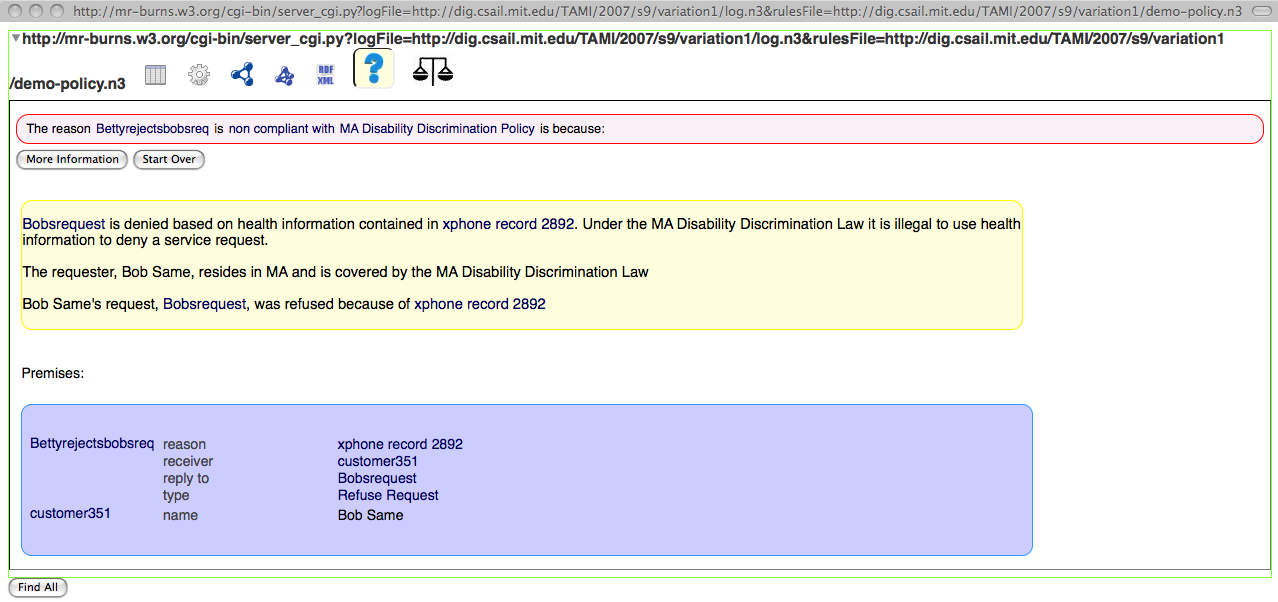
- Integrate strengths from past systems: trace-based explanations (expert systems), provenance modeling (semantic web), modular task-based explanations (cognitive assistants), and model-agnostic interpretability (LIME, SHAP).
- Introduce the concept of 'provenance-aware' and 'context-aware' explanations that reflect user-specific needs and data lineage.
- Leverage knowledge graphs and causal reasoning to provide intuitive, interpretable explanations for complex, black-box models.
Experimental results
Research questions
- RQ1How can explanations in AI systems be made context-aware and personalized to different user roles (e.g., clinicians, patients, administrators)?
- RQ2What are the key differences between transparency and explainability, and how can explainability be systematically defined in knowledge-enabled systems?
- RQ3What foundational components from past AI systems (e.g., rule-based tracing, provenance modeling) can be integrated into modern hybrid AI systems to improve explainability?
- RQ4How can knowledge graphs and causal models enhance the interpretability of black-box machine learning models?
- RQ5What are the limitations of current explainability techniques in addressing user mental model formation and fairness concerns?
Key findings
- The paper establishes a clear distinction between transparency—general system properties—and explainability, which is the ability to justify specific decisions in context.
- User-centric explanations are essential for building trust, enabling effective collaboration, and supporting mental model development in both users and systems.
- Historical systems such as expert systems provided robust trace-based explanations, while semantic web technologies enabled fine-grained provenance modeling of evidence and reasoning.
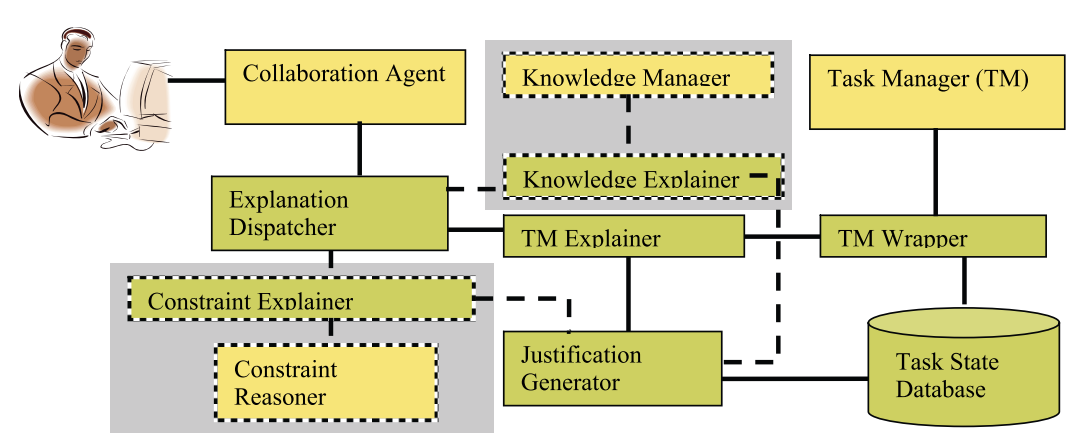
- Cognitive assistants demonstrated modular, task-based explanation generation, allowing for selective and adaptive explanation delivery.
- Model-agnostic methods like LIME and SHAP improve interpretability of black-box models but remain limited in capturing causal reasoning and user-specific context.
- The integration of knowledge graphs, causal reasoning, and taxonomic checks for explainability can significantly enhance the interpretability and trustworthiness of hybrid AI systems.
Read this paper
Open the full text in the Nubint reader and ask about any passage as you read.
Read this paper on NubintThis review was generated by AI from the original paper. Please check the paper before citing it.