
[Paper Review] Framework for Certification of AI-Based Systems
This paper proposes a data-centric framework for certifying AI-based systems in safety-critical aerospace applications, emphasizing traceability of requirements, training data, models, and test results. It demonstrates the approach by training a DNN for airborne intruder detection with 79% average precision, showing how sensitivity to input variations like range can be systematically analyzed for certification readiness.
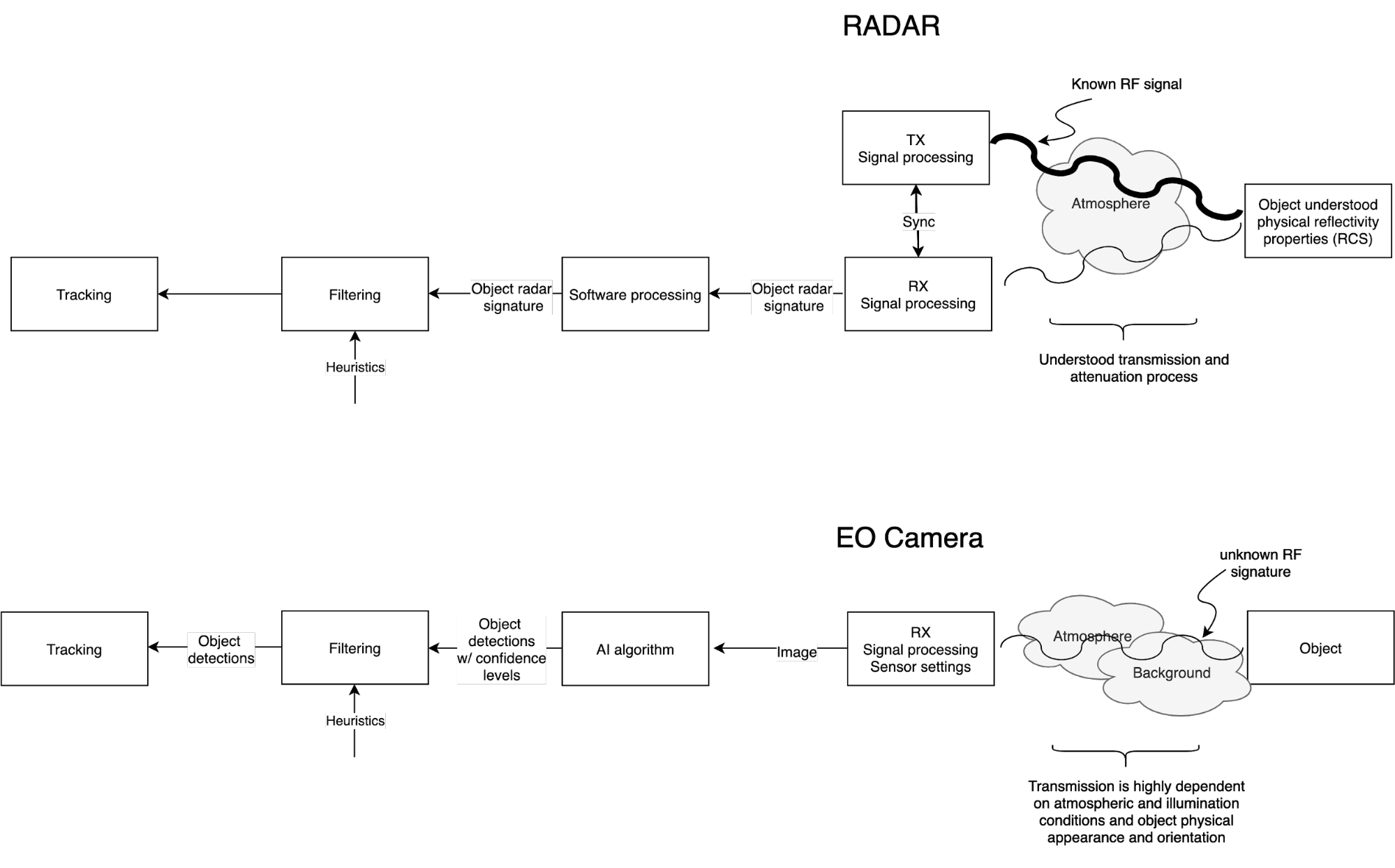
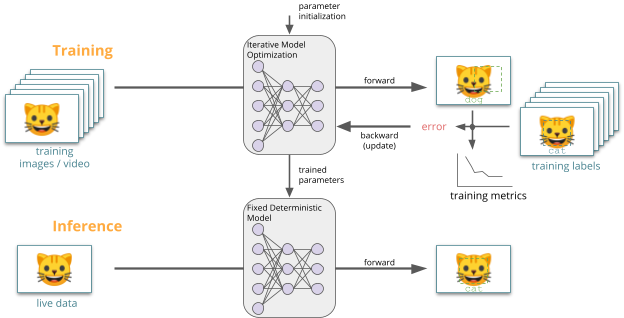
The current certification process for aerospace software is not adapted to "AI-based" algorithms such as deep neural networks. Unlike traditional aerospace software, the precise parameters optimized during neural network training are as important as (or more than) the code processing the network and they are not directly mathematically understandable. Despite their lack of explainability such algorithms are appealing because for some applications they can exhibit high performance unattainable with any traditional explicit line-by-line software methods. This paper proposes a framework and principles that could be used to establish certification methods for neural network models for which the current certification processes such as DO-178 cannot be applied. While it is not a magic recipe, it is a set of common sense steps that will allow the applicant and the regulator increase their confidence in the developed software, by demonstrating the capabilities to bring together, trace, and track the requirements, data, software, training process, and test results.
Motivation & Objective
- To address the limitations of traditional certification standards like DO-178 for AI-based systems, particularly deep neural networks (DNNs), which lack mathematical traceability due to their parameterized, non-deterministic behavior.
- To develop a framework that enables systematic tracking and traceability of requirements, training data, model weights, training process, and test results to support regulatory confidence.
- To demonstrate the feasibility of the framework through a real-world use case: training a DNN for vision-based detect-and-avoid in aviation.
- To evaluate model generalizability and sensitivity to input variations such as range, lighting, and weather conditions, which are critical for safety certification.
- To lay the foundation for future integration of formal verification, adversarial robustness testing, and automated data generation within a certified ML pipeline.
Proposed method
- The framework establishes end-to-end traceability from system-level requirements to training data, model weights, and test outcomes using metadata-rich data management.
- It employs a data-centric approach where each image is annotated with attributes such as range to target, lighting, weather, background type, and sequence information to support statistical analysis.
- The model is trained using a standard DNN architecture (SSD FPN with ResNet-50) on a curated dataset split into 724 training and 379 test images, with pretraining on COCO.
- Sensitivity analysis is performed by partitioning test data into range bins (0–375m, 375–750m, etc.) to evaluate performance variation across operational conditions.
- The framework supports statistical evaluation of model performance and generalization across diverse input scenarios, enabling regulators to assess robustness.
- It allows for integration of adversarial example testing by storing and tracing perturbed inputs alongside standard data for stability analysis.
Experimental results
Research questions
- RQ1How can the traceability of AI-based systems be improved to meet certification standards when traditional code-based verification is insufficient?
- RQ2What metadata and data management practices are necessary to ensure model generalizability across diverse operational conditions such as lighting, weather, and range?
- RQ3How can sensitivity to input variations—such as distance to target—be quantitatively assessed and documented for certification?
- RQ4Can a data-centric framework support statistical confidence in model performance without relying on mathematical formalism of model weights?
- RQ5What role do systematic data provenance and metadata play in enabling regulatory review and auditability of AI models in safety-critical systems?
Key findings
- The DNN achieved an average precision of 79% on the test set for detecting aircraft intruders, demonstrating baseline performance for the use case.
- Model performance decreased with increasing range, with the highest average precision in the 0–375m bin and the lowest in the 1115–1500m bin, indicating sensitivity to range.
- The framework successfully enabled systematic partitioning of test data by input attributes such as range, allowing for targeted performance analysis.
- The use of metadata (e.g., lighting, weather, background) enabled qualitative and quantitative assessment of dataset diversity and model robustness.
- The framework supports the integration of adversarial example testing by allowing traceability of perturbed inputs, facilitating stability analysis during certification.
- The approach provides a foundation for statistical confidence in model behavior across operational domains, even when model weights are not mathematically interpretable.
Read this paper
Open the full text in the Nubint reader and ask about any passage as you read.
Read this paper on NubintThis review was generated by AI from the original paper. Please check the paper before citing it.