
[Paper Review] Fuzzing BusyBox: Leveraging LLM and Crash Reuse for Embedded Bug Unearthing
The paper introduces two techniques—LLM-generated seed inputs for fuzzing BusyBox and crash reuse across variants—to improve vulnerability discovery in embedded Linux utilities, and validates them on BusyBox targets including the latest version.
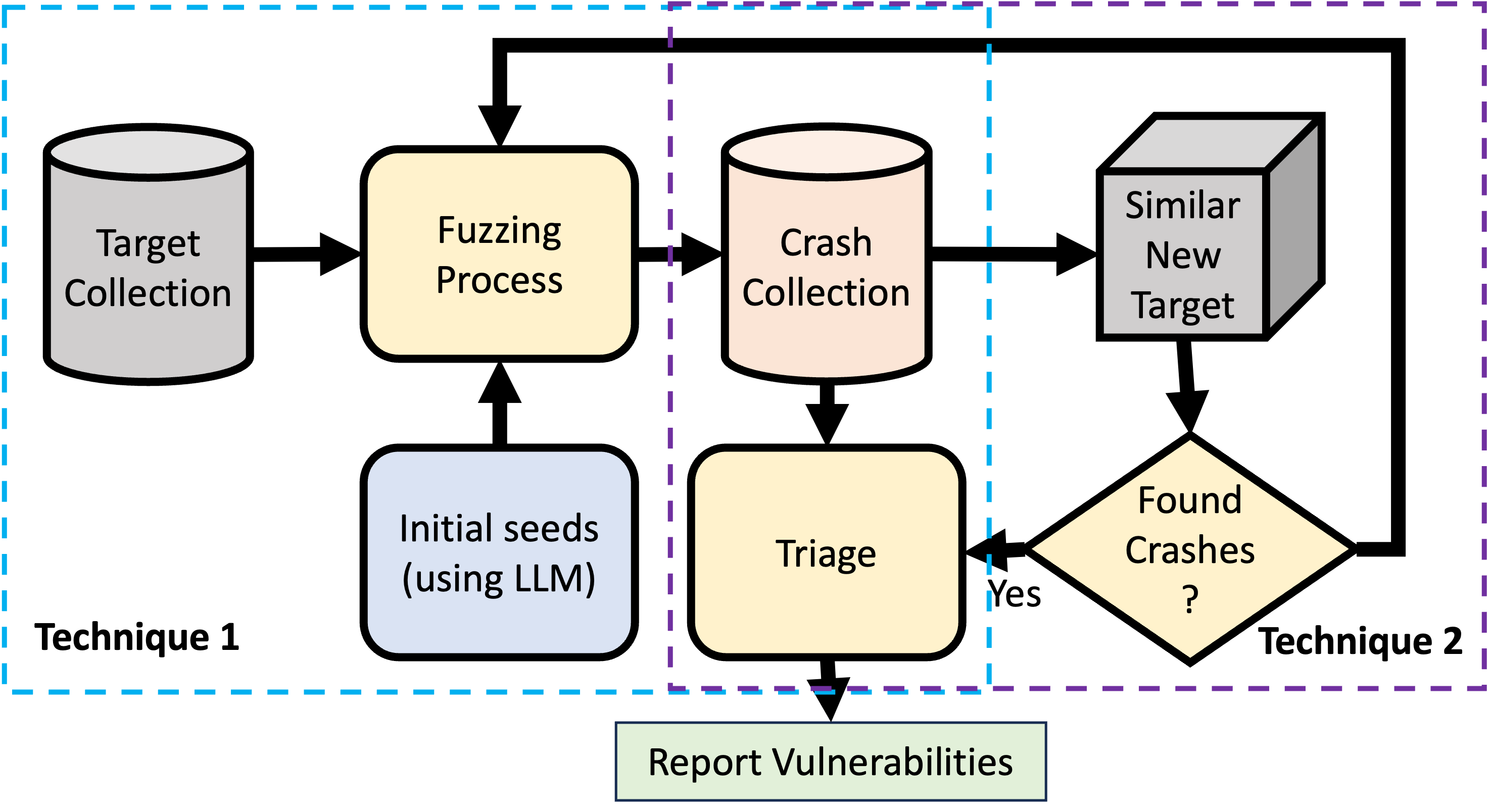
BusyBox, an open-source software bundling over 300 essential Linux commands into a single executable, is ubiquitous in Linux-based embedded devices. Vulnerabilities in BusyBox can have far-reaching consequences, affecting a wide array of devices. This research, driven by the extensive use of BusyBox, delved into its analysis. The study revealed the prevalence of older BusyBox versions in real-world embedded products, prompting us to conduct fuzz testing on BusyBox. Fuzzing, a pivotal software testing method, aims to induce crashes that are subsequently scrutinized to uncover vulnerabilities. Within this study, we introduce two techniques to fortify software testing. The first technique enhances fuzzing by leveraging Large Language Models (LLM) to generate target-specific initial seeds. Our study showed a substantial increase in crashes when using LLM-generated initial seeds, highlighting the potential of LLM to efficiently tackle the typically labor-intensive task of generating target-specific initial seeds. The second technique involves repurposing previously acquired crash data from similar fuzzed targets before initiating fuzzing on a new target. This approach streamlines the time-consuming fuzz testing process by providing crash data directly to the new target before commencing fuzzing. We successfully identified crashes in the latest BusyBox target without conducting traditional fuzzing, emphasizing the effectiveness of LLM and crash reuse techniques in enhancing software testing and improving vulnerability detection in embedded systems. Additionally, manual triaging was performed to identify the nature of crashes in the latest BusyBox.
Motivation & Objective
- Identify how widespread BusyBox variants are in real-world embedded devices.
- Increase fuzzing effectiveness on BusyBox by using LLM-generated initial seeds.
- Reduce time to vulnerability discovery by reusing crashes across program variants.
- Demonstrate the approach on BusyBox targets and show efficiency gains over traditional fuzzing.
- Highlight practical implications for open-source software components in embedded systems.
Proposed method
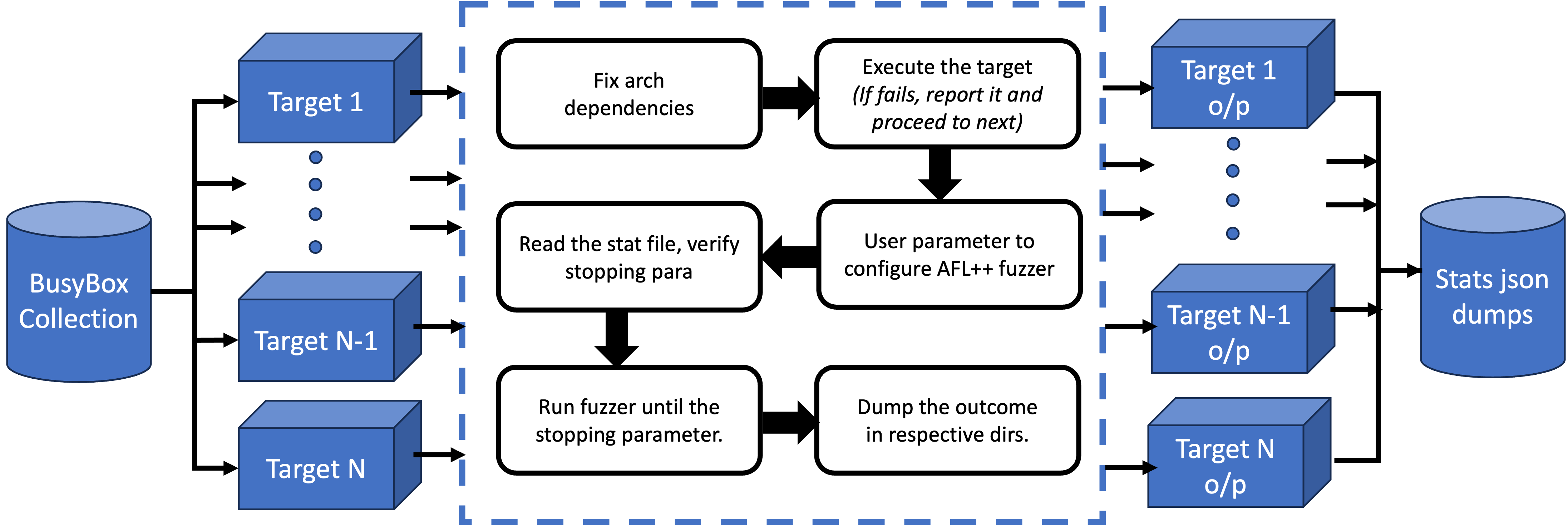
- Use AFL++ in QEMU mode to fuzz BusyBox binaries without altering source/compilation.
- Generate target-specific initial seeds for fuzzing using GPT-4 based on the target applet grammar.
- Minimize the LLM-generated seed corpus with afl-cmin before fuzzing.
- Introduce crash reuse by testing new targets against a database of previously collected crashing inputs from related variants.
- Perform manual crash triage with tools like Ghidra, GDB, AFL-Triage to identify crash origins and CVE relevance.
- Evaluate on BusyBox versions from real-world firmware datasets and analyze crashes in the latest BusyBox release.
Experimental results
Research questions
- RQ1RQ1: How widespread are BusyBox variants in real-world embedded devices and can vulnerabilities across variants be efficiently identified?
- RQ2RQ2: How can LLMs be leveraged to improve fuzz testing on embedded Linux utility programs like BusyBox?
- RQ3RQ3: Do crash reuse strategies provide time and resource savings when testing new BusyBox targets?
- RQ4RQ4: Can the combination of LLM seed generation and crash reuse uncover crashes in the latest BusyBox version without full fuzzing?
Key findings
- Older BusyBox versions remain in real-world embedded devices, underscoring the need for updates.
- LLM-generated initial seeds substantially increase the number of crashes compared to random seeds.
- Crash reuse enables testing new targets using existing crash data, reducing fuzzing time and resources.
- The latest BusyBox version (as of study) exhibited crashes identified through crash reuse and targeted fuzzing.
- Manual triage revealed crash characteristics and whether issues originated from BusyBox or dependencies, validating the approach.
- The workflow was demonstrated on BusyBox applets including awk and extended to others like dc, man, and ash.
Read this paper
Open the full text in the Nubint reader and ask about any passage as you read.
Read this paper on NubintThis review was generated by AI from the original paper. Please check the paper before citing it.