
[Paper Review] GCNIDS: Graph Convolutional Network-Based Intrusion Detection System for CAN Bus
This paper proposes GCNIDS, a Graph Convolutional Network-based intrusion detection system for CAN bus networks that converts raw CAN messages into graph-structured data using only two graph-based features—maximum in-degree and out-degree. The model achieves state-of-the-art performance in detecting single and mixed attacks, including DoS, Fuzzy, Spoofing, and Replay attacks, with 99% accuracy on DoS and Fuzzy attacks and strong detection of the challenging Replay attack, significantly reducing the need for manual feature engineering.
The Controller Area Network (CAN) bus serves as a standard protocol for facilitating communication among various electronic control units (ECUs) within contemporary vehicles. However, it has been demonstrated that the CAN bus is susceptible to remote attacks, which pose risks to the vehicle's safety and functionality. To tackle this concern, researchers have introduced intrusion detection systems (IDSs) to identify and thwart such attacks. In this paper, we present an innovative approach to intruder detection within the CAN bus, leveraging Graph Convolutional Network (GCN) techniques as introduced by Zhang, Tong, Xu, and Maciejewski in 2019. By harnessing the capabilities of deep learning, we aim to enhance attack detection accuracy while minimizing the requirement for manual feature engineering. Our experimental findings substantiate that the proposed GCN-based method surpasses existing IDSs in terms of accuracy, precision, and recall. Additionally, our approach demonstrates efficacy in detecting mixed attacks, which are more challenging to identify than single attacks. Furthermore, it reduces the necessity for extensive feature engineering and is particularly well-suited for real-time detection systems. To the best of our knowledge, this represents the pioneering application of GCN to CAN data for intrusion detection. Our proposed approach holds significant potential in fortifying the security and safety of modern vehicles, safeguarding against attacks and preventing them from undermining vehicle functionality.
Motivation & Objective
- To develop a generalizable intrusion detection system (IDS) for CAN bus networks that can detect a wide range of attacks, including mixed attacks, without relying on attack-specific detection logic.
- To minimize manual feature engineering by leveraging graph-based representations of raw CAN data, enhancing suitability for real-time deployment.
- To improve detection accuracy for challenging attack types such as replay and mixed attacks, which are often overlooked or poorly handled by existing IDSs.
- To be the first work to apply Graph Convolutional Networks (GCNs) to CAN bus data using only two graph-based features—maximum in-degree and out-degree—while maintaining high detection performance.
- To evaluate the model’s robustness on real-world CAN data, including complex attack scenarios involving multiple attack types simultaneously.
Proposed method
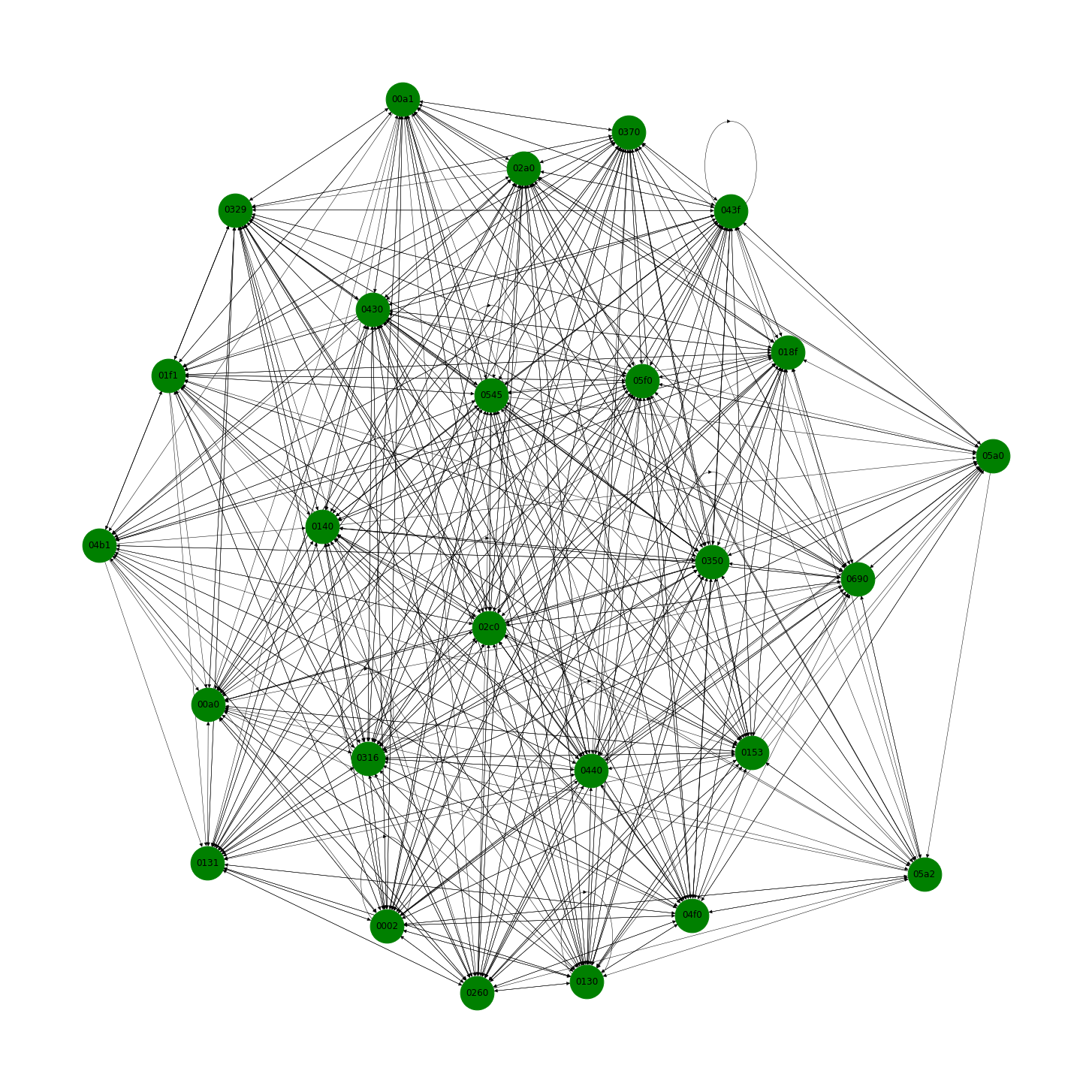
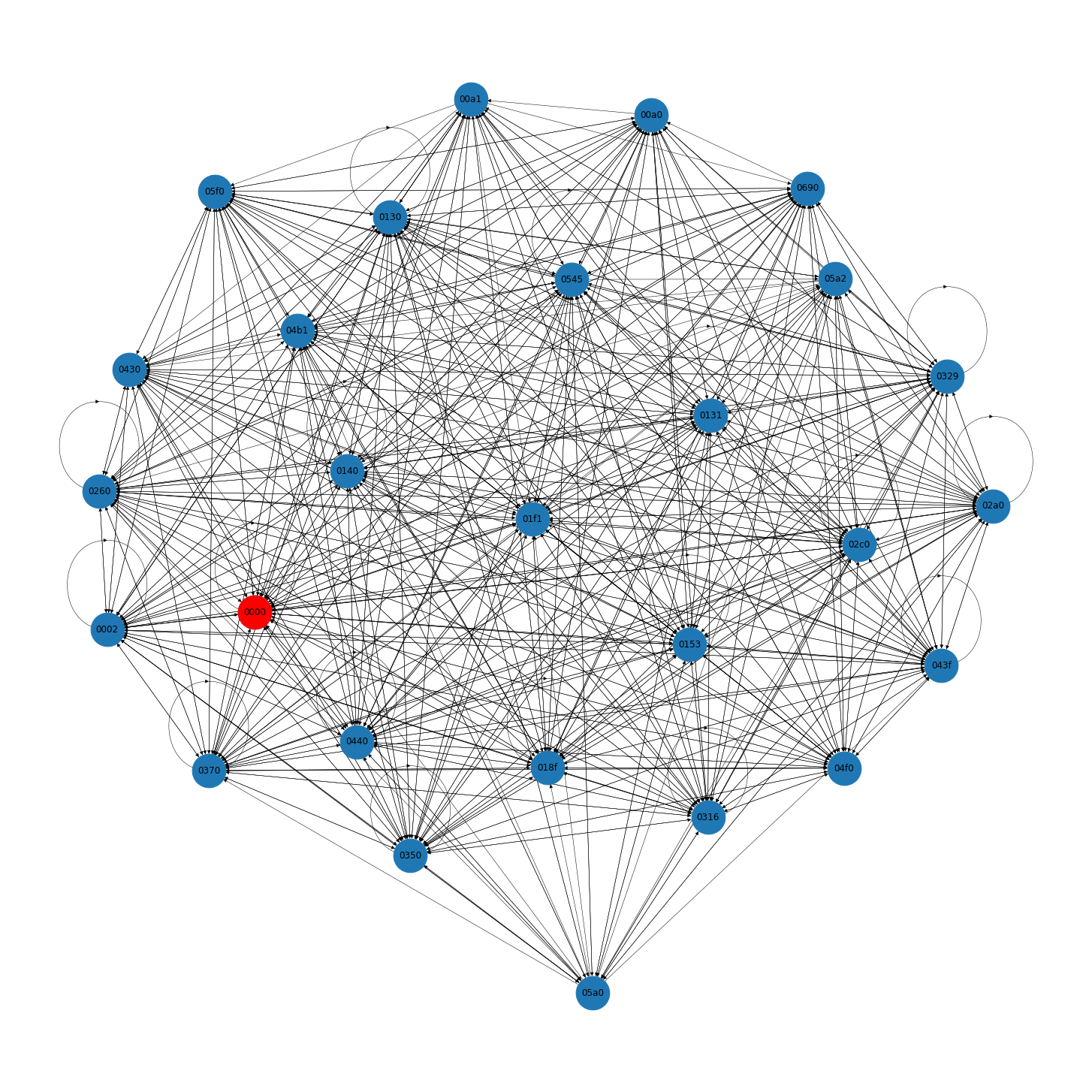
- The proposed method transforms raw CAN messages into a directed graph, where each message is a node and message transmission relationships form edges.
- Only two graph-based features—maximum in-degree and maximum out-degree—are used as input to the GCN model, minimizing the need for extensive feature engineering.
- A Graph Convolutional Network (GCN) is employed to learn spatial and temporal patterns in the CAN message graph, enabling end-to-end learning from raw data.
- The GCN model is trained on a labeled dataset of normal and attack-intentional CAN traffic, using cross-entropy loss for binary classification of attack vs. normal behavior.
- The model is evaluated using confusion matrices and standard metrics (precision, recall, F1-score) across single attacks (DoS, Fuzzy, Spoofing, Replay) and mixed attacks (combinations of DoS, Fuzzy, Spoofing, and Replay).
- The approach is validated on a real-world CAN dataset, with performance compared against SVM and GBF-based state-of-the-art methods.
Experimental results
Research questions
- RQ1Can a GCN-based model detect various single and mixed attacks on CAN bus networks with high accuracy while minimizing feature engineering?
- RQ2How does the proposed GCNIDS model perform on the challenging Replay attack, which is known to be difficult to detect?
- RQ3Can the model generalize to mixed attacks involving DoS, Fuzzy, Spoofing, and Replay attacks simultaneously, which are more representative of real-world threats?
- RQ4Does using only two graph-based features (max in-degree and max out-degree) enable effective attack detection without requiring extensive domain-specific feature engineering?
- RQ5How does GCNIDS compare to existing state-of-the-art IDSs such as SVM and GBF-based models in terms of precision, recall, and F1-score across diverse attack scenarios?
Key findings
- The GCNIDS model achieved 99% accuracy in detecting DoS-attacked graphs, with only 87 false positives among attack-free graphs.
- For Fuzzy attacks, the model achieved a false positive rate of just 0.11%, with only 12 misclassified instances out of all test cases.
- The model detected 99% of mixed attacks involving DoS, Fuzzy, and Spoofing attacks, outperforming the state-of-the-art method by Refat et al. (2022).
- For the most challenging Replay attack, the model made only 38 false negatives, indicating strong detection capability despite the attack's stealthiness.
- When detecting mixed attacks combining DoS, Fuzzy, Spoofing, and Replay attacks, the model maintained high performance, demonstrating robustness to complex, real-world attack patterns.
- The model significantly outperformed the SVM classifier (Tanksale, 2019) and the GBF-based method (Refat et al., 2022) in precision, recall, and F1-score across all attack types.
Read this paper
Open the full text in the Nubint reader and ask about any passage as you read.
Read this paper on NubintThis review was generated by AI from the original paper. Please check the paper before citing it.