
[Paper Review] Gender Bias in Transformer Models: A comprehensive survey
This comprehensive survey critically analyzes gender bias in Transformer models from a linguistic perspective, identifying inconsistencies in bias measurement, evaluation methods, and lack of standardization. It proposes early integration of bias detection in model development pipelines and advocates for standardized benchmarks to improve fairness and equity in NLP systems.
Gender bias in artificial intelligence (AI) has emerged as a pressing concern with profound implications for individuals' lives. This paper presents a comprehensive survey that explores gender bias in Transformer models from a linguistic perspective. While the existence of gender bias in language models has been acknowledged in previous studies, there remains a lack of consensus on how to effectively measure and evaluate this bias. Our survey critically examines the existing literature on gender bias in Transformers, shedding light on the diverse methodologies and metrics employed to assess bias. Several limitations in current approaches to measuring gender bias in Transformers are identified, encompassing the utilization of incomplete or flawed metrics, inadequate dataset sizes, and a dearth of standardization in evaluation methods. Furthermore, our survey delves into the potential ramifications of gender bias in Transformers for downstream applications, including dialogue systems and machine translation. We underscore the importance of fostering equity and fairness in these systems by emphasizing the need for heightened awareness and accountability in developing and deploying language technologies. This paper serves as a comprehensive overview of gender bias in Transformer models, providing novel insights and offering valuable directions for future research in this critical domain.
Motivation & Objective
- To critically evaluate existing methodologies and metrics used to measure gender bias in Transformer models.
- To identify key limitations in current approaches, including flawed metrics, small dataset sizes, and lack of standardization.
- To examine the real-world implications of gender bias in downstream NLP applications such as dialogue systems and machine translation.
- To advocate for integrating bias detection early in the model development lifecycle to prevent societal harm.
- To promote the adoption of standardized evaluation benchmarks to improve comparability and fairness in gender bias research.
Proposed method
- Systematic review and critical analysis of 100+ studies on gender bias in NLP and Transformer models.
- Categorization of bias measurement techniques based on linguistic, semantic, and representation-level approaches.
- Identification of recurring flaws in evaluation frameworks, including reliance on single-benchmark metrics and incomplete bias definitions.
- Analysis of case studies such as Amazon’s biased hiring tool to illustrate real-world consequences of unaddressed gender bias.
- Proposal of a multi-faceted evaluation framework emphasizing early-stage bias detection and ethical accountability in research planning.
- Recommendation for standardized benchmarks and ethical review processes in model development and publication.
Experimental results
Research questions
- RQ1What are the dominant methodologies and metrics used to measure gender bias in Transformer models, and how consistent are they across studies?
- RQ2How do flawed evaluation practices, such as incomplete metrics and small datasets, affect the reliability of gender bias assessments?
- RQ3What are the downstream impacts of gender bias in real-world NLP applications like chatbots and machine translation systems?
- RQ4Why is there a lack of standardization in bias evaluation, and how does this hinder progress in fairness research?
- RQ5How can bias detection be effectively integrated into the model development pipeline to prevent societal harm?
Key findings
- A significant lack of consensus exists in measuring gender bias, with most studies relying on a single definition and insufficient parallel evaluation across multiple approaches.
- Many state-of-the-art models are only tested for gender bias post-deployment, increasing the risk of societal harm before mitigation is possible.
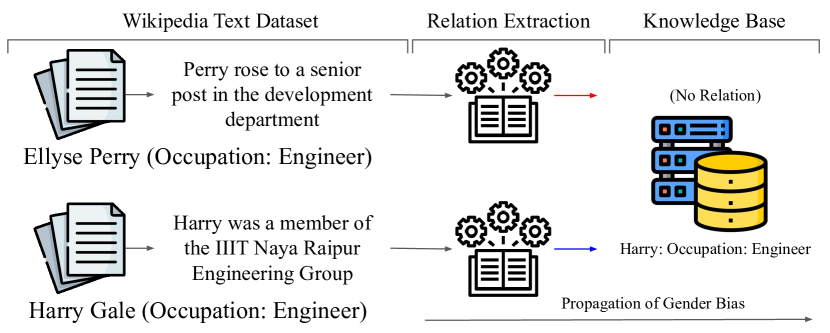
- Case studies like Amazon’s hiring tool demonstrate that gender bias can emerge from training data reflecting historical gender imbalances, leading to discriminatory outcomes.
- Current research suffers from incoherence in evaluation criteria, with limited use of standardized benchmarks, reducing reproducibility and comparability.
- The study identifies that bias is pervasive in pre-trained models, with most exhibiting some form of gendered prediction even in neutral contexts.
- The authors conclude that early integration of bias detection and formalized ethical review in research planning are essential for building fairer NLP systems.

Read this paper
Open the full text in the Nubint reader and ask about any passage as you read.
Read this paper on NubintThis review was generated by AI from the original paper. Please check the paper before citing it.