
[Paper Review] Generalized Local Optimality for Video Steganalysis in Motion Vector Domain
This paper proposes a generalized local optimality framework for video steganalysis in the motion vector (MV) domain by dynamically estimating MV optimality using variable predicted motion vectors (PMVs) and extending the concept to the PMV domain. The method improves steganalytic feature accuracy and robustness across diverse video codecs, resolutions, and prediction methods, achieving state-of-the-art performance with no increase in computational complexity.
The local optimality of motion vectors (MVs) is an intrinsic property in video coding, and any modifications to the MVs will inevitably destroy this optimality, making it a sensitive indicator of steganography in the MV domain. Thus the local optimality is commonly used to design steganalytic features, and the estimation for local optimality has become a top priority in video steganalysis. However, the local optimality in existing works is often estimated inaccurately or using an unreasonable assumption, limiting its capability in steganalysis. In this paper, we propose to estimate the local optimality in a more reasonable and comprehensive fashion, and generalize the concept of local optimality in two aspects. First, the local optimality measured in a rate-distortion sense is jointly determined by MV and predicted motion vector (PMV), and the variability of PMV will affect the estimation for local optimality. Hence we generalize the local optimality from a static estimation to a dynamic one. Second, the PMV is a special case of MV, and can also reflect the embedding traces in MVs. So we generalize the local optimality from the MV domain to the PMV domain. Based on the two generalizations of local optimality, we construct new types of steganalytic features and also propose feature symmetrization rules to reduce feature dimension. Extensive experiments performed on three databases demonstrate the effectiveness of the proposed features, which achieve state-of-the-art in both accuracy and robustness in various conditions, including cover source mismatch, video prediction methods, video codecs, and video resolutions.
Motivation & Objective
- To address the limitations of static and inaccurate local optimality estimation in existing video steganalysis methods.
- To improve steganalytic feature accuracy by modeling local optimality dynamically using variable PMVs instead of fixed PMVs.
- To extend the scope of local optimality from the MV domain to the PMV domain, increasing feature diversity and sensitivity to embedding traces.
- To develop low-dimensional, symmetrized steganalytic features that maintain high detection performance across real-world video variations.
- To ensure the proposed method maintains computational efficiency comparable to prior methods despite enhanced modeling complexity.
Proposed method
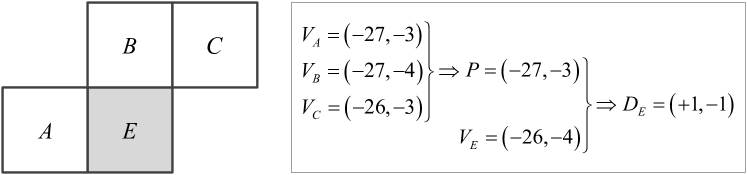
- Proposes a dynamic local optimality estimation by incorporating the variability of predicted motion vectors (PMVs) in rate-distortion cost calculations, replacing static PMV assumptions.
- Generalizes local optimality from the MV domain to the PMV domain, enabling detection of embedding traces in both MVs and PMVs.
- Designs two new steganalytic feature types—GLO-MV and GLO-PMV—based on the generalized local optimality concept.
- Applies feature symmetrization rules to reduce feature dimensionality while preserving discriminative power.
- Uses rate-distortion cost metrics such as SAD and SATD to estimate local optimality, with reuse of intermediate computations to maintain efficiency.
- Employs Lagrangian cost and sum of absolute differences (SAD) as core components in the generalized optimality estimation framework.
Experimental results
Research questions
- RQ1How can local optimality estimation in video steganalysis be improved by accounting for PMV variability instead of assuming fixed PMVs?
- RQ2To what extent does extending local optimality from the MV domain to the PMV domain enhance steganalytic feature sensitivity and detection accuracy?
- RQ3Can generalized local optimality features maintain high performance across diverse video codecs, resolutions, and prediction methods?
- RQ4How does the proposed method compare in computational efficiency to existing steganalytic feature extraction techniques?
- RQ5What is the impact of feature symmetrization on reducing dimensionality while preserving detection accuracy?
Key findings
- The proposed GLO-MV and GLO-PMV features achieve state-of-the-art detection accuracy across all tested databases, including DB1, DB2, and DB3.
- On DB3, which uses high-resolution 1080p videos, the accuracy rates exceed those on lower-resolution CIF videos due to improved motion estimation accuracy and smoother textures.
- The method maintains strong performance under different video codecs, with detection accuracy on MPEG-4 slightly lower than on H.264/AVC, attributed to less accurate motion estimation in MPEG-4.
- Feature extraction time for the proposed GLO method is only 1.40x that of AoSO at QP 15, and remains within 1.37x of NPE, indicating no significant computational overhead.
- GLO-PMV achieves faster feature extraction than NPE due to reliance solely on SAD-based rate-distortion costs, reducing computation time.
- The method demonstrates robustness to cover source mismatch, video prediction methods, codecs, and resolutions, outperforming existing methods in all evaluated conditions.
Read this paper
Open the full text in the Nubint reader and ask about any passage as you read.
Read this paper on NubintThis review was generated by AI from the original paper. Please check the paper before citing it.