
[Paper Review] Give Us the Facts: Enhancing Large Language Models with Knowledge Graphs for Fact-aware Language Modeling
A comprehensive survey of knowledge graph–augmented language models (KGPLMs) and a proposal to develop knowledge graph–enhanced large language models (KGLLMs) to improve factual recall and reasoning in LLMs.
Recently, ChatGPT, a representative large language model (LLM), has gained considerable attention due to its powerful emergent abilities. Some researchers suggest that LLMs could potentially replace structured knowledge bases like knowledge graphs (KGs) and function as parameterized knowledge bases. However, while LLMs are proficient at learning probabilistic language patterns based on large corpus and engaging in conversations with humans, they, like previous smaller pre-trained language models (PLMs), still have difficulty in recalling facts while generating knowledge-grounded contents. To overcome these limitations, researchers have proposed enhancing data-driven PLMs with knowledge-based KGs to incorporate explicit factual knowledge into PLMs, thus improving their performance to generate texts requiring factual knowledge and providing more informed responses to user queries. This paper reviews the studies on enhancing PLMs with KGs, detailing existing knowledge graph enhanced pre-trained language models (KGPLMs) as well as their applications. Inspired by existing studies on KGPLM, this paper proposes to enhance LLMs with KGs by developing knowledge graph-enhanced large language models (KGLLMs). KGLLM provides a solution to enhance LLMs' factual reasoning ability, opening up new avenues for LLM research.
Motivation & Objective
- Survey the landscape of knowledge graph–augmented pre-trained language models (KGPLMs) and their training stages.
- Analyze how knowledge graphs address factual recall, reasoning, and hallucination in PLMs and LLMs.
- Propose the concept of knowledge graph–enhanced large language models (KGLLMs) to improve knowledge modeling in LLMs.
- Summarize challenges, benefits, and future directions for integrating KGs with LLMs.
Proposed method
- Systematic literature review of KGPLM methods and applications.
- Categorization of KGPLMs into before-training, during-training, and post-training enhancements.
- Discussion of knowledge injection techniques and knowledge-noise handling.
- Analysis of KG benefits for factual recall, reasoning, and interpretability.
- Proposal of KGLLM as a direction to enhance LLM factual knowledge and reasoning.
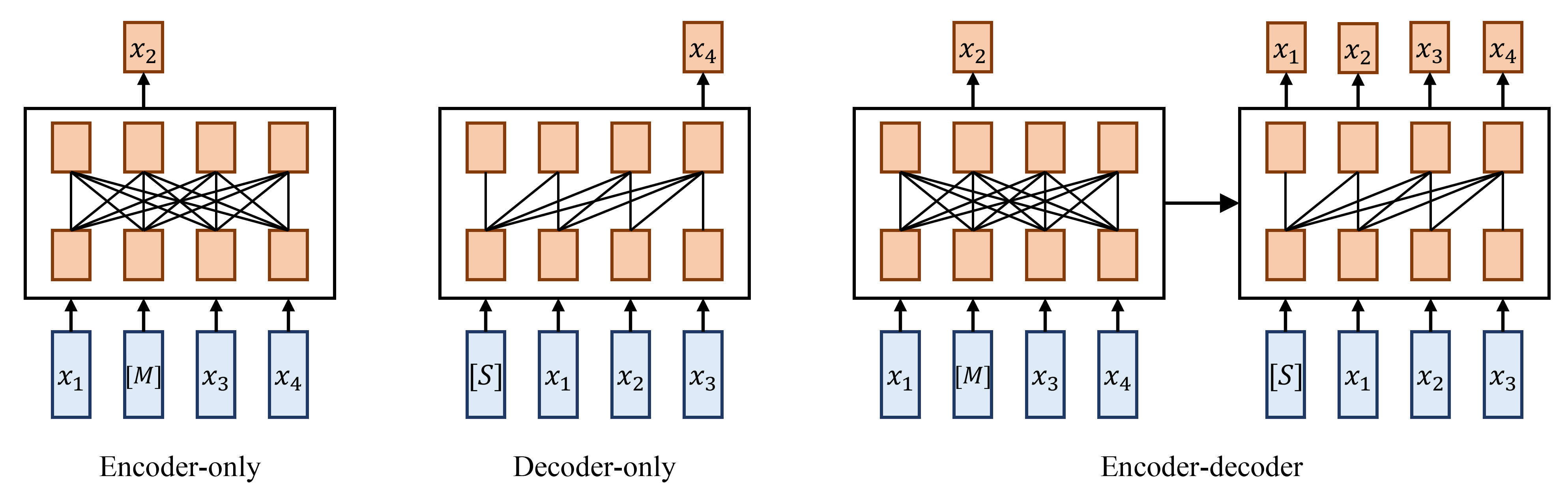
Experimental results
Research questions
- RQ1Is constructing and using knowledge graphs still necessary for improving LLM factual knowledge and reasoning?
- RQ2How can knowledge graphs be effectively integrated with LLMs to improve knowledge recall and reduce hallucination?
- RQ3What are the main categories and techniques of KGPLMs, and how can they inform the development of KGLLMs?
- RQ4What future directions and challenges exist for knowledge graph–driven enhancements of large language models?
Key findings
- KGPLMs are categorized by the stage at which KGs participate: before-training, during-training, and post-training enhancements.
- Knowledge integration strategies include expanding input structures, enriching information, data generation, and optimizing masks for before-training methods.
- During-training methods add knowledge encoders, knowledge fusion layers, adapters, or modify pre-training tasks to better align text with KG structure.
- Post-training approaches fine-tune PLMs with knowledge, or generate knowledge-based prompts to guide generation.
- KGs can mitigate hallucination, improve factual grounding, and enhance interpretability by making knowledge sources explicit.
- The paper advocates KGLLMs—large language models augmented with KGs—to advance factual knowledge modeling and reasoning in LLMs.

Read this paper
Open the full text in the Nubint reader and ask about any passage as you read.
Read this paper on NubintThis review was generated by AI from the original paper. Please check the paper before citing it.