
[Paper Review] Gradient Informed Proximal Policy Optimization
This paper proposes Gradient Informed Proximal Policy Optimization (GI-PPO), a novel method that integrates analytical gradients from differentiable environments into the PPO framework by introducing an adaptive $α$-policy to dynamically balance gradient influence based on variance and bias assessment. The approach achieves superior performance over baselines in function optimization, physics simulations, and biased traffic control environments, including a 10-lane pace car problem with high-dimensional dynamics.
We introduce a novel policy learning method that integrates analytical gradients from differentiable environments with the Proximal Policy Optimization (PPO) algorithm. To incorporate analytical gradients into the PPO framework, we introduce the concept of an α-policy that stands as a locally superior policy. By adaptively modifying the α value, we can effectively manage the influence of analytical policy gradients during learning. To this end, we suggest metrics for assessing the variance and bias of analytical gradients, reducing dependence on these gradients when high variance or bias is detected. Our proposed approach outperforms baseline algorithms in various scenarios, such as function optimization, physics simulations, and traffic control environments. Our code can be found online: https://github.com/SonSang/gippo.
Motivation & Objective
- To address the challenge of integrating analytical gradients into on-policy RL methods like PPO, which lack direct access to likelihood-ratio (LR) gradients for variance and bias estimation.
- To develop a method that leverages analytical gradients when they are reliable (low variance and bias) while reducing their influence when they are unreliable.
- To enable stable and high-performing policy learning in environments with chaotic or partially differentiable dynamics, such as traffic simulations.
- To eliminate the need for expensive dual gradient estimation (LR + RP) by introducing a self-assessing mechanism for analytical gradients within the PPO framework.
Proposed method
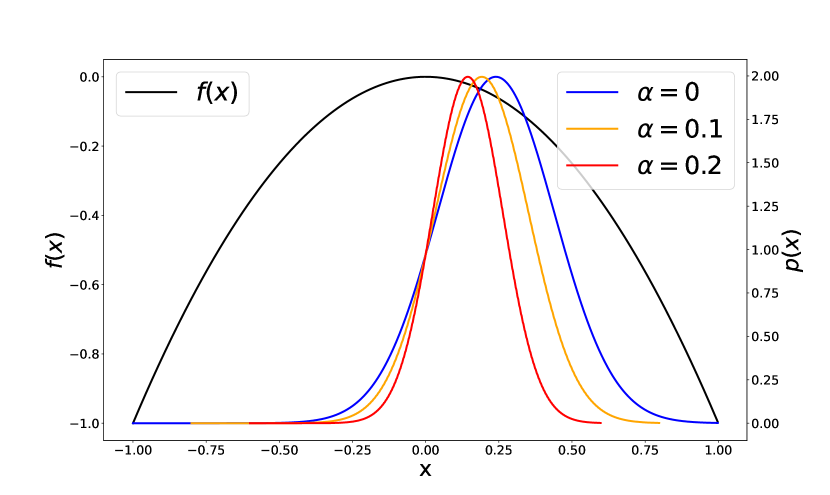
- Introduces an $α$-policy that interpolates between standard PPO updates and analytical gradient-based updates, where $α$ is adaptively adjusted based on gradient quality.
- Proposes metrics to estimate the variance and bias of analytical gradients directly from the environment dynamics, without requiring LR gradient computation.
- Uses a surrogate loss function in PPO to constrain policy updates, ensuring stability while allowing dynamic influence from analytical gradients.
- Employs Backpropagation Through Time (BPTT) to compute analytical gradients in differentiable environments such as physics simulators and traffic models.
- Adapts $α$ in real time: increases influence when gradients are low-variance and low-bias, decreases it when gradients are unreliable.
- Validates the method across multiple environments, including function optimization, differentiable physics, and multi-lane traffic control, with early termination for unstable episodes.
Experimental results
Research questions
- RQ1Can analytical gradients from differentiable environments be effectively and safely integrated into the PPO framework without relying on likelihood-ratio gradient estimation?
- RQ2How can the influence of analytical gradients be adaptively controlled based on their estimated variance and bias during policy learning?
- RQ3Does the proposed GI-PPO method outperform standard PPO, RP-only, and LR+RP baselines in environments with biased or high-variance analytical gradients?
- RQ4Can GI-PPO achieve superior performance in complex, real-world-like traffic control scenarios where analytical gradients are inherently biased due to discrete events like lane changes?
- RQ5What is the computational cost of the proposed method relative to existing gradient-informed RL approaches?
Key findings
- GI-PPO outperforms standard PPO, RP-only, and LR+RP baselines in function optimization, differentiable physics simulations, and multi-lane traffic control environments.
- In the 10-lane pace car problem, GI-PPO achieved significantly higher cumulative rewards than baseline methods, even though analytical gradients are biased due to discrete lane changes.
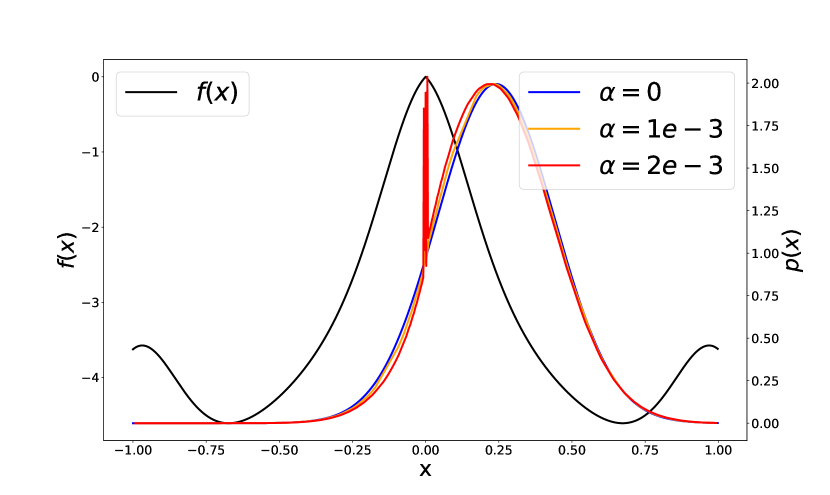
- The method reduces reliance on analytical gradients when they exhibit high variance or bias, as evidenced by adaptive $α$-values dropping in such conditions.
- GI-PPO achieves better performance than LR+RP with substantially lower computational cost, as shown in Table 2, where training times are 50-60% shorter than LR+RP across all traffic settings.
- The method maintains stable learning in chaotic environments by dynamically balancing PPO-based and gradient-based updates, avoiding divergence even when analytical gradients are unreliable.
- Wall-clock training times show GI-PPO is efficient: for 10-lane traffic, it required 533 seconds vs. 2103 seconds for LR+RP, while achieving superior performance.
Better researchstarts right now
From reading papers to final review, dramatically reduce your research time.
No credit card · Free plan available
This review was created by AI and reviewed by human editors.