
[Paper Review] Guided scenarios with simulated expert personae: a remarkable strategy to perform cognitive work
This paper proposes using guided scenarios with simulated expert personae—such as Richard Feynman and Emmy Noether—as a cognitive strategy to perform complex intellectual work with large language models (LLMs). By framing prompts as dialogues between expert personas in a contextual scenario, the LLM generates high-quality, technically accurate outputs, including LaTeX equations and Python code, that surpass standard prompting, as demonstrated in solving a novel quantum optics problem beyond its training data.
Large language models (LLMs) trained on a substantial corpus of human knowledge and literature productively work with a large array of facts from that corpus. Surprisingly, they are also able to re-create the behaviors of personae that are captured within the corpus. By forming teams of simulated personae, supplying contexts that set the stage, and providing gentle prompts, one can move through scenarios that elicit expert behavior to perform meaningful cognitive work. The power of this strategy is demonstrated with two examples, one attacking factuality of LLM responses and the other reproducing a very recently published result in quantum optics.
Motivation & Objective
- To investigate whether LLMs can perform complex cognitive work by simulating dialogues between expert personae.
- To address limitations of standard prompting, such as hallucination and low factual accuracy, by leveraging emergent behavioral patterns in LLMs.
- To demonstrate that simulated expert dialogues can produce novel, valid scientific insights not present in the model’s training data.
- To explore the scalability and utility of assembling teams of simulated experts for intellectual and scientific problem-solving.
- To evaluate the potential of LLMs to generate actionable, deconflicted, and technically rigorous responses through persona-driven prompting.
Proposed method
- Formulating a scenario where fictional or historical expert personas (e.g., Feynman and Noether) engage in a technical dialogue about a novel scientific problem.
- Using minimal, gentle prompts to guide the LLM in maintaining the personas’ voices and technical accuracy.
- Generating responses that include structured technical content such as LaTeX-formatted equations, code, and scientific reasoning.
- Validating outputs against known results from recent literature, such as the Tirole et al. paper on double-slit time diffraction.
- Employing the LLM’s internal knowledge and emergent behavioral patterns to simulate expert reasoning without fine-tuning.
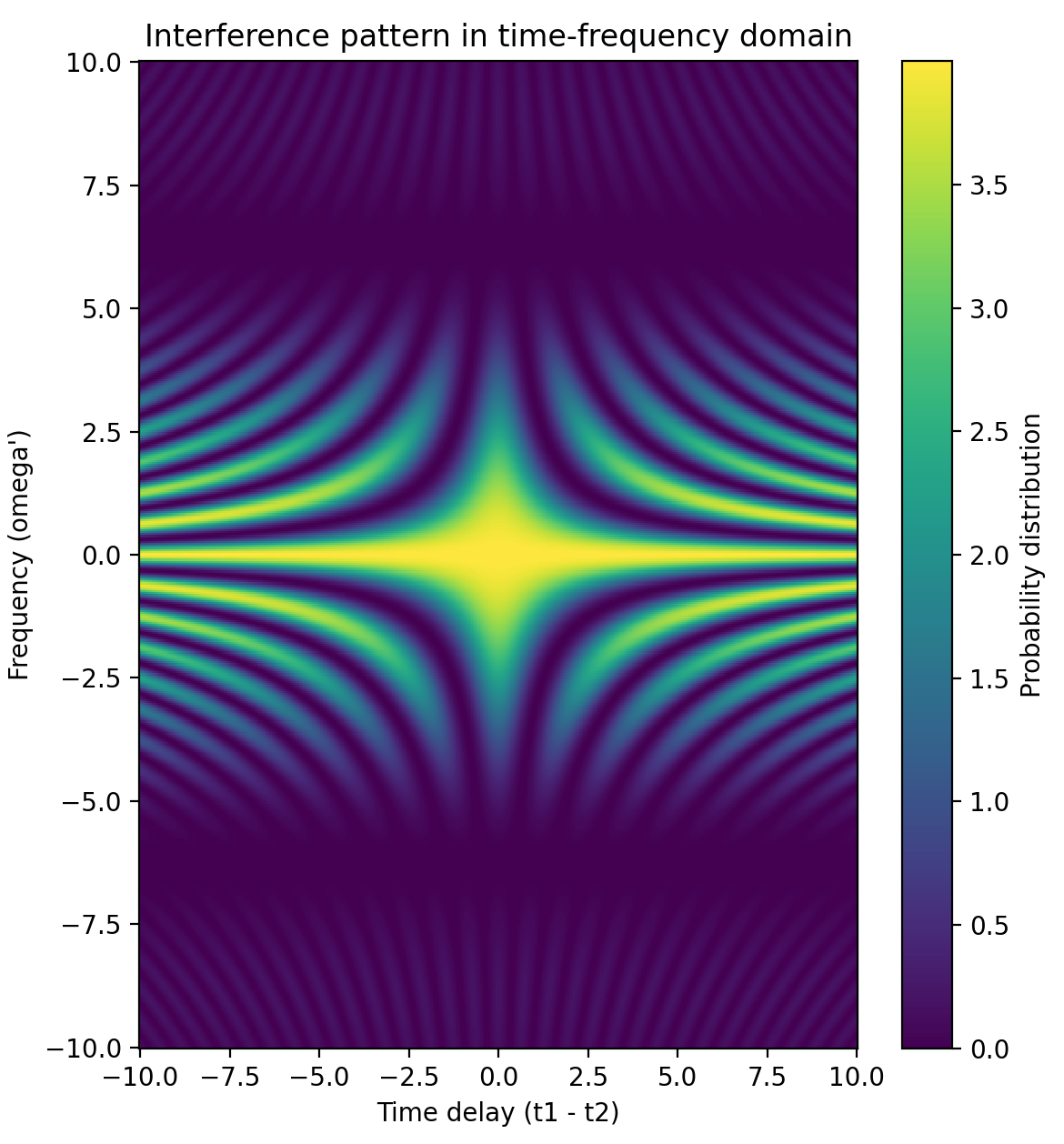
- Using the output to generate visualizations via Python code and compare them to real experimental figures.
Experimental results
Research questions
- RQ1Can guided scenarios with simulated expert personas significantly improve the quality and factual accuracy of LLM-generated responses compared to standard prompting?
- RQ2To what extent can LLMs generate novel, scientifically valid insights on topics outside their training data by simulating expert dialogues?
- RQ3How effective is persona-based prompting in reducing hallucination and confabulation in complex cognitive tasks?
- RQ4Can simulated expert dialogues produce technically rigorous outputs, including mathematical formulations and executable code, for advanced scientific problems?
- RQ5What is the potential of this method to scale for solving real-world scientific and engineering challenges?
Key findings
- The guided persona scenario produced a complete, mathematically rigorous solution to the double-slit time diffraction problem, including LaTeX-formatted equations and Python code for visualization, which was not present in the model’s training data.
- The LLM generated a time-dependent interference pattern expression that closely matched the results published in the Tirole et al. Nature paper, despite the model’s training cutoff in September 2021.
- The simulated dialogue between Feynman and Noether produced a technically coherent and accurate derivation of the time-diffraction phenomenon, demonstrating emergent expert reasoning.
- The method significantly outperformed a simple prompt, which failed to produce a valid solution and instead generated a confabulated response.
- The output included a deconflicted, validated set of assertions that could be stored and reused, suggesting potential for memory-augmented LLM systems.
- The approach enabled the LLM to make valid predictions about the consequences of the phenomenon, aligning with real-world research outcomes.

Read this paper
Open the full text in the Nubint reader and ask about any passage as you read.
Read this paper on NubintThis review was generated by AI from the original paper. Please check the paper before citing it.