
[Paper Review] Guiding Principles for Using Mixed Methods Research in Software Engineering
This paper provides actionable guidelines for software engineering researchers to design, implement, and evaluate mixed and multi-method studies with methodological rigor, ethical integrity, and innovative insight. It introduces four core principles—methodological rationale, novel insights, procedural rigor, and ethics—supported by fictional research personas, design tradeoffs, and antipatterns to help researchers avoid common pitfalls in combining qualitative and quantitative methods for socio-technical SE problems.
Mixed methods research is often used in software engineering, but researchers outside of the social or human sciences often lack experience when using these designs. This paper provides guiding principles and advice on how to design mixed method research, and to encourage the intentional, rigorous, and innovative application of mixed methods in software engineering. It also presents key properties of core mixed method research designs. Through a number of fictitious but recognizable software engineering research scenarios, we showcase how to choose suitable designs and consider the inevitable trade-offs any design choice leads to. We describe several antipatterns that illustrate what to avoid in mixed method research, and when mixed method research should be considered over other approaches.
Motivation & Objective
- To address the lack of systematic guidance for software engineering researchers in designing and executing mixed and multi-method studies.
- To support researchers unfamiliar with mixed methods in selecting appropriate designs that align with their research aims and context.
- To highlight the benefits of methodological integration in studying complex socio-technical software engineering phenomena.
- To provide practical, illustrative scenarios through fictional researcher personas to demonstrate real-world design tradeoffs.
- To identify and warn against common antipatterns in mixed methods research to improve research quality and reproducibility.
Proposed method
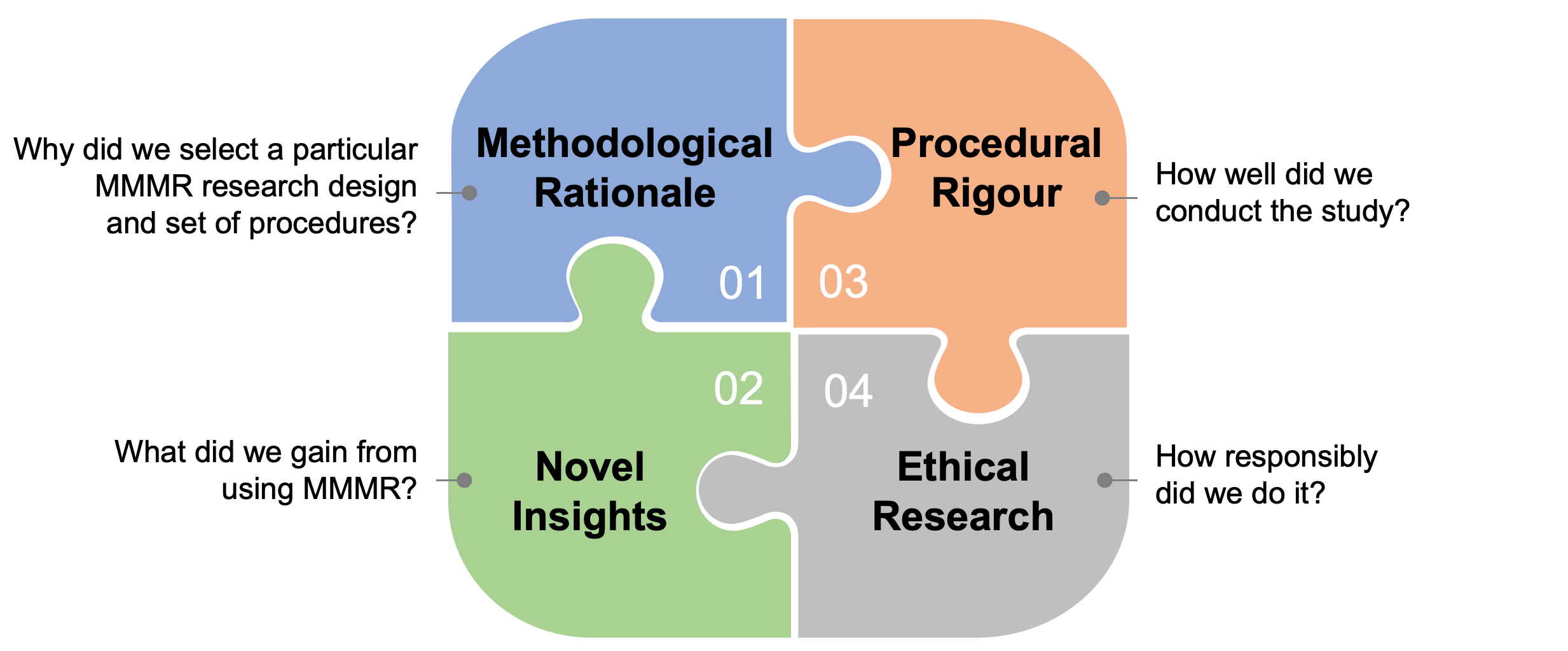
- Proposes four core principles for mixed methods research: methodological rationale, novel insights, procedural rigor, and ethical conduct.
- Uses four fictional researcher personas (Ali, Sam, Vicki, Zara) to illustrate distinct research scenarios and methodological choices.
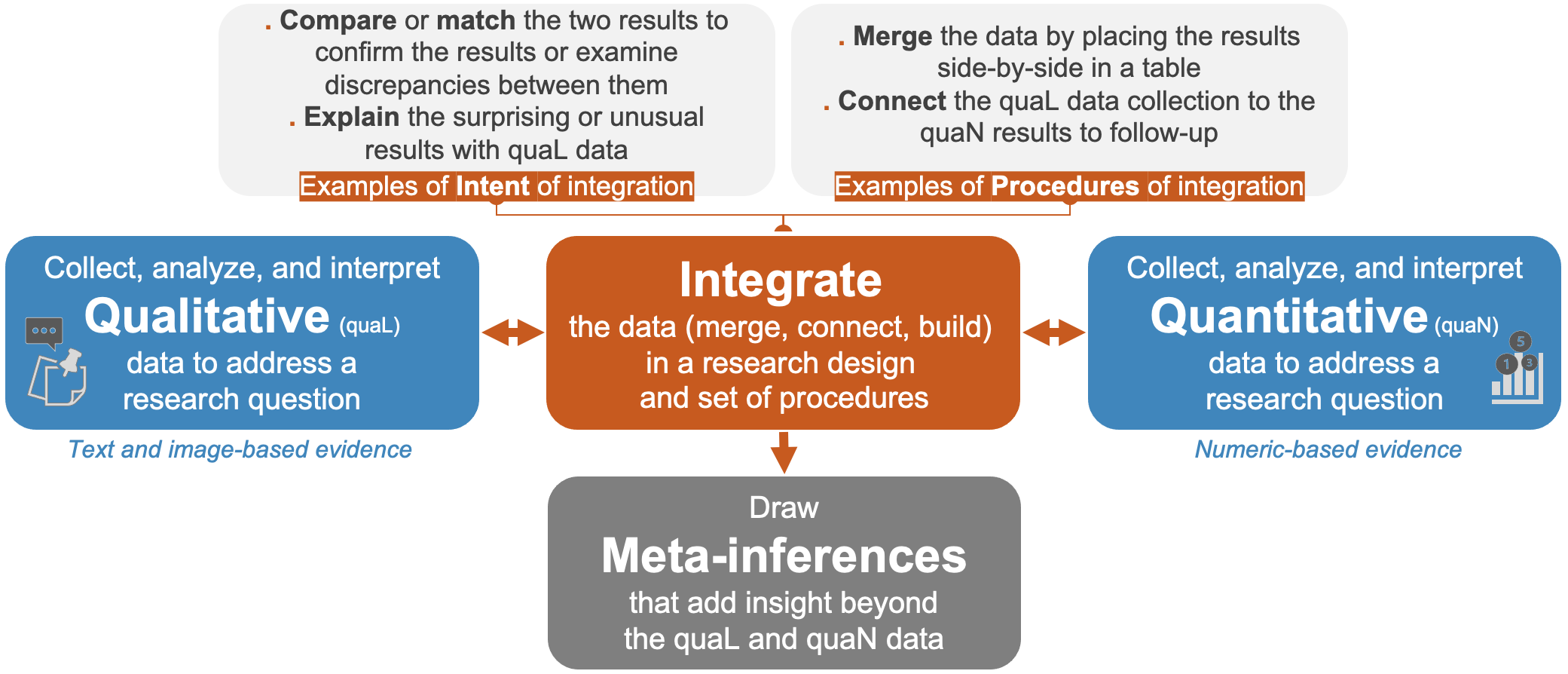
- Introduces key characteristics of mixed methods designs, including timing of procedures, inductive/deductive reasoning, and data integration strategies.
- Employs antipatterns as negative design examples to highlight common methodological flaws and misuses of mixed methods.
- Recommends visualizing research designs to clarify methodological flow and integration points.
- Emphasizes the need for upfront planning of integration—especially in results and discussion sections—to ensure coherence and impact.
Experimental results
Research questions
- RQ1How can software engineering researchers systematically choose and justify mixed methods designs that align with their research questions?
- RQ2What are the key characteristics and tradeoffs in mixed methods research designs relevant to software engineering contexts?
- RQ3How can researchers ensure that mixed methods lead to novel insights not achievable through single-method approaches?
- RQ4What are the common methodological pitfalls (antipatterns) in mixed methods research, and how can they be avoided?
- RQ5How can ethical considerations be meaningfully integrated into the design and reporting of mixed methods studies in software engineering?
Key findings
- The integration of qualitative and quantitative methods in software engineering research can yield deeper, more nuanced insights into socio-technical phenomena than single-method approaches.
- Researchers who apply mixed methods with clear methodological rationale and procedural rigor report stronger validity and credibility in their findings.
- Antipatterns such as disconnected data collection, lack of integration in results, and questionable ethics significantly undermine the credibility and impact of mixed methods studies.
- The timing and sequence of data collection and analysis (e.g., concurrent vs. sequential) are critical design decisions that affect the study’s validity and interpretability.
- Proper integration of findings—especially in the results and discussion sections—requires deliberate planning and is essential for demonstrating the added value of mixed methods.
- The use of fictional but realistic research personas helps researchers visualize and navigate complex design tradeoffs, improving methodological decision-making.
Read this paper
Open the full text in the Nubint reader and ask about any passage as you read.
Read this paper on NubintThis review was generated by AI from the original paper. Please check the paper before citing it.